
TL;DR
Landing pages and sales pages look alike but do different jobs. Here’s how to tell them apart.
- The core difference: A landing page captures leads or promotes one offer; a sales page exists to close a single purchase.
- Use a landing page when: You want signups, downloads, free-trial registrations, or contest entries.
- Use a sales page when: You want to sell a product or service and need room to handle objections.
- Length differs: Landing pages stay short and benefit-led; sales pages run long and persuasive.
- They overlap: A sales page is technically a type of landing page, and one page can do both.
- Build either in WordPress: SeedProd lets you create both from the same templates without code.
One of the most common questions I get is: what’s the difference between a landing page and a sales page?
They might look similar at first, but they’re designed for totally different things. Landing pages are great for collecting leads or promoting offers, while sales pages are where you actually make the sale.
In this guide, I’ll show you how to tell them apart, when to use each one, and how to build both without hiring a designer or touching code.
Want to skip ahead? Jump to the landing page vs sales page comparison.
In This Guide
- What Is a Landing Page Exactly?
- When To Use a Landing Page
- What Are the Types of Landing Pages?
- What Exactly Is a Sales Page?
- When To Use a Sales Page?
- What Are the Types of Sales Pages?
- Landing Page vs Sales Page: What Are the Differences?
- Landing Page vs Sales Page: Which One Is Right for You?
- Landing Page vs Sales Page FAQs
What Is a Landing Page Exactly?
A landing page is a single web page built around one action, like a signup, download, or free-trial registration. It’s the page you “land on” after clicking an ad or a search result, and it’s designed to persuade you to take that one action.
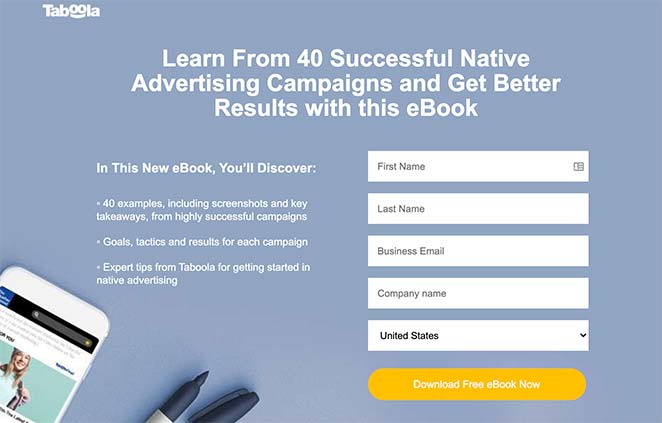
Many businesses use landing pages in digital marketing campaigns for lead generation or to convert visitors into customers. They typically focus on a single product or offer, making it easier for visitors to decide and take action.
For example, if you’ve ever clicked on a banner ad or a link and found yourself on a page asking you to enter your email or download a free guide, that’s a landing page.
The key goal is to give visitors enough information and value that they feel compelled to act. A good landing page design usually includes these common elements:
- Headline: The headline is the first thing visitors see. It should grab attention and convey your offer or value proposition.
- Subheadline: The subheadline adds context and often expands on your headline.
- Call to Action (CTA button): The CTA is the button or link visitors click to take action, like registering for a webinar or downloading a freebie. It should be easy to notice and clearly explain what to do next.
- Form: You can use a form to collect information from visitors, such as their name and email address.
- Social Proof: Social proof includes customer reviews, testimonials, or endorsements that build trust with visitors.
- Images or Video: High-quality images or videos help represent your offer visually.
- Benefits and Features: Benefits and features highlight your value proposition and explain why your product differs from the competition.
When To Use a Landing Page
Use a landing page whenever you want to convert website visitors into leads or customers. This is lead generation: the goal is to engage your target audience and get them to enter your sales funnel as new leads.
A landing page also works well to drive traffic to a specific offer or product. For example, if you’re running a Facebook ad campaign to promote a new ebook, you could create a landing page focused solely on that offer.
The benefit of a landing page is that it’s highly focused and conversion-driven. Unlike your homepage or other pages, it has one specific goal, which makes it more effective at getting visitors to act.
Here are some situations where you might want to use a landing page:
- Promote a new product or service.
- Generate leads by offering a free trial, consultation, or guide.
- Encourage visitors to sign up for a newsletter or email list.
- Promote a limited-time offer or discount.
- Collect entries for a giveaway or contest.
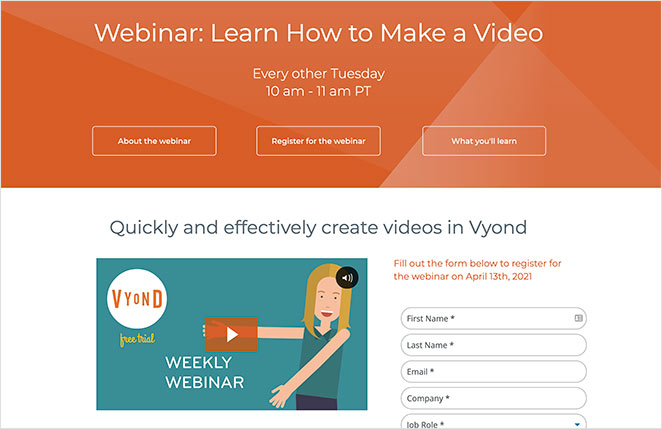
In short, if you have a specific goal and want to boost conversion rates, a landing page is often the best way to get there.
What Are the Types of Landing Pages?
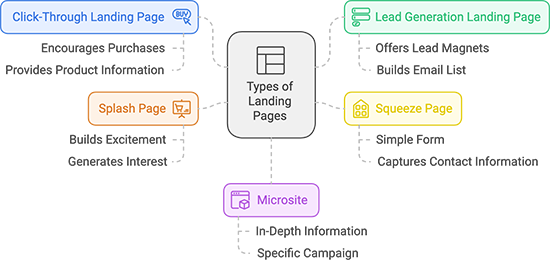
There are several types of landing pages you can use to achieve different goals. Here are some of the most common:
- Click-Through Landing Page: An eCommerce landing page designed to give more information about a product and encourage visitors to click through to a purchase page.
- Lead Generation Landing Page: A page for capturing leads by offering a free guide, consultation, or another lead magnet in exchange for contact information. The goal of a lead generation landing page is to build an email list for future marketing.
- Squeeze Page: A landing page focused solely on generating leads. A squeeze page typically has minimal information and a simple form to capture an email address.
- Splash Page: You can use splash pages to showcase a new product or promotion alongside a social or email campaign to build excitement.
- Microsite: A standalone mini-site for a specific campaign or product. A microsite may include several pages and more in-depth information.
If you need a more visual guide, check out these landing page examples. Once you know which type to use, you can build pages that actually match your goals.
Now that you know more about landing pages, what exactly is a sales page?
What Exactly Is a Sales Page?
A sales page is a single page built to sell one product or service. It’s usually longer and more detailed than a landing page, covering the product’s features, benefits, and pricing.
A sales page aims to convince visitors to buy by addressing their objections and highlighting the product’s value. Business owners use sales pages in marketing campaigns to generate revenue.
So if you’ve ever clicked a Google ad to buy an online course and landed on a page packed with detail about it, that’s a sales page.

A sales page often uses design elements similar to landing pages for a smooth user experience. The difference is that its focus is on driving sales.
For example, the copy may lean harder into solving pain points with detailed social proof like case studies, user-generated content, and video testimonials.
A sales page may also include pricing and payment options, a money-back guarantee, frequently asked questions (FAQ), and live chat to reach your sales team.
When To Use a Sales Page?
Use a sales page in campaigns where the aim is to turn potential customers into buyers by convincing them to purchase your product or service.
The key difference is focus: a sales page focuses on the product itself, while a landing page focuses on a specific offer related to it.
Here are some situations where you might want to use a sales page:
- Launch a new product or service and generate sales.
- Promote a product or service that’s not selling as well as you’d like.
- Sell a high-ticket item that requires more explanation and persuasion.
- Highlight the features, benefits, and value of your product in more detail.
The key to a successful sales page is giving visitors enough information and value that they feel confident buying. So if you’re trying to sell something, a sales page gives you the space and structure to do it.
What Are the Types of Sales Pages?
Since sales pages are built for selling, several types exist. Here are some of the most common:
- Long-Form Sales Page: Long and detailed, often running several screens. It’s built to give full information and answer every objection, which is why businesses use it for higher-priced products.
- Video Sales Page: Uses video to showcase your product and explain it. A good fit when your product needs a demonstration to make sense.
- Short-Form Sales Page: Shorter and more to the point. It gives less detail than a long-form page but still highlights the key features and benefits.
- Product Launch Sales Page: Popular for promoting a launch. It builds anticipation and often includes a countdown timer to create urgency.
- Upsell Sales Page: Promotes additional products to customers who have already bought. It’s designed to increase revenue per customer.
Stuck between long-form and short-form? Go long when the offer is new, expensive, or unfamiliar, since the reader needs convincing before they’ll commit.
Keep it short when the product is low-cost or already familiar, because extra copy just slows the decision down.
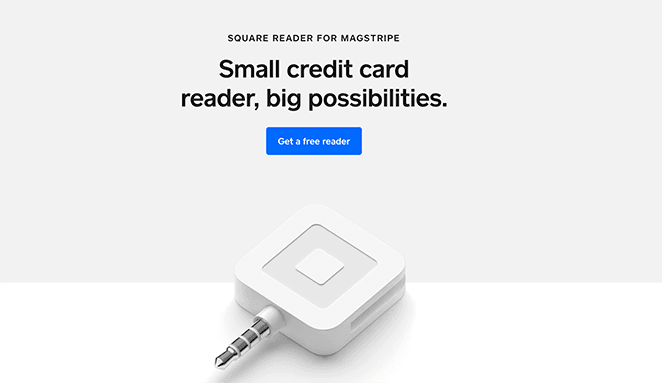
Need a little more inspiration? Check out these high-converting sales page examples from genuine brands.
Landing Page vs Sales Page: What Are the Differences?
Landing pages and sales pages both drive conversions, but they differ in purpose, length, design, targeting, testing, and cost. I’ll walk through each below.
One point that trips people up: a sales page is technically a type of landing page whose job is direct selling. So the two aren’t opposites, they overlap.
A single page can even do both, selling a product while also capturing email addresses from visitors who aren’t ready to buy yet.
Purpose of the Page
A landing page aims to capture leads or promote an offer, like a free trial or eBook. The goal is to get visitors to take one action, then nurture them through email marketing campaigns.
A sales page aims to persuade visitors to buy. It explains the product’s benefits and features in depth, provides social proof, and ends with a clear call to action to make the purchase.
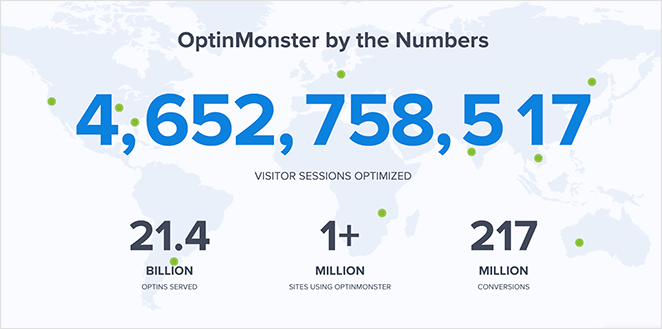
Both pages chase a specific goal, but landing pages are best for starting conversations with potential customers, while sales pages are better for closing the deal.
Page Length
Another key difference is length.
Landing pages are typically shorter and contain only the essential information needed to convey your offer. They’re concise and focused, with a clear call to action that stands out.
Sales pages are often longer and more detailed, giving visitors everything they need to decide. They usually cover features and benefits, social proof, pricing, and a clear call to action.
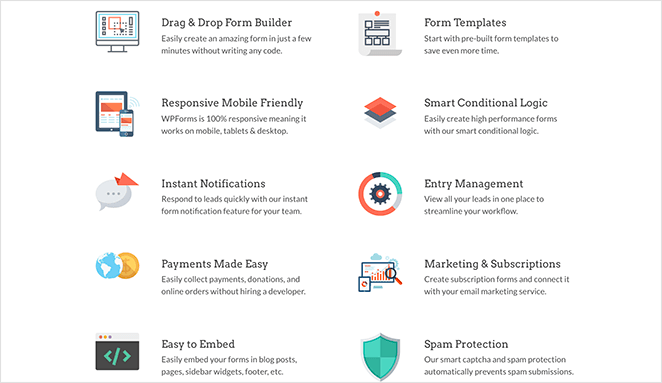
The right length depends on your offer, audience, and overall strategy. As a rule, landing pages stay short and focused while sales pages run longer and more detailed.
Design of the Page
Design also differs based on each page’s purpose and audience.
Landing pages are clean and easy to scan, with simple layouts and minimal distractions so attention stays on the offer. They lean on bright, contrasting colors and large fonts to draw the eye to what matters.
Sales pages often have a more complex layout, with multiple sections of detailed information. They may include images or videos showing the product in action, plus longer headlines and subheadings.
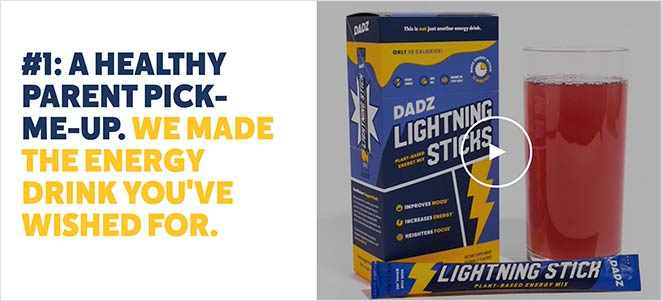
Both page types can include testimonials, but landing pages tend to use short quotes or excerpts while sales pages run more detailed, specific testimonials to build trust.
Page Targeting
Targeting differs too. Landing pages usually target a specific audience to collect contact information, like people who click an ad or an email campaign.
The messaging is tailored to that audience’s needs and interests, with a strong focus on their pain points.
Sales pages tend to target broader audiences to promote a product to a wider range of potential customers. The messaging leans on the product’s features and benefits to convince visitors it’s worth the investment.
For example, a landing page promoting a free software trial might target small business owners looking to manage operations more efficiently. A sales page promoting a high-end fitness product might target enthusiasts willing to invest in their health.
Testing the Page
Another difference is how you test and optimize each page for better performance.
Landing pages are often subject to A/B testing, where you run two versions with one element changed, like the headline, CTA button, or color scheme. The goal is to find the version with the better conversion rate.
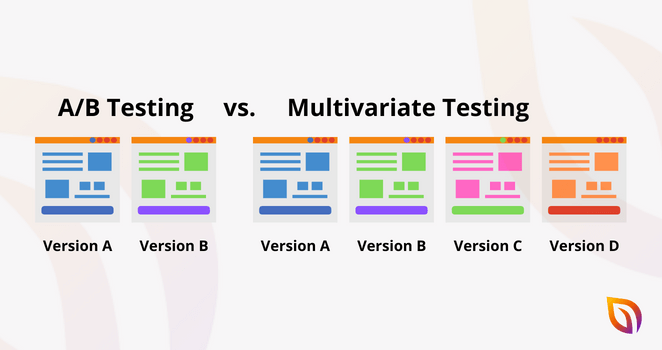
Sales pages can need more complex testing because of their length and content. Instead of simple A/B testing, they may use multivariate testing, where you test several variables at once, like different headlines, images, video content, pricing, and social proof.
Page Cost
The cost of creating a landing page versus a sales page can vary for several reasons.
Because landing pages are shorter and simpler, they’re quicker and cheaper to produce. You can build one with pre-designed templates or website builders, saving time and money over a fully custom sales page.
Sales pages are often longer and need more design and copywriting work. You might hire a professional copywriter, or create custom graphics and video, all of which add to the cost.
Common Mistakes When Choosing Between a Landing Page and Sales Page
Even though the two look similar, I’ve seen a lot of people mix them up. Here are some of the most common mistakes to watch out for:
- Using a landing page when you actually need to sell something. If your goal is revenue, you’ll need a full sales page, not just a signup form.
- Sending ad traffic to your homepage. Your homepage has too many distractions. A focused page (landing or sales) always performs better.
- Not testing both page types. Sometimes a short landing page works. Other times a longer sales page gets better results. It’s worth testing both.
Here’s how the two compare side by side:
| Feature | Landing Page | Sales Page |
|---|---|---|
| Main Goal | Capture leads or interest | Drive purchases |
| Length | Short and focused | Long and detailed |
| Used For | Free trials, downloads, signups | Product launches, high-ticket sales |
| Content Style | Light, benefits-focused | In-depth, persuasive copy |
| Conversion Type | Emails, leads | Sales, checkouts |
Landing Page vs Sales Page: Which One Is Right for You?
The page you need depends on the result you want.
A landing page is the right choice if you want to generate leads and collect contact information to nurture later. A sales page is the better option if your main focus is increasing sales on a particular product or service.
If you’re on WordPress, you can build either one yourself in minutes with a drag-and-drop builder, which I’ll show you next.
Quick Way to Decide
Still not sure? Run through these three questions and the answer usually sorts itself out:
- Are you collecting an email or making a sale? Email points to a landing page; a sale points to a sales page.
- Is the offer free or paid? A free offer suits a landing page; a paid product suits a sales page.
- Do you need the visitor’s details or their card? Their details means a landing page; their payment means a sales page.
How to Create a Landing Page or Sales Page
The easiest way to build either page on your WordPress site is with a landing page builder.
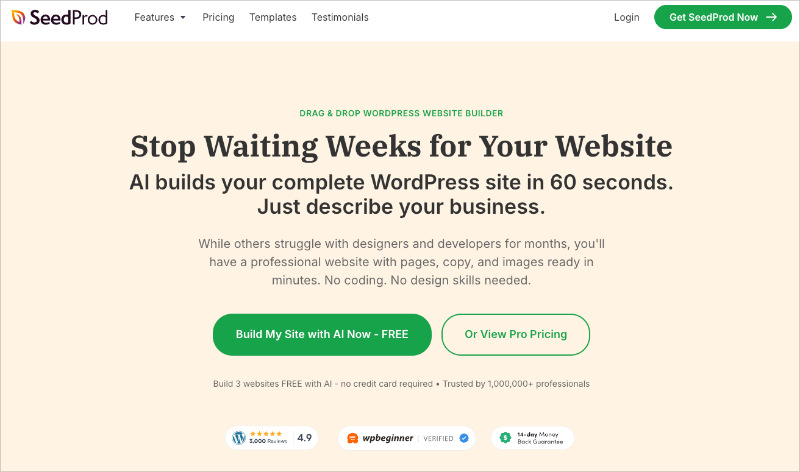
SeedProd lets you build both a lead-capture landing page and a full sales page from the same templates, without writing any code. It’s the drag-and-drop website builder used by over 1 million website owners.
With its pre-made templates and visual editor, you can put together a landing page or a sales page in under 30 minutes. It uses a block-based interface with everything you need to generate leads and drive sales, including:
- CTA buttons
- Star ratings
- Countdown timers
- Pricing tables
- Testimonials
- Opt-in forms
- And more
It also works with popular WordPress plugins, including OptinMonster for popups, AIOSEO for SEO, WPForms for contact forms, and MonsterInsights for Google Analytics.
I’ve also written step-by-step guides for making both types of pages with SeedProd:
So whether you’re an eCommerce business, a startup, or a blogger, you can create the page you need without writing a single line of code.
Landing Page vs Sales Page FAQs
Can a sales page also be a landing page?
Yes. A sales page is technically a type of landing page, since it’s a standalone page built around one action.
The difference is the action: a sales page asks for a purchase, while most landing pages ask for a signup or download. A single page can even do both at once, selling a product while capturing emails from visitors who aren’t ready to buy.
Is a sales page a type of landing page?
Yes. Both are standalone pages focused on a single conversion goal, with no site navigation to distract visitors. A sales page is a landing page whose specific job is to sell a product or service.
So every sales page is a kind of landing page, but not every landing page is a sales page.
Do I need both a landing page and a sales page?
Often, yes, because they handle different stages. A landing page captures leads at the top of your funnel, then a sales page converts those warmed-up leads into buyers later.
If you only sell one simple product, a single page may be enough. But if you nurture leads before selling, having both gives each stage a page that’s built for it.
There you have it. I hope this guide cleared up the difference between a landing page and a sales page.
Before you go, you might like this comparison of WooCommerce and Shopify. You can also see this guide on how to create a sales funnel landing page in WordPress.
Thanks for reading! We’d love to hear your thoughts, so please feel free to join the conversation on YouTube, X and Facebook for more helpful advice and content to grow your business.