
TL;DR: Building an App Landing Page
An app landing page is a standalone page built to get people to download your app. The fastest way to make one in WordPress is with SeedProd: pick a mobile template, customize it with drag-and-drop blocks, and publish in minutes.
- One clear job: a good app landing page points everything at a single download button.
- Five core elements: a benefit headline, a primary CTA, benefit-led copy, social proof, and visuals.
- Speed matters: most app discovery happens on a phone, so a fast, mobile-first page wins.
- Pick a template: start from a mobile-responsive SeedProd template instead of a blank page.
- Capture leads early: connect an email service so a pre-launch page builds your list before the app ships.
- Cost: a basic page is free with SeedProd Lite, with paid tiers for templates and lead-gen blocks.
You want to build a page that gets people to download your app, without touching a single line of code.
I build landing pages in WordPress with SeedProd, and the app ones always come down to the same thing: make it dead simple to understand the app and tap “Download.” Get that right and the page does its job. Get it wrong and visitors browse, then leave.
In this guide, I’ll walk you through what actually makes an app landing page convert, with five real app examples, then show you how to build your own in WordPress step by step.
What Is an App Landing Page?
An app landing page is a standalone web page built to get visitors to download your app. It strips out everything that isn’t the download and points the whole page at one action.
That single focus is the difference between a page that converts and a homepage that just describes your product. Every section, the headline, the screenshots, the reviews, exists to move someone toward the button.
Here’s why it earns its place in your marketing:
- It targets one audience: you can tailor the page to a specific group and a specific goal, instead of speaking to everyone at once.
- It lifts conversions: a focused page makes the next step obvious, which is why a clear call to action matters so much.
- It builds trust: reviews, ratings, and download counts reassure people before they commit.
- It gives you data: a dedicated page shows you what’s working so you can adjust your marketing.
And yes, it’s worth building even before launch. A pre-launch page grabs emails while people are interested, gives you an audience to retarget, and hands the press a single link to point to. Creating a landing page like this costs almost nothing to start.
Is an App Landing Page Different From an App Store Listing?
Yes, and the two work best together. Your App Store or Google Play listing is locked into a fixed layout and a fixed set of fields, so your messaging has to fit their template.
A landing page on your own site gives you full control over the headline, the branding, and what you ask for. You can collect emails, run your own analytics, and send paid traffic somewhere you own, then point people to the app store to download.
What Should an App Landing Page Include?
Five elements do most of the work on a high-converting app landing page: a call to action, a headline, body copy, social proof, and visuals. Here’s what each one is responsible for.
| Element | What it does | Make it concrete |
|---|---|---|
| Call to action | Sends people to download or sign up | One primary button above the fold, linked to your app store |
| Headline | Explains the app’s core benefit fast | A single outcome-led line, not a clever tagline |
| Body copy | Says what the app does and how it helps | Enough to answer the reader’s unspoken questions, no more |
| Social proof | Builds trust before the ask | App Store rating, download count, or a real review |
| Visuals | Shows the app at a glance | Screenshots or a short product video that loads fast |
1. Call to Action
Your app page exists to get one click: the call to action. That’s usually a download button pointing to your app store, or a form that sends people the app directly.
Every other element should support that one button, which makes the CTA the most important thing on the page. Keep one primary button above the fold so nobody has to scroll to find it.
2. Headline
The headline is the first thing visitors see. It doesn’t need to be witty, but it should make your app’s value obvious in one read. A strong landing page headline keeps people on the page long enough to care.
3. Body Copy
The body copy is where you explain what your app does and why it helps. Length depends on your audience, so write enough to answer the questions a visitor would have before downloading, then stop.
4. Social Proof
Social proof tells visitors your app is worth trusting. Most app pages show reviews and testimonials, an App Store rating, or a download count to prove other people already use it.
5. Engaging Visuals
Visuals make your app easier to understand at a glance, whether that’s screenshots, graphics, or a short video. The point isn’t a pretty page, it’s helping the copy do its job faster.
A short demo video can explain something complicated far quicker than text. For more on this, see these landing page best practices.
5 App Landing Page Examples That Get It Right
The fastest way to learn what works is to look at apps that already do it well. Each of these pages nails one of the five elements above, so I’ll point out exactly what each one does and why it lands.
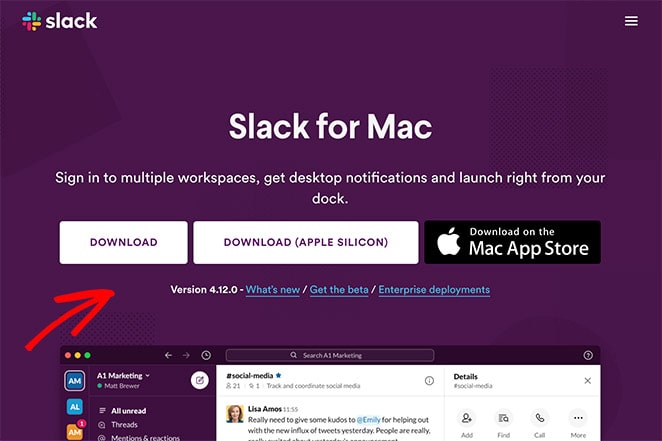
Slack: the benefit headline.
Slack leads with what the app does for you, not a feature list, so the value lands in one read. The “Get started” button sits right next to that promise, above the fold, with nothing competing for attention. It’s a clean example of a headline and CTA working as one unit.
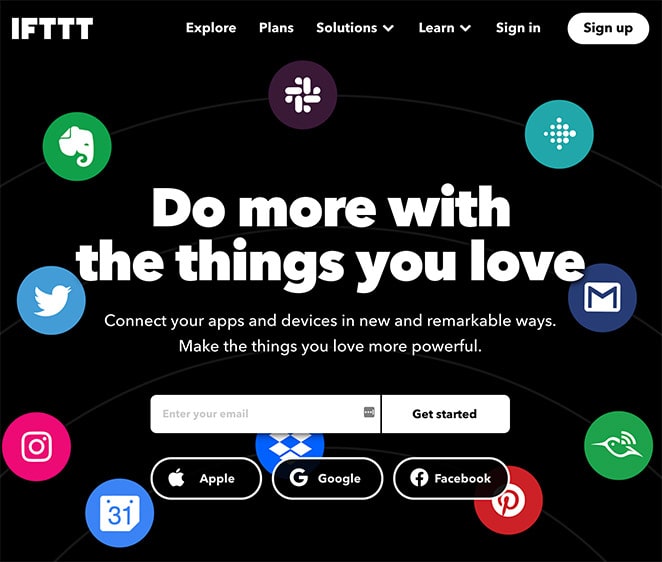
IFTTT: the single call to action.
IFTTT automates a lot, but the page refuses to overwhelm you with it. The whole layout funnels toward one “Start today” action, with app store download links close behind. When an app can do many things, this kind of restraint is what keeps the page converting.
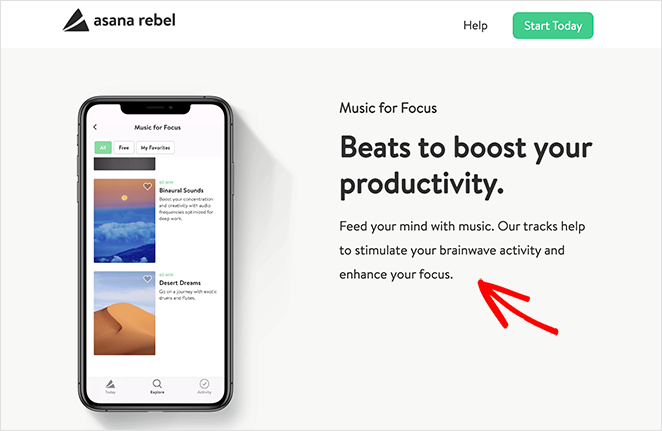
Asana Rebel: the visuals.
The Asana Rebel fitness app sells a feeling, so the page leans on full-bleed lifestyle imagery instead of text. You understand the experience before you read a word, which is exactly what visuals are for on an app page. The copy then fills in the detail the images can’t.
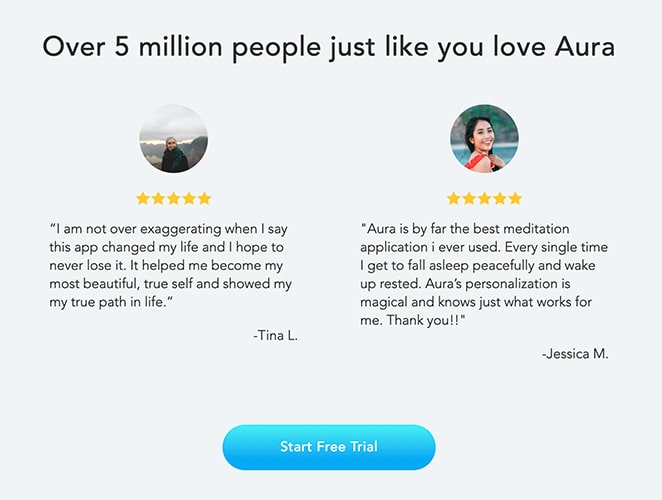
Aura: the social proof.
Aura puts its rating and tens of thousands of five-star reviews front and center, so trust lands before the pitch does. For a wellness app asking for daily commitment, that proof matters more than any feature claim. It’s a smart reminder that social proof works hardest near the top, not buried at the bottom.
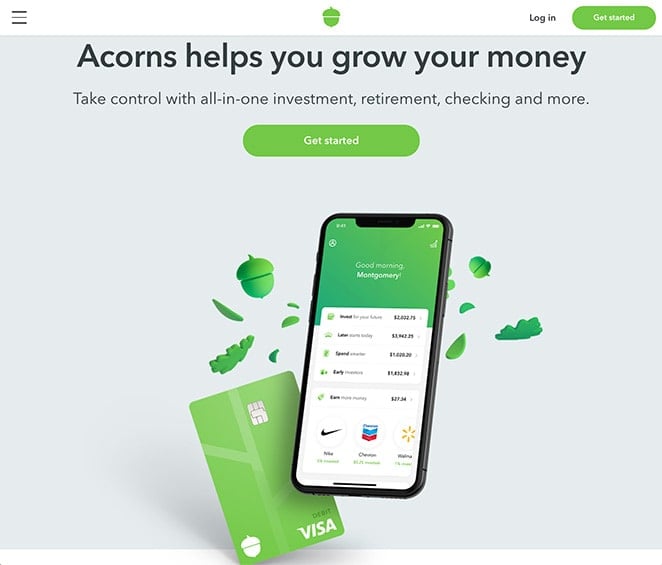
Acorns: the body copy.
Investing can feel intimidating, so Acorns uses plain, reassuring copy to make the app feel approachable. The body text answers the “is this for me?” worry directly instead of listing features. That’s body copy doing real work, removing the hesitation that stops a download.
What Makes an App Landing Page Convert?
The five elements give you the parts. Putting them together so they actually drive downloads comes down to a few conversion habits worth getting right.
- One primary CTA above the fold: people should see the download button without scrolling, and it should be the loudest thing on the page.
- App-store badges: the official App Store and Google Play badges are instantly recognizable and signal a real, trusted app.
- A benefit-led headline: say what the reader gets, not what the app has.
- Fast load: a slow page loses people before they ever see the button, which is why page speed feeds directly into conversions.
So which one matters most? The CTA. If a visitor can’t find an obvious way to download in the first few seconds, the rest of the page barely matters.
How Do You Make a Landing Page for an App?
The easiest way to make an app landing page in WordPress is with a plugin, and the one I reach for is SeedProd. It’s a drag-and-drop website builder that lets you build any landing page without hiring a developer.
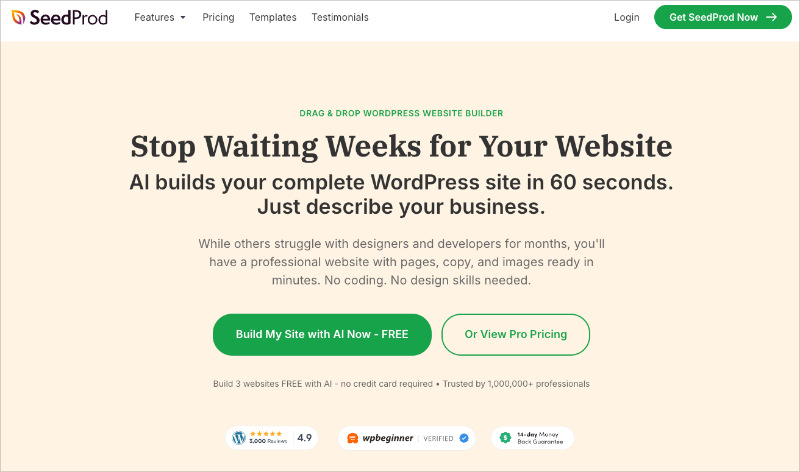
You drag content onto a live preview and watch the page take shape, so there’s no code to write and nothing to guess at. You can start from one of its mobile-responsive landing page templates or build from blocks made for collecting leads.
Pre-launch versus post-launch is worth thinking about here. Before your app ships, SeedProd’s coming soon mode lets you run a pre-launch page that collects emails. After launch, the same page turns into a download-focused page that drives installs.
A lot of people weigh a standalone no-code builder against a WordPress option. The case for staying WordPress-native is simple: everything lives on a site you own, alongside your blog, your analytics, and your email list, instead of scattered across another platform.
Speed is the other reason I use it. When I measured a test page with GTmetrix, SeedProd loaded in 556ms across 16 requests, while the same page built in Elementor took 1,882ms across 32 requests. On a page where most visitors arrive on a phone, that gap is the difference between a download and a bounce.
So if you want to build a mobile app landing page in WordPress easily, follow the steps below.
Video Tutorial
1. Install SeedProd Landing Page Builder
First, get started with SeedProd and download the plugin, then follow these instructions for installing and activating a WordPress plugin.
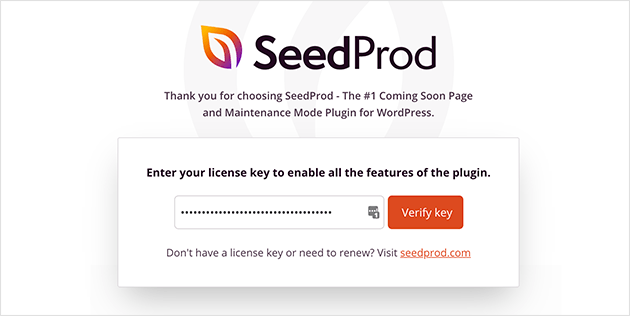
After activating SeedProd, you’ll land on a welcome page asking for your license key, which is in the inbox of your registered email address. Paste it in and click the Verify Key button.
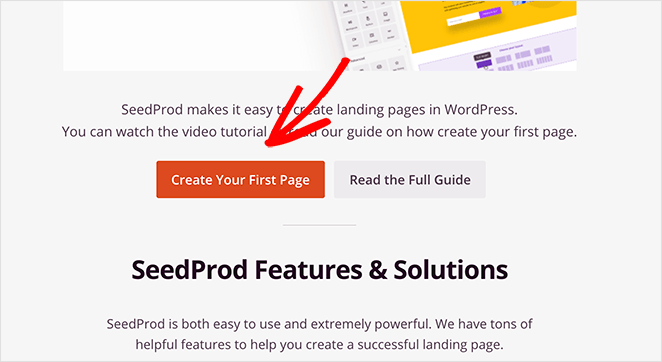
Then scroll down and click the Create Your First Page button.
2. Create a New Landing Page
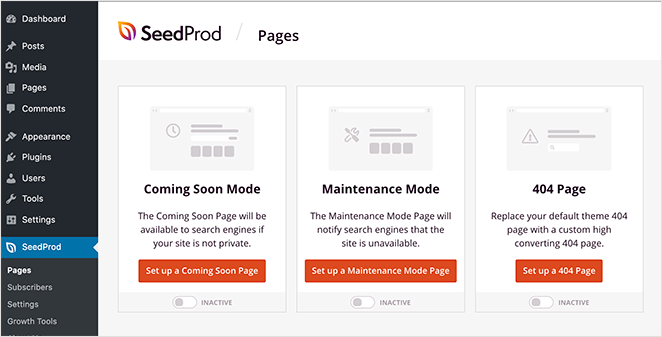
You’ll land on the SeedProd landing page dashboard. Along the top are SeedProd’s page modes, which you can turn on with a single click:
- Coming Soon Mode: to create a coming soon page in WordPress.
- Maintenance Mode: to put WordPress in maintenance mode.
- 404 Page: to create a custom 404 error landing page.
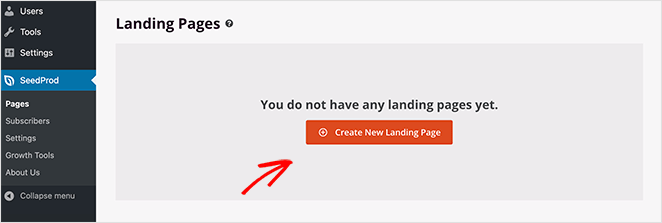
Below that, every landing page you create is listed. To make your first one, click the Add New Landing Page button.
3. Choose a Landing Page Template
Next you’ll see SeedProd’s library of mobile-responsive responsive landing page templates. When I pick one for an app page, I look for a template with a strong hero area and room for screenshots, since that’s where the headline, CTA, and visuals all have to land together.
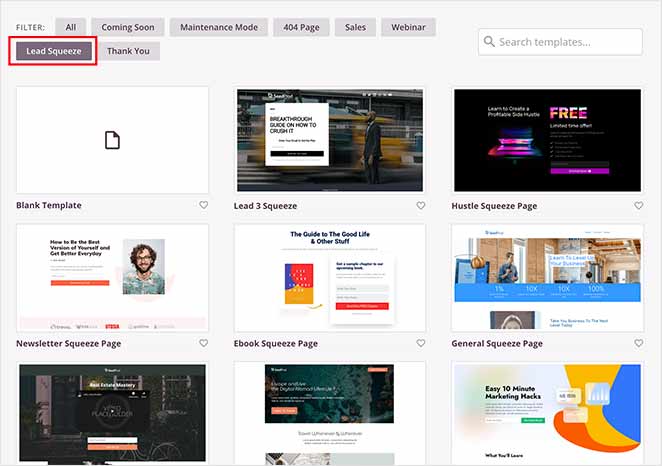
Use the filters along the top to narrow templates by goal, including Coming Soon, Maintenance Mode, 404 Page, Sales, Webinar, Lead Squeeze, and Thank You.
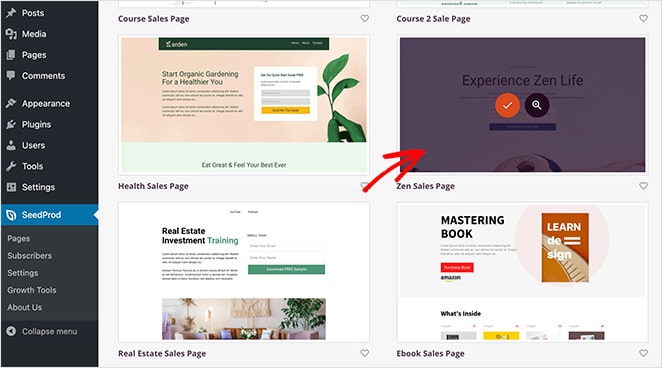
When you find one that’s close, hover over the thumbnail and click the tick icon to open it in the editor. For this tutorial, we’ll use the Zen Sales Page template.
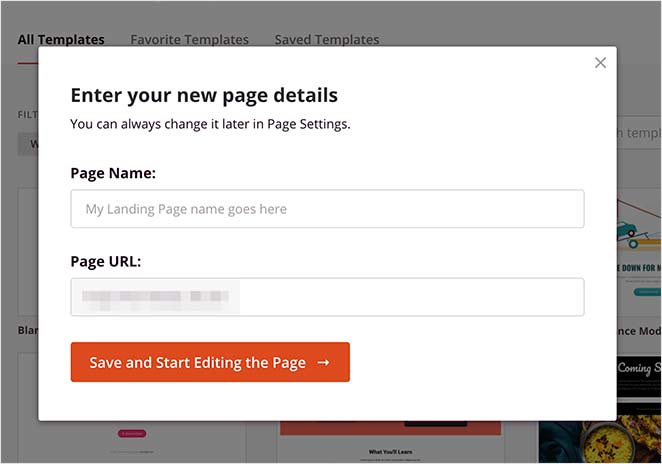
A popup asks for your landing page name and URL. Enter them, then click Save and Start Editing the Page to open the template in the visual editor.
4. Add Your Landing Page Content
SeedProd’s drag-and-drop editor has two sides. Blocks and settings sit on the left, and a live preview of your page sits on the right.
The preview updates as you work, and you can click anything on it to edit the content directly. Content elements are called blocks, split into Standard blocks for basic design and Advanced blocks for lead-generating elements like:
- Social media buttons
- Optin forms
- Giveaways
- Countdown timers
- Star ratings
- Contact forms
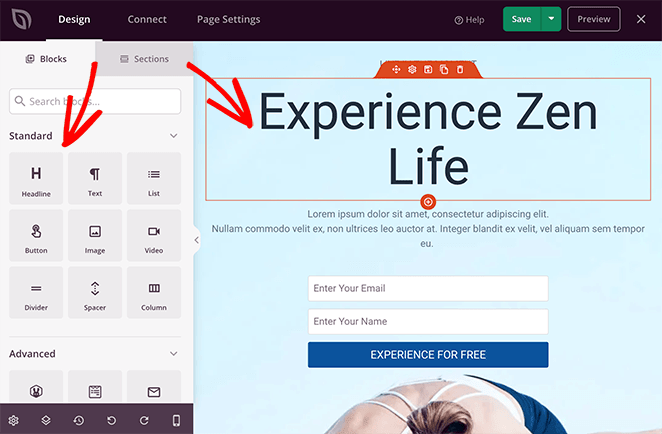
Build your page by editing the existing content or dragging new blocks onto the preview. To add a download button, drag the Button block onto your page and edit the CTA text.
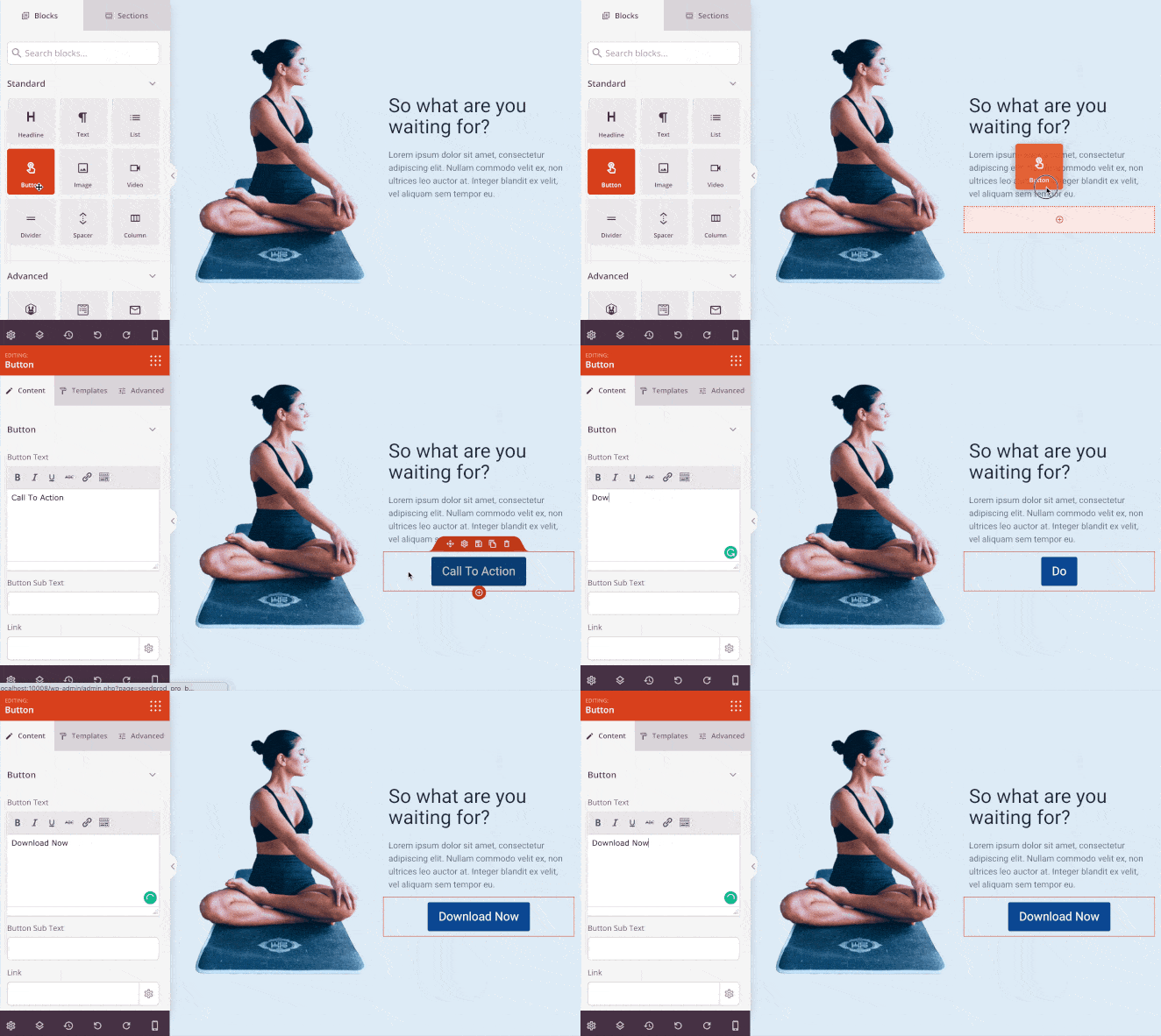
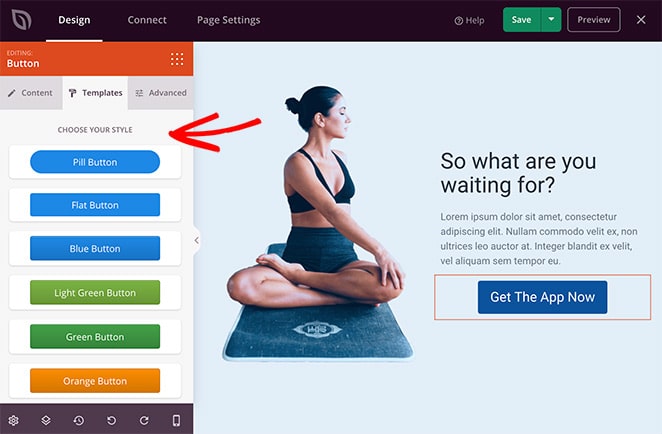
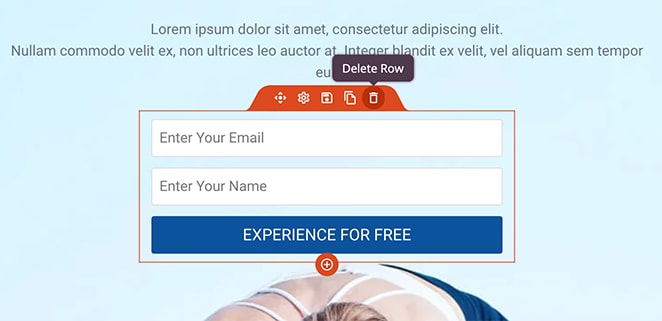
Many blocks come with ready-made templates too. Click the Templates tab to apply a style in one click, and remove any element by hovering over it and clicking the trash icon.
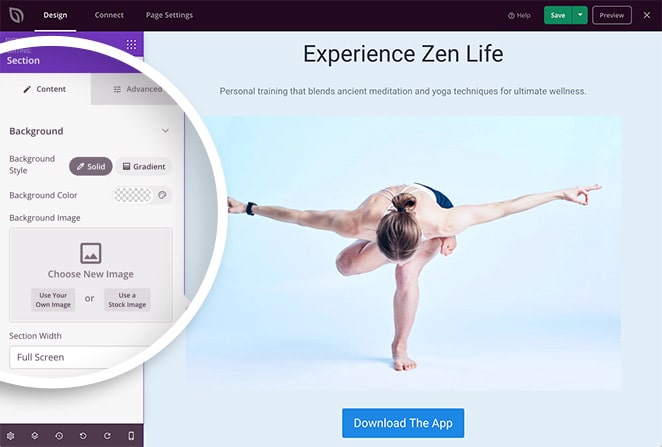
SeedProd also has whole premade sections, so you can drop in a complete block instead of building it piece by piece. These include call to action areas, features, headers, footers, FAQ, and hero areas.
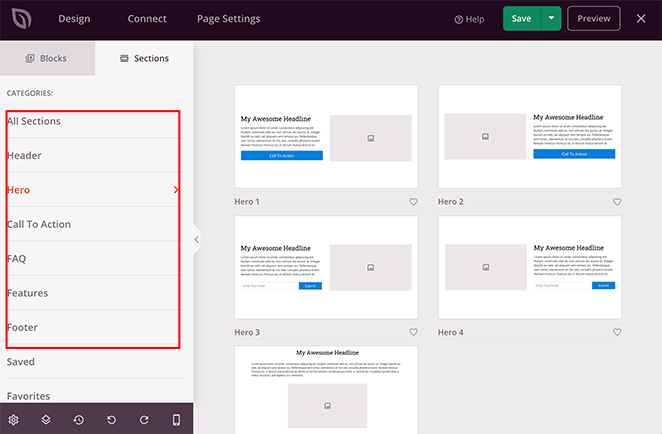
You can edit any section to fit your design. The hero section below uses an extra image to show that the app downloads on both the Android and iOS app stores.
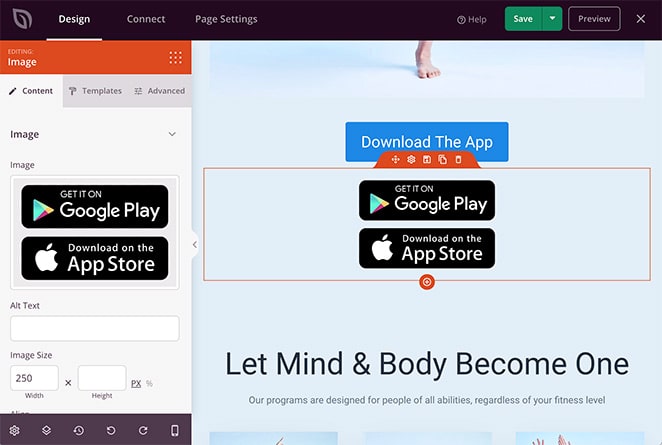
Keep adding content until you’re happy, then click the green Save button in the top right to store your work.
5. Customize Your App Landing Page
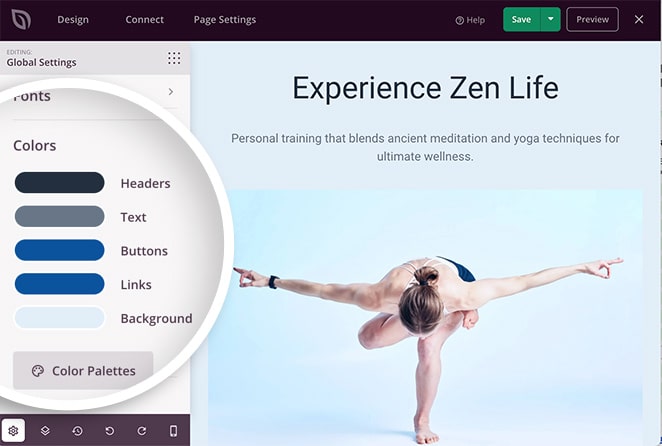
Now bring the page in line with your branding. Click the gear icon in the bottom left to open Global Settings, where you control background colors and images, fonts, and your color palette.
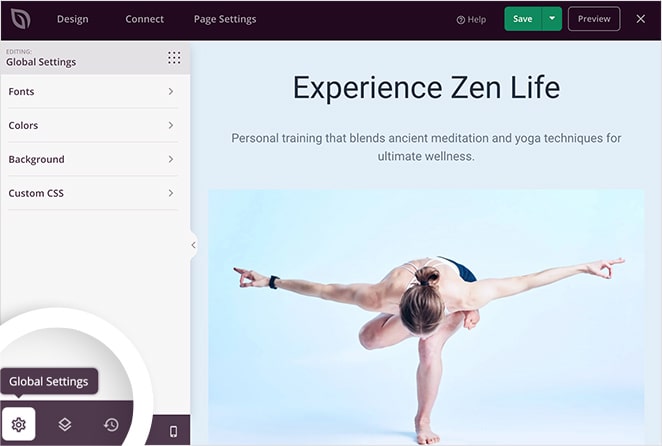
The Background tab lets you change the color, add a gradient, upload an image, or set a full-width video background. The Font and Color tabs give you the same control over typography and color.
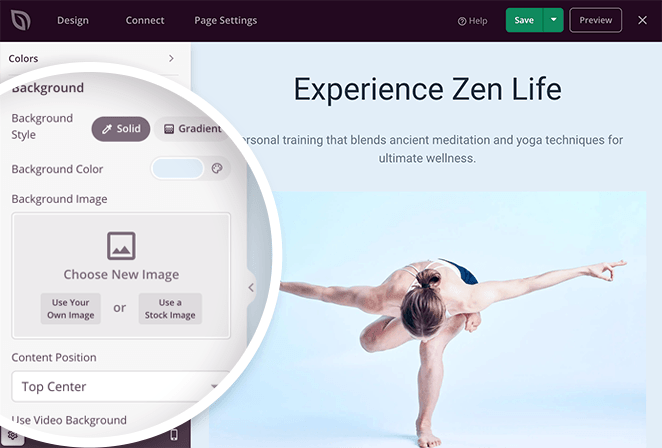
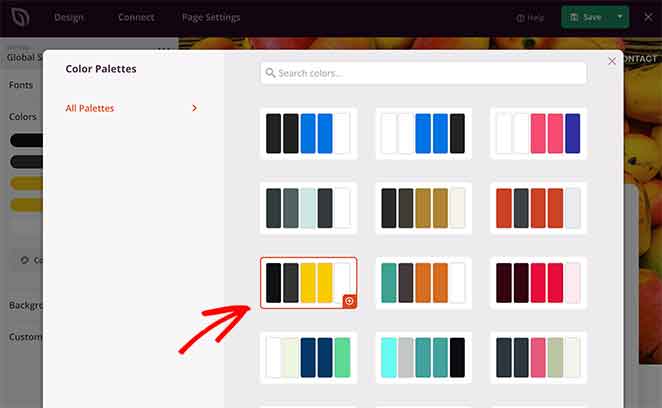
If you’re not sure where to start, the built-in color palettes and font pairings let you try a full style in one click. When you’re done, click Save.
6. Connect Your Email Marketing Service
If you want to grow your list from your page, connect an email service. This is the step I lean on most for a pre-launch app page, since it turns the page into a list builder before the app even ships.
Click the Connect tab to see the integrations, including Constant Contact, GetResponse, Drip, and more of the popular email newsletter services.
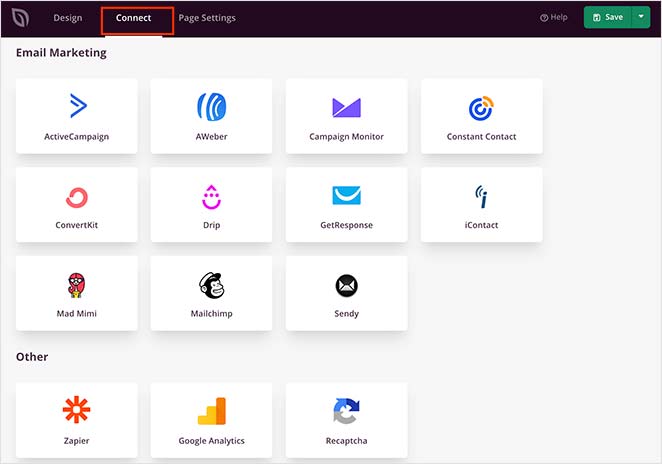
Click your provider and follow the prompts to authorize the connection. After that, anyone who subscribes is added to your list automatically.
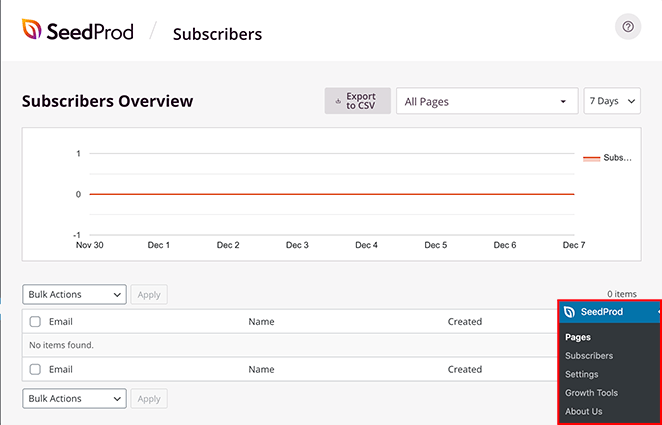
No email provider yet? SeedProd’s built-in subscriber management stores your leads right inside WordPress, so you can grow your email list before launch without paying for a separate service. View them under SeedProd » Subscribers.
7. Configure Your Landing Page Settings
Open the Page Settings tab at the top of the builder to adjust your General, SEO, Analytics, and Scripts settings. In General, you can rename the page, change its URL, and switch its status from draft to published.
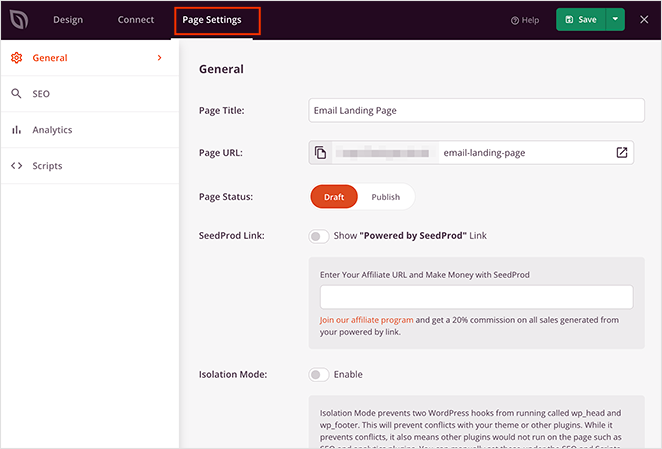
You can also turn on Isolation Mode, which publishes the page with only the scripts it needs. That helps catch theme or plugin conflicts and keeps the page fast.
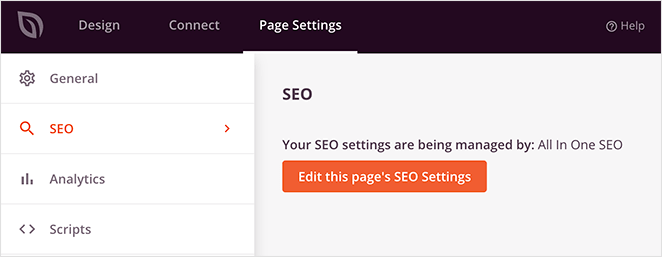
Under SEO and Analytics, set your search details and connect tracking with plugins like All in One SEO and MonsterInsights. The Scripts section is where custom header, body, and footer scripts go, like a Facebook tracking pixel.
8. Check Your Page Is Mobile Friendly
Before you publish, make sure the page looks right on a phone. This matters more for app landing pages than almost any other kind, because most app discovery happens on mobile in the first place.
A fast, mobile-first page is also what keeps people from bouncing before the download button loads. To preview the mobile view in SeedProd, click the phone icon in the bottom right of the editor.
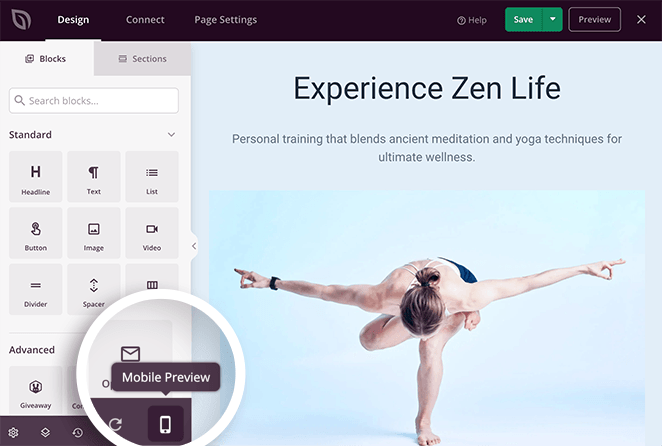
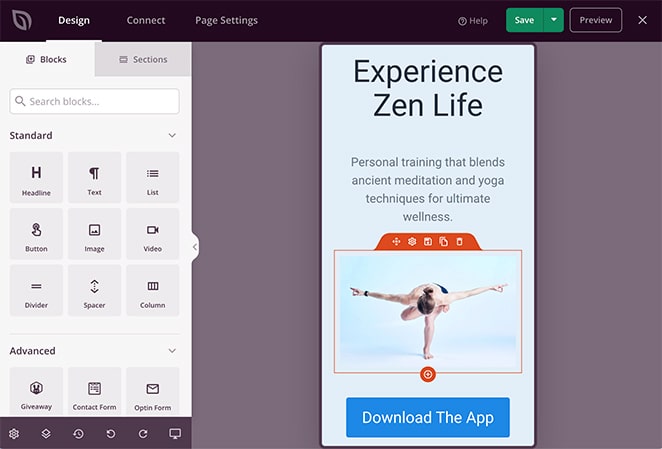
The preview switches from desktop to mobile, and you can scroll through and make changes the same way. Anything you adjust applies to both views automatically. For more on this, see SeedProd’s guide to making your site mobile-friendly.
9. Publish Your App Landing Page in WordPress
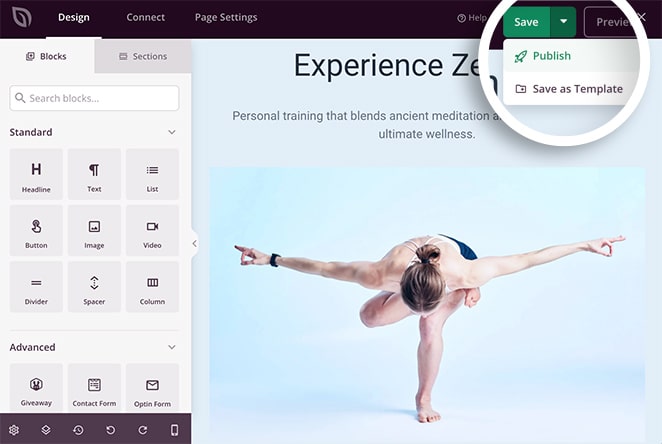
Once the page looks good on mobile, you’re ready to go live. Click the down arrow next to the green Save button and select Publish.
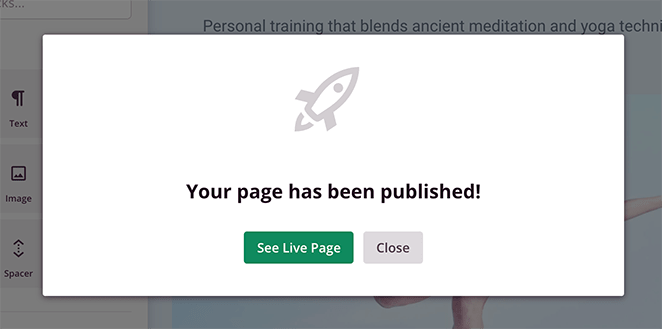
A popup confirms the page is published. Click See Live Page to view it.
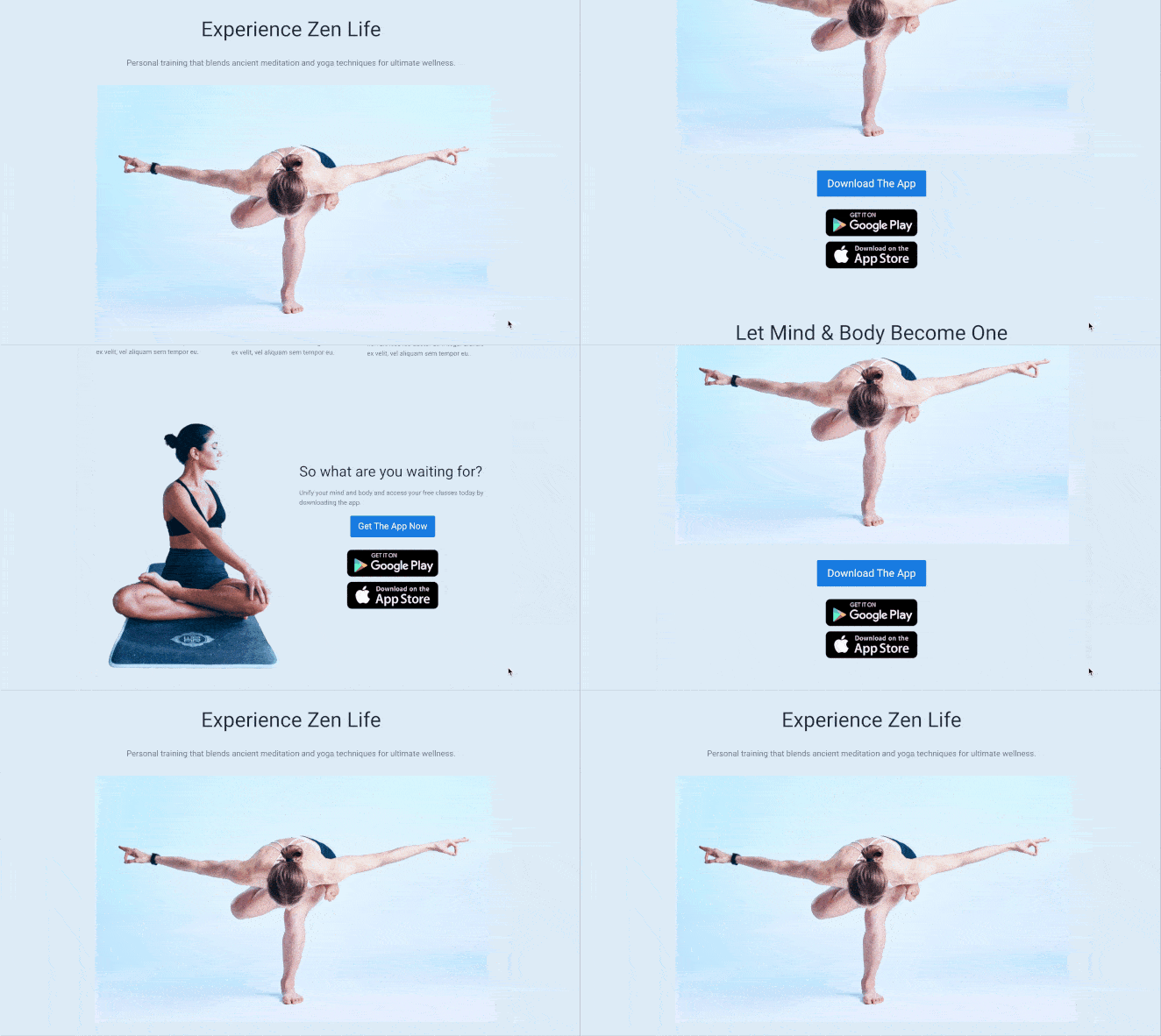
Ready to build yours?
Get your app landing page live in minutes, no code
You’ve seen the steps and the elements that convert. SeedProd’s drag-and-drop builder and mobile templates let you put them together and publish today.
I want to build my pageWhat to Do After You Publish
Publishing is the start, not the finish. The page only earns its keep once it’s driving downloads or collecting signups, so a couple of follow-up moves matter.
- Test your CTA: try different button text and placement and watch which gets more taps.
- Use the email list as a launch list: if you ran a pre-launch page, email those subscribers the moment the app goes live.
- Send traffic to it: point your ads, social posts, and press at the page, not straight at the app store, so you keep the lead and the data.
Build It Faster With AI (Bonus)
Once you’ve built a page the standard way, there’s a faster route worth knowing about. The nine steps above are still the main path, and they’re the ones I’d start with. This is a bonus on top of them.
SeedProd’s own AI site builder can rough out a starting layout for you inside the editor, which helps when you’re staring at a blank page. Treat that output as a draft to refine, not a finished page.
The bigger shortcut is to skip the dashboard and talk to your WordPress site directly. That’s what WPVibe does, and it’s made by the same team behind SeedProd.
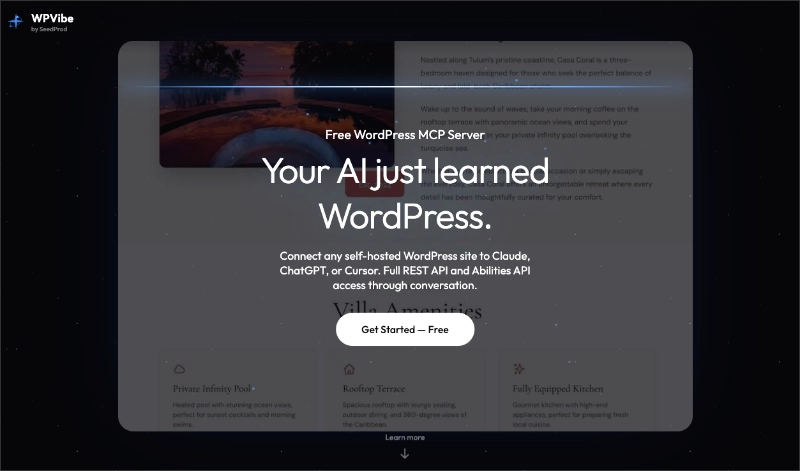
WPVibe connects your WordPress site to an AI assistant like Claude or ChatGPT, so you can manage the site through conversation. Instead of clicking around wp-admin, you describe what you want and the AI does it.
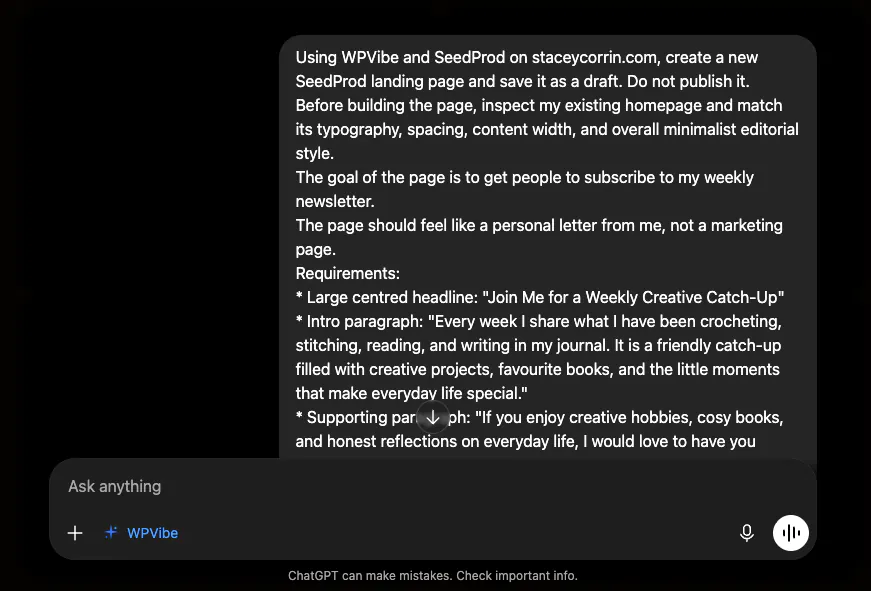
It can create and edit posts and pages, upload images, and even build a classic theme for you. It’s not a separate page builder, it’s a layer that lets your AI tool read and change a site you already own.
Two things make it safe to try on a real site. New posts save as drafts so nothing goes live without your say-so, and theme changes happen in a sandbox you preview on a private link before you publish.
How to Build an App Landing Page With AI
The exact wording you’d type into a builder isn’t set in stone, so think of this as the shape of the flow rather than fixed buttons to press. Here’s how I’d approach it once your standard page exists.
- Install the free Vibe AI plugin: add it from WordPress.org, the same way you installed SeedProd.
- Connect your AI client: paste the WPVibe server URL into Claude, ChatGPT, or Cursor, then authorize your site with one click.
- Describe the page you want: tell the AI you’re building an app landing page, and give it the five elements from earlier, a benefit headline, one download CTA, short body copy, social proof, and screenshots.
- Hand it your real content: paste your app’s pitch, your App Store and Google Play links, and any review quotes, so it works from your words, not placeholder text.
- Review the draft and refine: check what it produced, then ask for changes in plain language until the page does its one job.
Used this way, the AI handles the busywork while you keep control of the message and the final call to publish. The standard SeedProd build is still the reliable route, this is just the faster one once you know what a good app page needs.
FAQs About App Landing Pages
What is the best app landing page builder for beginners?
For a beginner, SeedProd is the one I’d point you to. It’s a drag-and-drop website builder, so there’s no code, and it comes with mobile templates made for landing pages.
You can build a basic page on the free version, then upgrade when you need more templates or lead-gen blocks.
Do I need a landing page if my app is already in the App Store?
Yes. App store listings are locked into a fixed layout, so you can’t control your messaging or branding the way you’d like.
A landing page on your own site lets you collect emails, run your own analytics, and add reviews for trust, then send people to the store to download.
Should I use video on my app landing page?
A short video can show how your app works far faster than text, and it keeps people on the page longer.
Just make sure it loads quickly and looks good on mobile, since a heavy video can slow the page and cost you downloads.
How much does it cost to build an app landing page?
You can build a basic app landing page for free with SeedProd Lite, with no developer needed.
Paid plans unlock the full template library, the lead-generating blocks, and email integrations. So your cost depends on how much design and list-building you want, not on hiring anyone.
Get Started With SeedProd Today
You now have a page that explains your app and points everything at the download, without writing a line of code. That’s the whole point of an app landing page.
Get started with SeedProd and build yours with drag-and-drop blocks and mobile templates.
If you liked this article, then please follow us on Twitter and Facebook for more useful content to help grow your business.