
TL;DR: Startup Landing Page Examples
The best startup landing pages focus on one idea and one action, rather than trying to be a full website.
- Keep one goal: every element should drive toward a single CTA (email signup, free trial, or waitlist)
- Lead with the problem: open with what you solve, not what you built
- Use social proof early: one client logo or testimonial builds instant credibility
- Show the product: screenshots, demos, or video convert better than text alone
- Test your headline first: your copy is the highest-leverage element to A/B test
- Build with SeedProd: launch a WordPress startup landing page in under an hour with drag-and-drop blocks
Most founders spend days building their startup landing page and still get zero signups. The product isn’t the problem. The page never answered the one question every visitor came to have answered: “is this actually for me?”
Most landing page articles show you what looks good in a screenshot. This one shows you what actually drives signups. Here are 9 startup landing page examples worth learning from, plus the elements your page needs to work.
Jump to the startup landing page examples:
- What Is a Startup Landing Page?
- How to Build a Startup Landing Page
- 9 Startup Landing Page Examples
- 1. SurveyAuto: How to Build Trust Before Asking for a Signup
- 2. Streem: How to Lead with Video Without Losing the CTA
- 3. Wheels: How to Make Visitors Imagine Using Your Product
- 4. NutSpace: How to Capture Leads Without Friction
- 5. CoachHub: How to Address Objections in Your Hero Section
- 6. Pleo: How to Collect Email Addresses at Multiple Decision Points
- 7. Meatable: How Mission-Driven Brands Use Emotional Copywriting
- 8. NeuroFlow: How to Use Statistics as a Conversion Signal
- 9. Mythical Games: How to Launch with Nothing but a Headline and a CTA
- More Startup Landing Page Examples
- FAQs About Startup Landing Pages
What Is a Startup Landing Page?
A startup landing page is the first place you send people to validate your idea, collect leads, and drive early conversions. It’s a single, focused page that explains your product or service and often doubles as the homepage when you don’t have a full website yet.
Most startup landing pages fall into two categories:
- Lead capture page: Designed to collect emails or signups with a form so you can follow up later. See how to make a lead capture page here.
- Click-through page: Warms up visitors and pushes them to a next step like checkout or account creation so they can convert immediately.
The main benefit of a startup landing page is speed. You can validate your idea, capture leads, and test messaging without paying for a full website. It’s a low-risk way to see if people care about your product before you invest heavily in a full site.
Slack is a perfect example. In the early days, it launched with just a single pre-launch page.
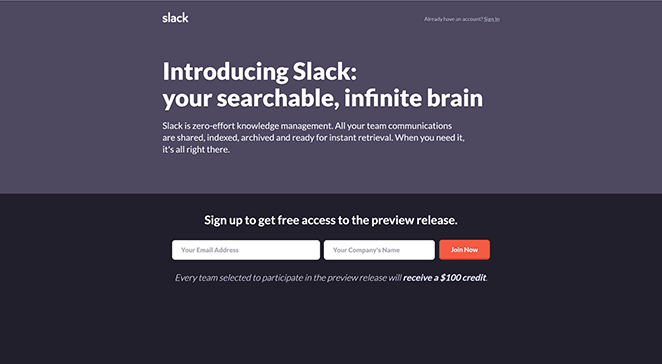
That page let Slack test its message, measure demand, and collect leads for its beta launch. Only after proving the concept did they invest in a full website.
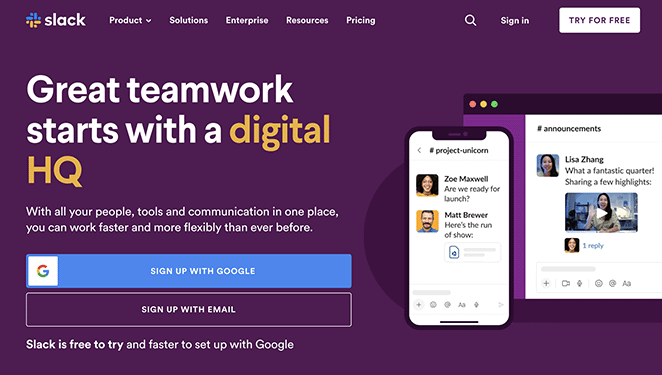
That’s the power of a waitlist page or beta launch page like this. You can test offers, run split tests, and build buzz before you have a complete site.
How to Build a Startup Landing Page
Every startup landing page that converts well covers the same five elements. Get these right and the design details matter a lot less.
- Headline: One clear promise in 10 words or fewer. “Video messaging for async teams” beats “The platform built for modern work.”
- Social proof: One logo strip or testimonial within the first scroll answers the “can I trust this?” question before you ask visitors to act.
- CTA: One button, one action, above the fold. Give visitors three CTAs in the same place and they’ll often choose none.
- Product visual: A screenshot, GIF, or short video showing the product in use converts better than three paragraphs describing it.
- Mobile layout: More than half of startup landing page visitors are on their phones. Test on a real device before you publish.
One of the best ways to build a startup landing page in WordPress is with SeedProd, a drag-and-drop website builder that has pre-built blocks for every element on this list.
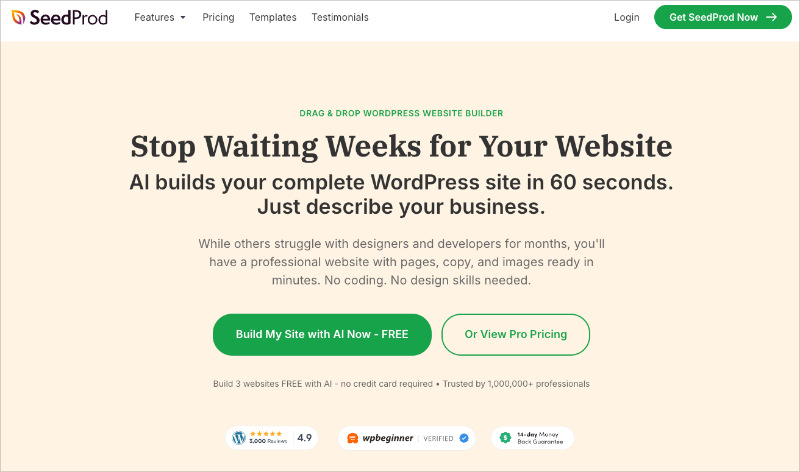
SeedProd is a WordPress website builder that lets you create visually appealing web pages without code. It comes with hundreds of high-quality landing page templates, and you can customize each design with its drag-and-drop editor.
The visual editor has all the building blocks needed to increase conversion rates, including:
- Lead capture forms
- Call to action (CTA) buttons
- Image galleries
- Pricing tables
- Social media
- Reviews and testimonials
- Accordions
- And more
You can also use its page modes to create a coming soon page for your startup, put your website in maintenance mode, or create a login and 404 page.
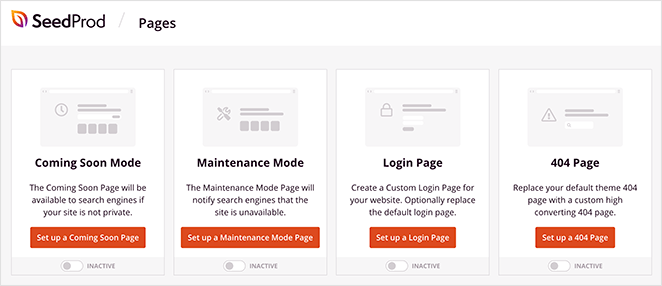
Here’s a step-by-step guide on creating a landing page with SeedProd for your startup. It’s also worth checking out this guide on the anatomy of a landing page to make sure you cover the essential elements.
9 Startup Landing Page Examples
Need some inspiration before you start building? Here are 9 startup landing page examples that show different conversion techniques in action.
1. SurveyAuto: How to Build Trust Before Asking for a Signup
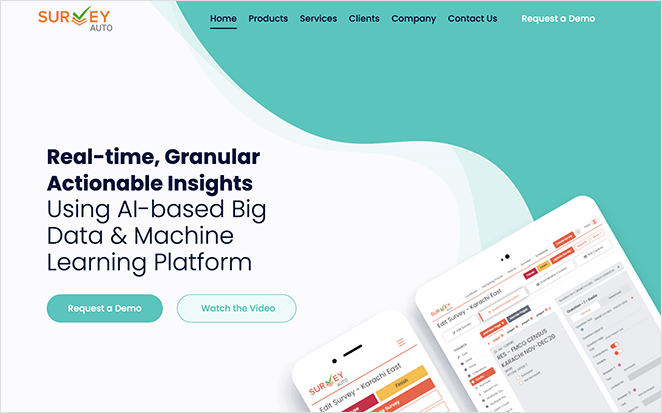
SurveyAuto’s startup landing page is clean, engaging, and shows visitors crucial information about the business. The page has individual sections to separate content and uses imagery to hold your attention.
Why it converts:
- The client logo carousel appears before the first CTA, so visitors have a trust signal before they are asked to act
- The product video answers the “but how does it actually work?” objection without requiring a demo call
- A free trial removes the need to evaluate pricing before signing up, which cuts the friction between interest and conversion
2. Streem: How to Lead with Video Without Losing the CTA
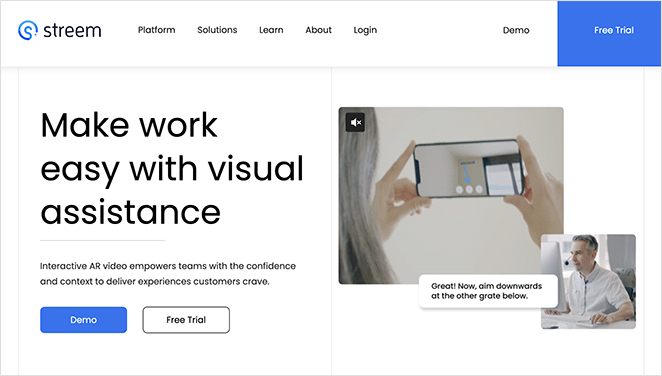
Streem has a minimalist startup landing page that uses white space and color contrast to direct attention. The top of the page features a video to demonstrate the product, while the rest of the page goes into more detail.
Why it converts:
- The product video in the hero section answers “what does this do?” before the visitor has to scroll
- Benefits-driven feature copy names the pain point each feature solves, not just the feature itself
- Multiple CTAs appear at different scroll depths, so visitors can act whenever they’re ready
3. Wheels: How to Make Visitors Imagine Using Your Product
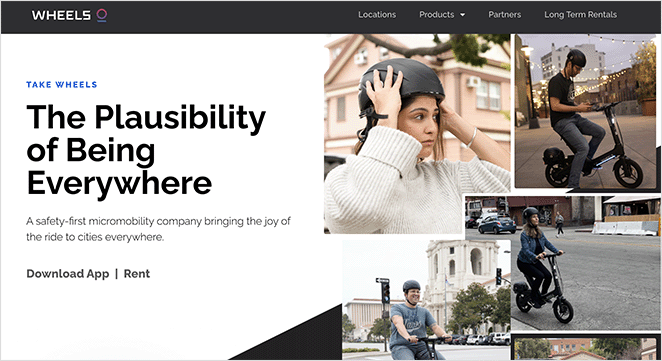
This landing page example from Wheels uses visual content to help users imagine using the product. A combination of high-quality images and animations brings the page to life, prompting visitors to learn more.
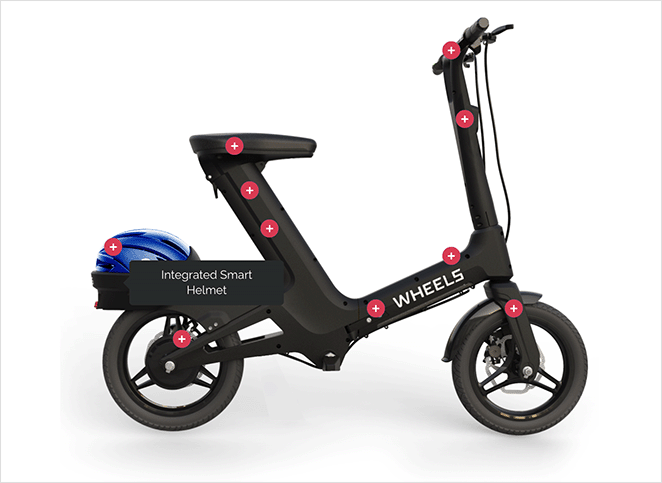
Why it converts:
- Official statistics appear alongside product claims, giving the page credibility before the visitor decides whether to trust the brand
- The interactive product demo lets visitors explore features at their own pace, which reduces the need for a sales call
- App download links at the bottom remove the friction between “interested” and “installed”
4. NutSpace: How to Capture Leads Without Friction
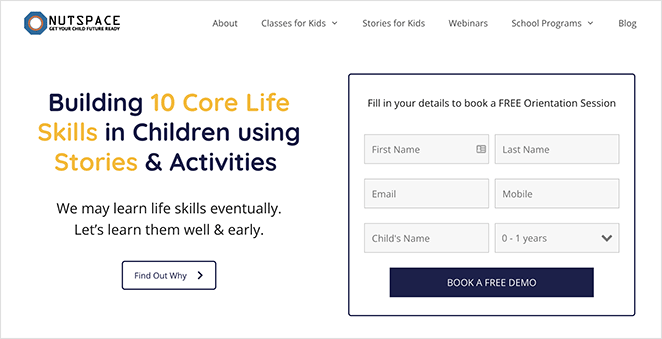
NutSpace has a colorful product launch page for its startup, which makes sense given that its products focus on children. The page uses popular digital marketing strategies to capture attention and guide users. It also allows visitors to book a free session right away.
Why it converts:
- The lead capture form asks only for an email address, removing the friction that comes from long forms with multiple fields
- Direct-from-page product purchases cut the number of steps between interest and sale
- The newsletter form at the bottom catches visitors who weren’t ready to buy but are willing to stay in touch
5. CoachHub: How to Address Objections in Your Hero Section
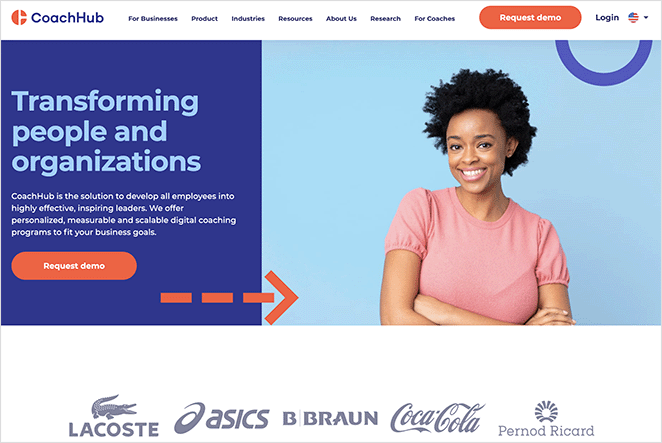
CoachHub offers another example of a well-structured SaaS startup landing page. Like the other pages in this post, it has clear page sections and uses visual content to explain the details of its product.
Why it converts:
- Client logos from recognizable brands appear early in the page, giving hesitant visitors a reason to trust before they explore further
- The explicit focus on data safety addresses a common objection for HR software buyers before they have a chance to bounce
- Simple animations draw attention down the page without requiring video bandwidth or slowing load times
6. Pleo: How to Collect Email Addresses at Multiple Decision Points
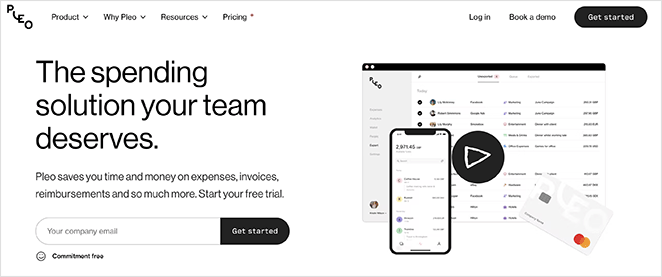
Pleo’s startup landing page has a monochrome design and a modern layout. Visitors get a solid overview of the software as they scroll down the page with high-quality graphics, animations, and videos.
Why it converts:
- The email-only signup form removes every barrier except intent, which qualifies leads before they enter the funnel
- Video testimonials add a layer of social proof that text testimonials can’t match because they’re harder to fake
- Multiple signup forms appear at different scroll depths, so the CTA is visible regardless of where a visitor decides to act
7. Meatable: How Mission-Driven Brands Use Emotional Copywriting
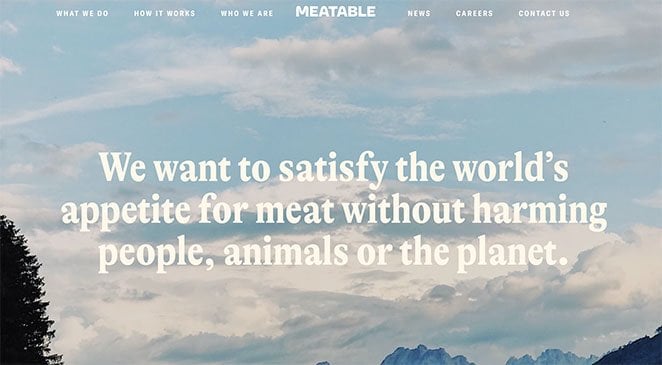
Meatable offers sustainable meat production, and this startup landing page demonstrates its values perfectly. The page takes you on a visual journey and uses emotional copywriting to help visitors imagine a more sustainable future.
Why it converts:
- Bold mission-driven headlines establish what the company stands for before explaining what they sell, which filters for aligned visitors immediately
- Co-founder profiles humanize the brand, which matters when the product’s credibility is tied to the people behind it
- Links to press coverage give skeptical visitors a way to verify the company’s legitimacy without leaving the page
8. NeuroFlow: How to Use Statistics as a Conversion Signal
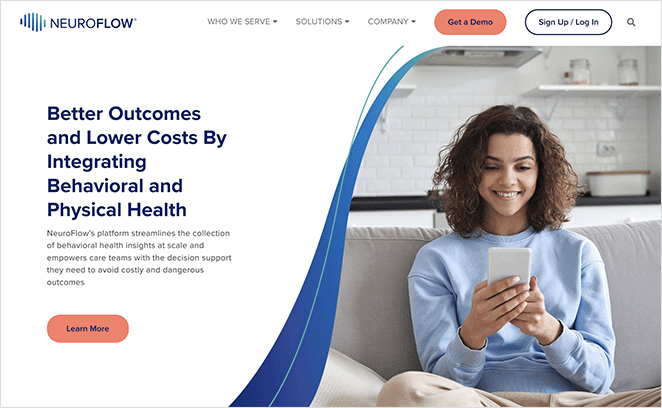
NeuroFlow’s startup landing page design is simple, effective, and easy to navigate. The layout is minimal, with clear sections that highlight product features in a way that’s benefit-driven.
Why it converts:
- Statistics appear alongside the feature copy, which gives the benefit claims something concrete to lean on rather than asking visitors to take the company’s word for it
- Minimal lead capture form fields reduce the decision cost for busy healthcare professionals evaluating the product
- Multiple CTAs give visitors different entry points depending on how far along they are in evaluating the product
9. Mythical Games: How to Launch with Nothing but a Headline and a CTA
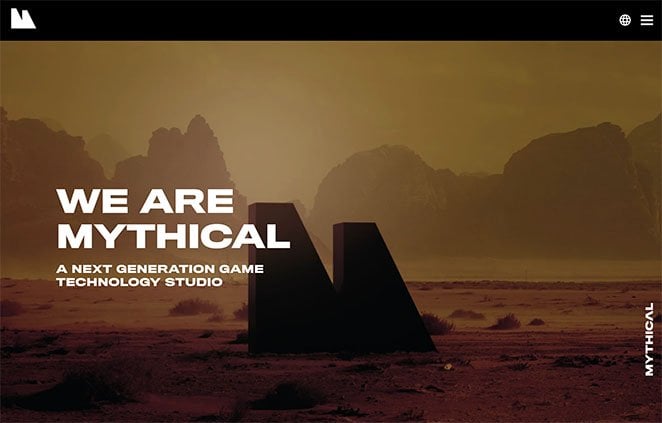
The final startup landing page example comes from Mythical Games, a next-generation game technology company. It’s a minimal pre-launch page design, but successful startup pages don’t need fancy bells and whistles to make an impact. You can get your message across effectively with even the simplest landing page elements.
Why it converts:
- The hero headline communicates the brand’s entire identity in one line, so visitors know immediately if this is for them
- Media endorsements from recognizable outlets provide third-party credibility without requiring a dedicated review section
- Social media links at the bottom let interested visitors connect on their preferred platform without navigating away from the page
More Startup Landing Page Examples
The 9 examples above cover the core conversion techniques. Here are 6 more startup landing pages worth studying, each one demonstrating a specific approach to a different conversion challenge.
Linear
Linear’s landing page leads with the product interface rather than a headline about productivity. If you’re building for developers or designers, showing the tool immediately reduces the “what does this actually look like?” barrier before any sales copy has to do that work.
Loom
Loom embeds a product demo video directly on the landing page, which closes the gap between “I wonder what this does” and “I want to try it.” It’s one of the clearest examples of using video as the primary conversion element rather than a supporting one.
Superhuman
Superhuman’s original waitlist page was minimal by design: one headline, one CTA, and a request form. The invitation-only framing made getting access feel like something worth pursuing, which drove word-of-mouth before the product had a single public user.
Raycast
Raycast’s landing page shows the command launcher in action within the first second. For a product that’s genuinely hard to describe in words, letting the interface demonstrate itself is a smarter approach than writing copy about it.
Arc Browser
Arc’s landing page leans into the feeling of something new rather than listing browser features. The hero section uses motion and personality to signal that this browser thinks differently, which is the emotional trigger it needs to earn a download from someone who wasn’t looking for a new browser.
Perplexity
Perplexity’s landing page is essentially a working version of the product. Visitors can ask a question before they sign up, which removes the biggest barrier to adoption: not knowing what AI search actually feels like until you’ve tried it.
FAQs About Startup Landing Pages
What should a startup landing page include?
A startup landing page needs five core elements: a headline that makes one clear promise in 10 words or fewer, social proof (one logo strip or testimonial) within the first scroll, a single CTA above the fold, a product visual showing the product in use, and a mobile layout tested on a real device. Start with these before worrying about design. A page that covers all five will outperform a beautiful page missing any one of them.
What is the difference between a startup landing page and a website?
A startup landing page has one goal and one CTA. A website has navigation, multiple pages, and serves multiple audiences at once. The difference isn’t size but focus. A landing page strips out everything that isn’t directly related to getting one specific action from a specific type of visitor. Most early-stage startups don’t need a website yet. They need a landing page that validates demand and captures leads before they invest in building the full site.
How long should a startup landing page be?
As long as it takes to answer the visitor’s main objection, and no longer. For a simple waitlist or pre-launch page, one screen is often enough. For a SaaS product with a monthly fee, you’ll typically need enough space to cover the problem, the solution, social proof, and pricing. A good rule: if you can’t explain why a section needs to be there, cut it. Shorter pages with clear CTAs tend to convert better than long pages that try to cover every possible question.
Next Steps
Your startup landing page is the fastest way to test whether people want what you are building. Use the examples in this post as inspiration for your own.
When you’re ready to build, SeedProd gives you every element from this post in a drag-and-drop WordPress builder. You can launch a complete startup landing page in under an hour using templates designed to convert from day one.
You might also like this post on creating a landing page with a countdown timer to add urgency to your page.
Thanks for reading! We’d love to hear your thoughts, so please feel free to join the conversation on YouTube, X and Facebook for more helpful advice and content to grow your business.