
I used to think landing pages and microsites were basically the same thing. But once I started building out campaigns, I realized they work in very different ways, and choosing the wrong one can hurt your results.
In this guide, I’ll walk you through the real difference between a landing page vs microsite, share examples, and help you figure out which one fits your goals best.
- What Is a Microsite (And Why Use One)?
- What Is a Landing Page (And How It Works)?
- Landing Page vs Microsite: What's the Difference?
- Strengths and Weaknesses of a Microsite
- Strengths and Weaknesses of a Landing Page
- Landing Page vs Microsite: Which One Should You Use?
- How I Build Landing Pages and Microsites with SeedProd
- Landing Page vs Microsite FAQs
| Feature | Landing Page | Microsite |
|---|---|---|
| Number of Pages | Single page | 2 to 5+ pages |
| Main Goal | Get visitors to take one action | Explore a topic or campaign in more depth |
| Best For | Ads, signups, promotions | Awareness campaigns, events, niche topics |
| SEO Potential | Limited | Better, more content and structure |
| Setup Time | Fast and simple | Slower, more planning needed |
| Hosting | Usually part of main site | Often has its own domain |
| Focus | Conversion-focused | Informational or exploratory |
What Is a Microsite (And Why Use One)?
A microsite is a small website of two or three pages built for one specific purpose, like promoting a product, campaign, or topic. It sits separate from your main company website and usually has its own web address so it can focus on a single message.
Why Use a Microsite Instead of a Full Website?
Companies build microsites to reach a specific audience, share focused content, or test new ideas away from their main site. Most are temporary and expire once the campaign ends.
For instance, you can use a microsite to:
- Target a specific audience in search engines with a new message
- Countdown to a specific product launch
- Test campaign ideas, additional domains, and marketing messages
- Educate your audience on a particular topic
- Spark interest in an upcoming event
The famous “Elf Yourself” campaign is a good one to look at. During the holidays it runs as a microsite you can play with, and the rest of the year it shows a coming soon page like this:

I picked this example for a reason. It shows the one thing microsites do that a single landing page can’t, which is switch into seasonal or coming-soon mode and live on its own schedule.
That seasonal on-off pattern is exactly the kind of thing a coming soon page handles, and it’s the angle I lean on most when I build campaign sites in SeedProd.
What Is a Landing Page (And How It Works)?
A landing page is a single web page built for marketing. It’s the first page people see after clicking a link like an ad, and its job is to get visitors to take one specific action.
What Can You Do with a Landing Page?
A landing page keeps visitors focused on a single offer, which makes it easier to turn them into customers or leads. You’d reach for one when you have one clear action in mind.
For instance, you can use a landing page to:
- Promote free downloads to grow your email list
- Advertise ecommerce flash sales with an urgent call-to-action (CTA)
- Encourage visitors to register for a webinar or event
- Convince users to sign up for a free trial or demo
- Promote a new product or service
- Market a giveaway or contest
Here’s a landing page from OptinMonster. They use it to promote one product feature for their PPC ad campaign.
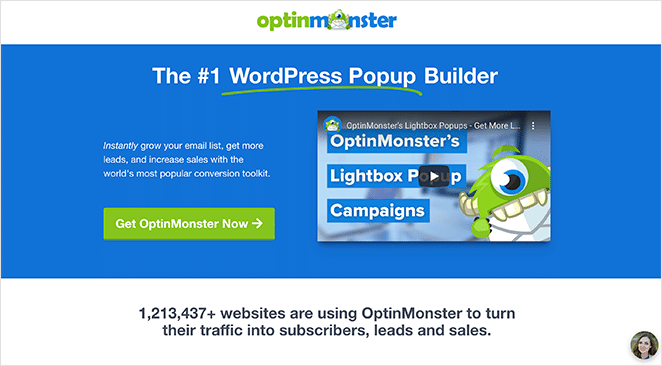
As you can see, it has a single page, no navigation, and one strong call-to-action.
Landing Page vs Microsite: What’s the Difference?
The main difference between landing pages and microsites is their focus and size.
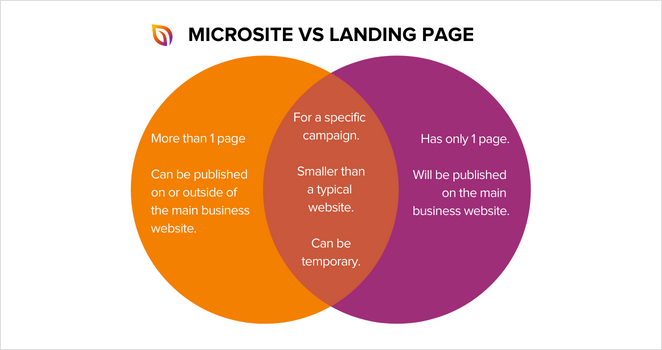
A landing page is a single page designed to get visitors to take one quick action, like signing up or buying. A microsite is a small website with multiple pages built to explore a topic or campaign in more depth.
Both present targeted content for a specific marketing goal. The difference is how much room they give you to do it.
Strengths and Weaknesses of a Microsite
A microsite sits on a fine line between educating an audience and lead generation. It has a homepage like a full website and can live on a different domain to your main site.
Because a microsite has multiple pages, you can run search engine optimization (SEO) on it to attract organic traffic.
| Feature | Strength | Weakness |
|---|---|---|
| Content | More informative; can host more than a landing page | Can be less focused on conversions |
| Engagement | Richer, more entertaining user experience | Distracting elements like external links and multiple CTAs |
| SEO | Can be optimized for organic search traffic | More complex and time-consuming to set up |
| Cost | — | Can require an extra domain and higher maintenance |
| Conversion | Can hold multiple calls-to-action | Competing elements and length can lower conversions |
The SEO Trade-Off Most Guides Skip
Microsites have real SEO potential, but a separate domain comes with a catch worth naming. A brand-new domain starts its authority from zero and splits link equity away from your main site.
That’s why many teams now build the microsite on a subdomain or subfolder of the main site instead of a fresh domain. You keep the focused campaign experience without throwing away the authority you’ve already earned.
Here’s the part I only learned by building both. A microsite can look better than a landing page and still convert worse, because every extra page and link is another exit the visitor can take before they act.
Microsites can also be costly to maintain, since you may need to buy an extra domain and they take longer to set up and optimize.
Strengths and Weaknesses of a Landing Page
Landing pages convert your visitors into leads and customers. Unlike a microsite, they put persuasive design first and entertainment second.
Brands use them to deliver facts, testimonials, and figures in the briefest way possible to get one action.
| Feature | Strength | Weakness |
|---|---|---|
| Focus | Persuasive design built around one conversion | Less engaging than a microsite |
| Content | Concise delivery of facts and proof | Less information than a microsite |
| Bounce Rate | Brevity can help keep bounce rates low | — |
| SEO | Drives traffic to a specific URL | One page limits topical depth |
| Tracking | Easy to track with UTM tags and short-links | — |
| Development | Easier and faster to create than a microsite | — |
Take this ebook landing page example from Taboola:
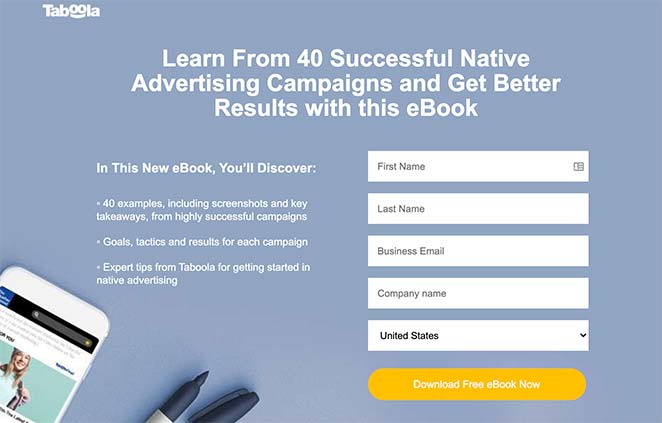
The page is likely great at converting, but it isn’t entertaining. There are no cool transition effects or videos.
It tells you why you should download the ebook and does it quickly. That brevity is part of why landing pages can keep bounce rates low.
Landing pages also help with SEO by driving traffic to a specific URL, and they make tracking easy with UTM tags and short-link services. The trade-off is that one page offers less to a visitor than a full microsite.
Landing Page vs Microsite: Which One Should You Use?
If you’re still torn, the choice usually comes down to four questions. Run through them and the answer tends to pick itself.
- What’s the goal: one clear action points to a landing page. Exploring or explaining a topic across a few pages points to a microsite.
- What’s your timeline: a landing page can go live in an afternoon. A microsite needs days of planning and more pages to write.
- What’s your budget: a landing page usually lives on your main site for free. A microsite on a separate domain adds registration and ongoing maintenance costs.
- Who’s doing the work: a landing page is a one-person job. A microsite often needs more hands for content, design, and upkeep.
The two simple rules still hold underneath all of that:
- Use a landing page when you want someone to take one clear action, like signing up, downloading, or buying.
- Use a microsite when you need to explain a campaign, tell a story, or share several types of content across multiple pages.
There’s no wrong choice. It just depends on what you want your visitors to do, and I’ve used both enough to know they each shine in different situations.
If you want to start right now, pick the one that matches your single most important goal this month. Chasing one signup or sale means a landing page. Educating people before they’re ready to buy means a microsite.
Made your call?
Build the one that wins, without touching code
SeedProd builds both landing pages and full microsites with the same drag-and-drop editor and 300+ templates. Skip the comparison and start building the one your campaign actually needs.
I want to build mineCan You Use Both Together?
Yes, and this is the part most “which is better” articles miss. The two work well as a pair, not just as an either-or choice.
A common modern setup is to use a microsite to attract and educate people through organic search, then route the visitors who are ready to act to a focused conversion landing page. The microsite does the teaching. The landing page closes.
So if you can’t decide, you may not have to. Think of the microsite as the top of the journey and the landing page as the finish line.
How I Build Landing Pages and Microsites with SeedProd
If you’re setting up either one, you don’t need to hire a developer or touch a line of code. I build mine with SeedProd, a drag-and-drop WordPress website builder, and it’s the fastest path I’ve found from blank screen to a live page.

To see how fast the landing-page side can go, I recreated an existing site as a one-page website in SeedProd. The whole single-page layout came together inside the builder without touching the active theme.
That’s the landing-page end of this comparison, a one-page site rather than a multi-page microsite. The same editor handles the microsite side too, just with more pages.
SeedProd comes with full website kits and landing page templates you customize using drag-and-drop blocks, and it works with any WordPress theme. It also handles email integrations and subscriber management, with custom domain mapping available on its Elite plan if your microsite needs its own address.
Whether you’re promoting a product, testing a campaign, or collecting signups, you can build something that looks good and works hard for your business without extra tools.
Landing Page vs Microsite FAQs
Is a microsite better than a landing page for SEO?
A microsite usually has more SEO potential because it holds more pages and content for search engines to index. A landing page only ranks for the narrow topic of its single URL.
That said, a microsite on a brand-new domain starts from zero authority, so the SEO edge isn’t automatic. Building it on a subdomain or subfolder protects your existing rankings.
Can a microsite hurt your main site’s SEO?
A microsite on its own separate domain can split link equity away from your main site and force you to build authority twice. It rarely hurts your main site directly, but it can dilute your overall SEO effort.
Hosting the microsite on a subdomain or subfolder of your main site avoids most of that risk while keeping the focused campaign experience.
How much does a microsite cost compared to a landing page?
A landing page is usually free to run because it lives on your existing website and uses hosting you already pay for. A microsite on a separate domain adds domain registration plus ongoing maintenance for the extra pages.
If budget is tight, a landing page or a subfolder microsite keeps your costs flat while you test the campaign.
Can you build a microsite and a landing page on the same WordPress site?
Yes. You can build a focused landing page and a multi-page microsite on the same WordPress install, often inside the same builder. A common setup uses the microsite as a subfolder and the landing page as a standalone URL.
Keeping both on one site means one place to manage hosting, design, and tracking.
Build Your Next Campaign in WordPress
Once you know whether you want one focused action or a few pages of story, the build is the easy part. Pick the format that matches your goal and you’ll spend your time on the message, not the setup.
You might also like these other helpful guides:
- What Is a Dynamic Landing Page (+ How to Make One in WordPress)
- Landing Page vs. Website: What’s The Difference?
- What Is a Splash Page + 9 Steps to Create Your Own
- Landing Page vs Sales Page: Which One is Right for You?
Thanks for reading! We’d love to hear your thoughts, so please feel free to join the conversation on YouTube, X and Facebook for more helpful advice and content to grow your business.