

TL;DR:
You can embed video in WordPress in minutes. Paste a URL in the block editor, and it’s live.
- Block editor: paste URL from YouTube or Vimeo, WordPress auto-embeds it
- SeedProd: drag the video block onto any page, landing page, or theme template
- iFrame: copy embed code from YouTube’s Share button, paste into a Custom HTML block
- Video plugin: use Smash Balloon YouTube Feed Pro for a YouTube channel gallery
- Facebook video: paste the URL into SeedProd’s Facebook block, since WordPress can’t auto-embed Facebook anymore
- Performance: always use lazy loading or a custom thumbnail to prevent the video player from slowing your page
Whenever I build a high-converting landing page, my first thought is almost always about including a video. It’s the fastest way to build trust, but only if it plays smoothly for the user.
Most tutorials show you how to paste a URL and call it done. What they skip is why your video might be tanking your page speed, and what to do instead.
When you know the steps, embedding video in WordPress takes under two minutes. In this guide, I’ll walk you through every method I use, including how to keep your pages fast after you do it.
Why Add Videos to Your WordPress Site?
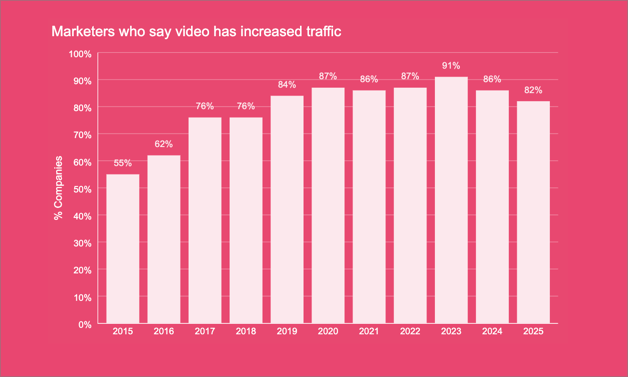
82% of video marketers report increased web traffic after adding video to their content. That’s a big reason to start using video on your WordPress site.
Adding high-quality videos can help your WordPress SEO and make it easier for people to find you.
Should I Upload Videos Directly to WordPress?
It’s better to embed videos from platforms like YouTube or Vimeo than upload them directly to WordPress.
While you can upload videos to your Media Library, I don’t recommend it.
At SeedProd, we always embed videos instead, and here’s why:
- Large file sizes: Videos take up a lot of storage and can slow your site, hurting user experience and SEO.
- High bandwidth use: Streaming video uses significant server resources. If your hosting plan has limits, you could hit them fast and face extra costs.
- Extra traffic opportunities: Uploading to platforms like YouTube or Vimeo lets you reach their audiences and send more visitors to your site.
Embedding or using a WordPress video plugin is the most efficient way to keep your site fast and accessible while growing your reach.
Where to Host Your Video Before Embedding
Before you can embed a video, it needs to live somewhere. Here are the three most common options.
| Platform | Cost | Best For | Trade-off |
|---|---|---|---|
| YouTube | Free | Discovery, public-facing content | Shows related videos at end, and can’t remove branding on the free plan |
| Vimeo | Free tier, paid plans from $12/mo (billed annually) | Sales pages, professional video | No competitor videos, but a paid plan is needed for business features |
| Self-hosted with CDN | Varies (hosting + CDN costs) | Gated or premium video content | Full control, but higher cost and more setup |
For most sites, YouTube is the right call: free, fast, and great for discovery. If you’re using video for sales pages or want no competitor ads at the end, Vimeo’s paid plan is worth it.
How to Embed Video in WordPress: 4 Ways
There are several ways to embed a video in WordPress. Below, I’ll share the methods I use most, from the simplest paste-and-go approach to the iFrame method for non-standard platforms.
Method 1: Embed a Video in WordPress Posts and Pages (Block Editor Method)
The WordPress Block Editor, or Gutenberg, provides a straightforward way to embed videos into your WordPress posts and pages.
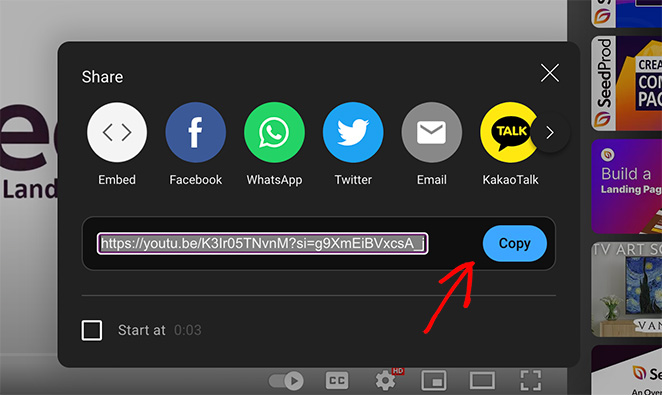
First, you’ll need the video URL you want to embed. On a platform like YouTube, go to the video and copy the URL from the address bar.
You can also click the share icon and copy the video URL from there.
Next, navigate to the post or page where you want to add the video and click “Edit” to open the WordPress Block Editor.
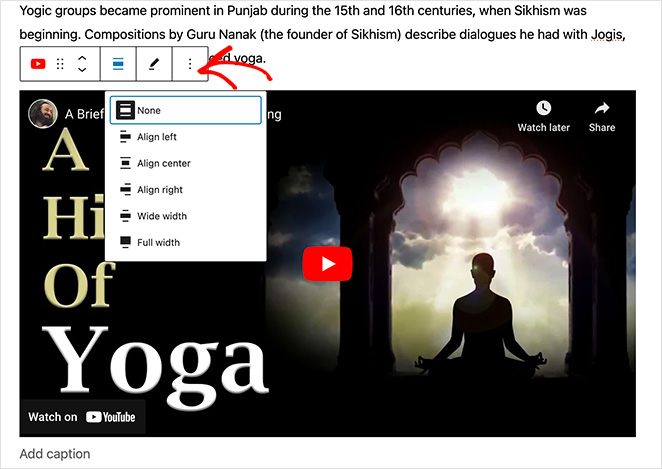
Click anywhere inside the WordPress block editor and paste the URL you copied earlier. Once you paste the video URL, WordPress will automatically fetch the embed code and display the video inside the content editor.

Next, you can customize the video by clicking the options in the popup toolbar. For example, you can change the video width, alignment, captions, aspect ratio, and more.
WordPress can only auto-embed white-listed platforms, including:
- YouTube
- Vimeo
- TikTok
- Dailymotion
- SoundCloud
- Spotify
- Reddit, Imgur, and more.
One thing that trips people up: Facebook and Instagram used to be on this list, but pasting their links stopped working in 2020 when Facebook closed the connection WordPress used. I cover the Facebook video workaround further down.
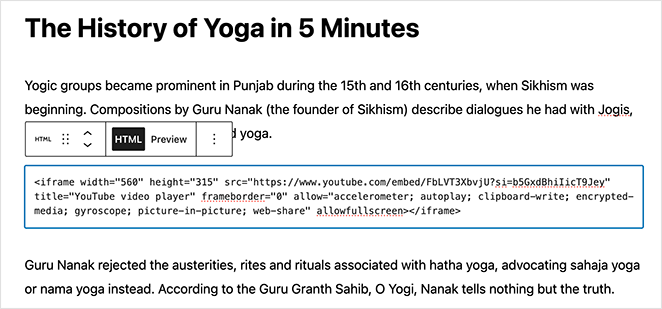
To embed video from a site that isn’t auto-detected, you copy and paste the video’s full HTML code instead. Add a Custom HTML block and paste the embed code in there.
The final task is to save and publish your post or page to make the video live.

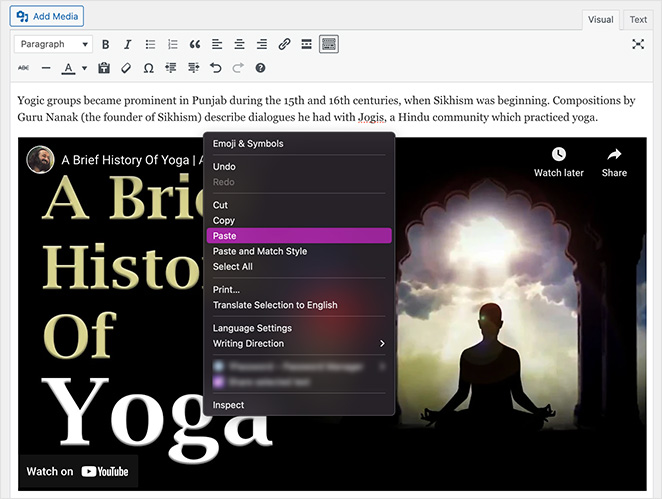
If you’re still using the classic editor, you can copy the URL of the video and paste it directly into the WordPress editor. Like before, the video will automatically load.
Method 2: Add Video Anywhere on Your WordPress Site with SeedProd
If you’re looking for a more customized approach to embed video in WordPress, SeedProd offers a simple yet powerful solution.

SeedProd is a drag-and-drop website builder that lets you add video to any part of your site: landing pages, theme templates, sidebars, without touching code.
First, you’ll need to install and activate the SeedProd plugin.
For help with this, you can see our documentation on installing SeedProd. It will explain how to download, install, and activate the plugin and your license key.
Now, you can add videos to your website using SeedProd’s drag-and-drop builder.
Adding Videos to a WordPress Landing Page
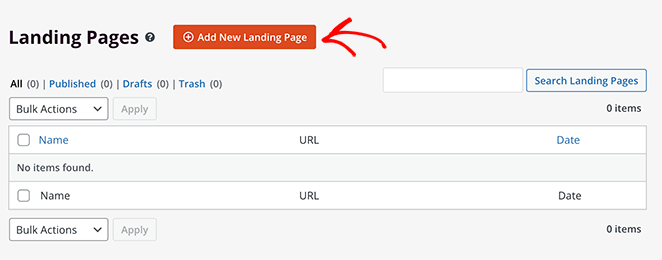
With SeedProd, adding a video to your landing page is a breeze. Navigate to SeedProd » Landing Page Builder from your WordPress dashboard and either create a new landing page or edit an existing WordPress page.
Once you’re inside the page builder, you have 2 options for embedding video content. You can use the standard Video block or the advanced Video Pop Up block.
Adding the Video Block
To use the video block, find it in the left-hand sidebar and drag and drop it onto your landing page layout.
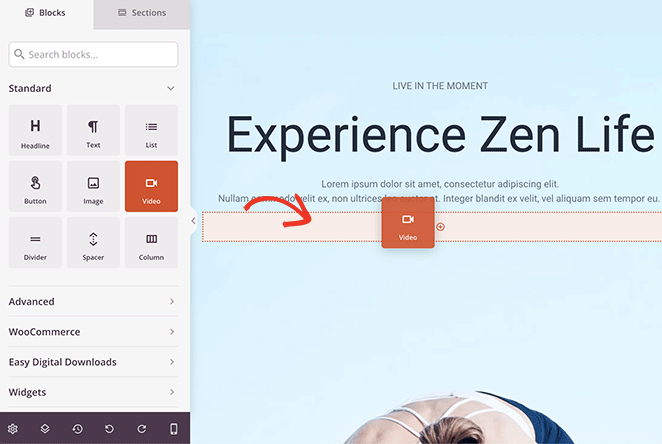
You can choose from 2 video sources in the block settings: YouTube and Custom.
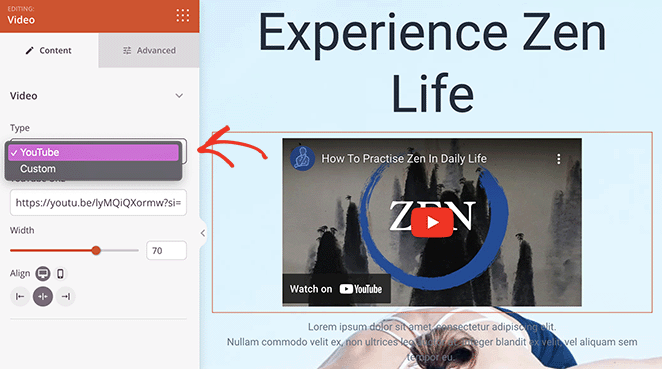
The YouTube source lets you paste a YouTube video link and will automatically embed the video code for you. Then, you can customize the video width, alignment, and visibility on desktop or mobile devices with a few clicks.
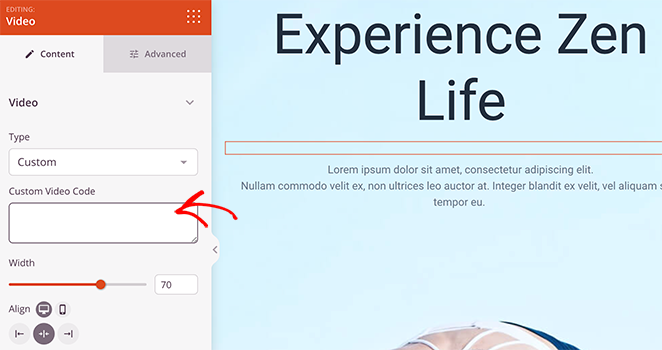
If you select the Custom option, you can embed a video in WordPress without YouTube. To do this, you’ll need to copy and paste the video embed code into the Custom Video Code box.
Adding the Video Pop Up Block
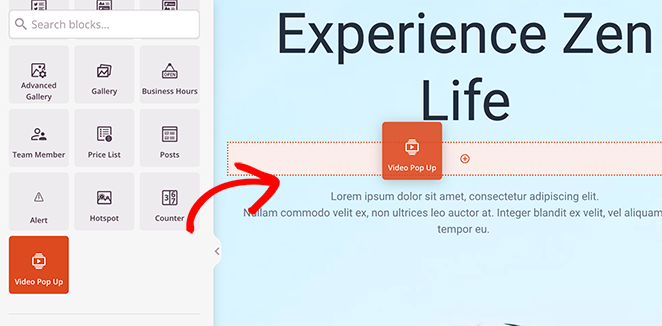
SeedProd’s Video Pop Up block offers many more customization options than the standard block. You can find it in the Advanced Blocks sidebar, then drag and drop it onto your page.
In the block settings, there are several video source options.
You can automatically embed video content from YouTube or Vimeo by pasting the video link.
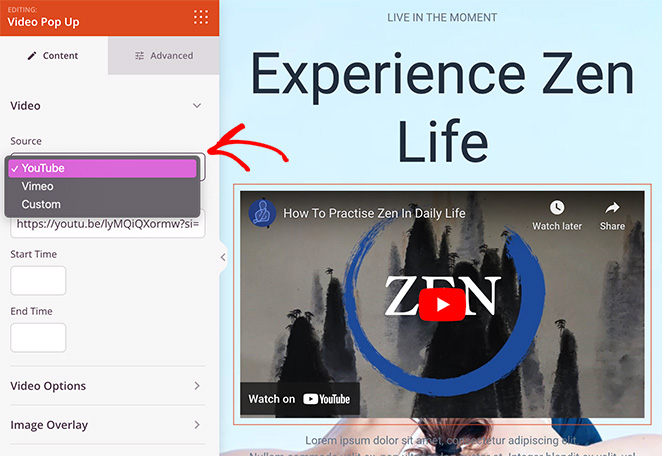
Alternatively, the Custom option lets you upload a video from your computer or paste a video link from an external website.
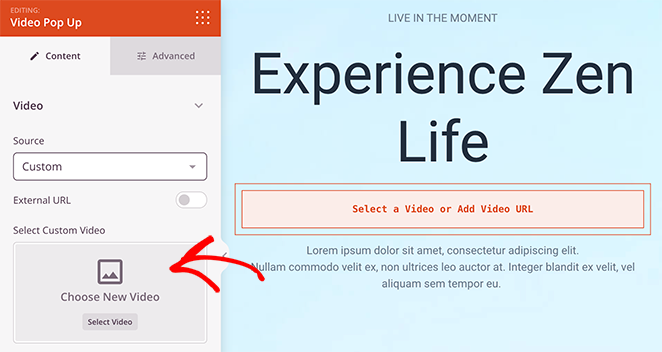
After choosing the video source, you can customize the video player by enabling different features, including:
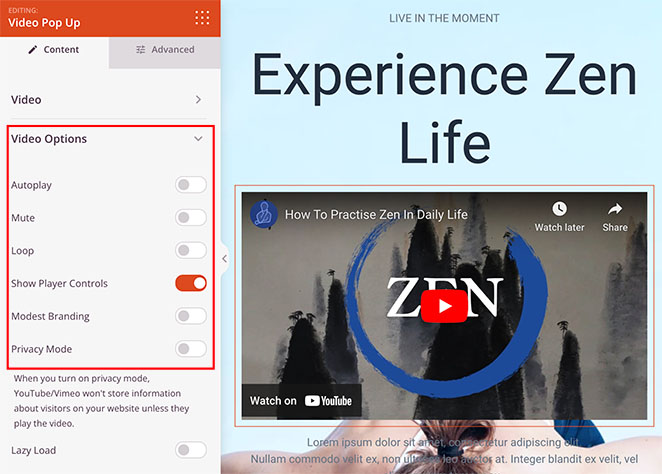
- Modest Branding: Hide the YouTube branding from your video player.
- Privacy Mode: Prevent YouTube or Vimeo from storing visitor information unless they play the video.
- Lazy Loading: Improve your page loading time by loading videos after the page loads.
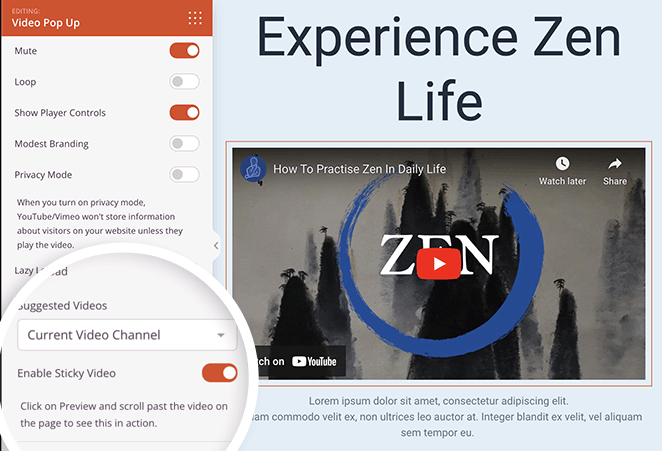
Additionally, enabling the Sticky Video feature ensures that when users visit that page, the video will stick to the bottom of the screen as they scroll.
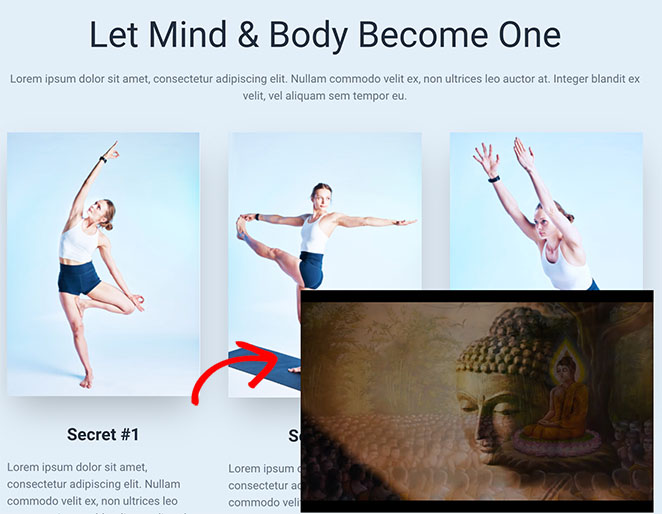
Keep a visitor’s attention on your key message even as they scroll.
Lastly, the Video Pop Up block has a Video Overlay option, which allows you to upload a custom video thumbnail image and play icon.
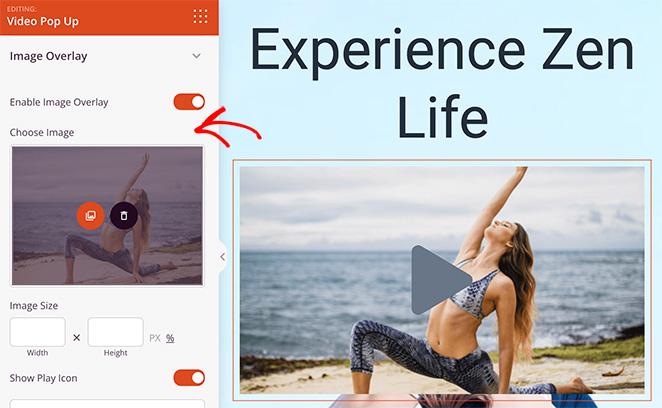
You can even enable the Lightbox option so the video opens in a Lightbox popup when a user clicks it.
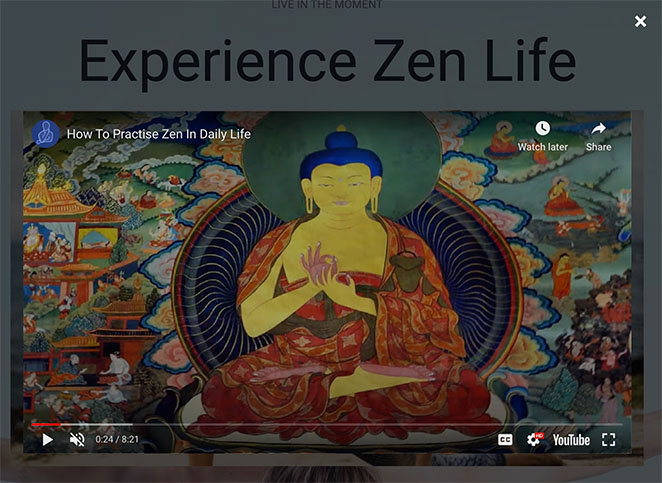
On a landing page, I use the Video Pop Up with a custom thumbnail and the Lightbox option. The visitor sees a clean image until they choose to watch.
The video opens full-screen when they’re ready, with no auto play and no page slowdown. That’s the setup I use on my own SeedProd landing pages.
For a complete customization guide, see our tutorial on how to create a video landing page in WordPress.
When you’re happy with your video and landing page customizations, click the Save and Publish button to make the changes live.
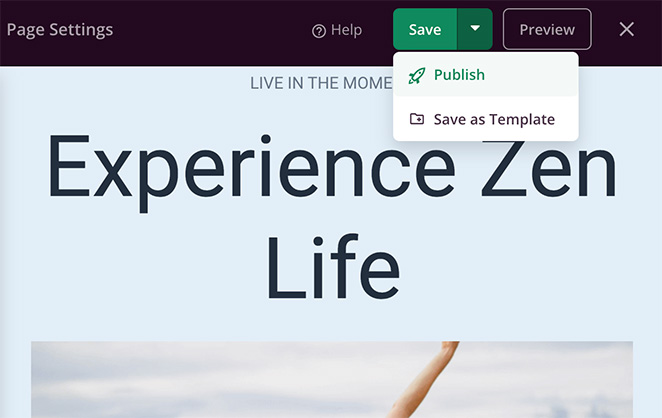
Here is an example of the final video after adding it to WordPress with SeedProd:

Embedding a Video in Your WordPress Theme
You can learn how by following this guide on how to create a WordPress theme.
Adding video to different parts of your WordPress theme follows similar steps to the landing page option. All you need to do is visit SeedProd » Theme Builder and edit any of the theme templates.
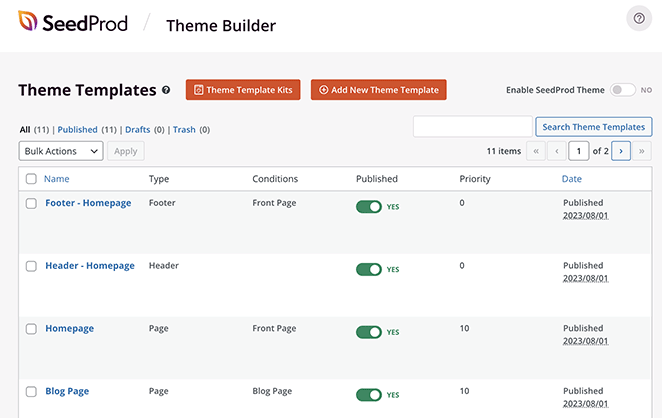
For example, you can open the sidebar template and drag over one of the video blocks to embed a video in your WordPress sidebar.
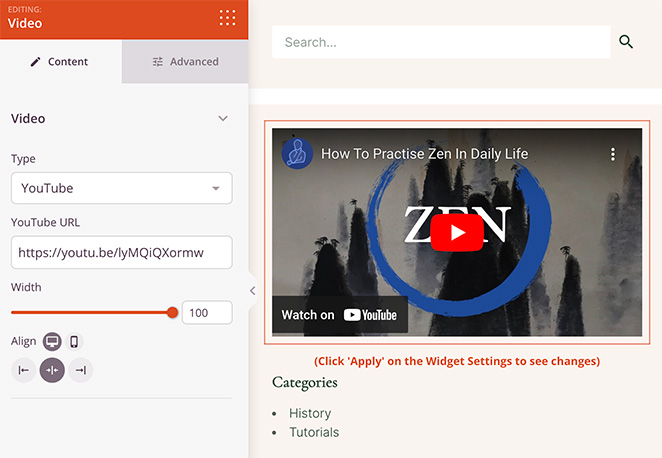
Here’s how that would look after saving the changes:

Or you can edit the footer template to add new video content to your footer widgets.
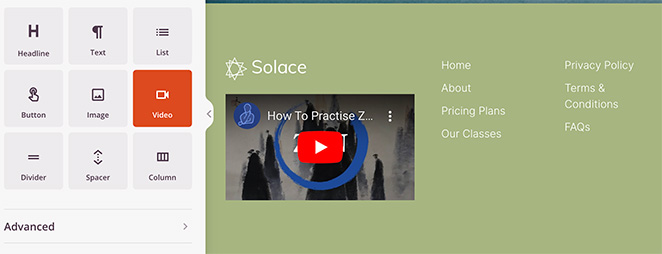
It’s really that simple, and none of it involves coding from scratch or hiring a developer.
Method 3: Use WordPress Video Plugins to Embed and Customize Videos
If you’re looking for more advanced features or have specific needs that the WordPress Block Editor or SeedProd can’t meet, a WordPress plugin specializing in video embeds might be the best solution.

For this, we recommend Smash Balloon’s YouTube Feed Pro plugin, our go-to option for building a YouTube video gallery in WordPress. It lets you embed YouTube channel videos in a customizable gallery.
The plugin can automatically import new videos, combine video feeds, add live streaming functionality, embed a YouTube playlist, and more. YouTube embeds also include like and share buttons, comments, and reactions to boost social proof right inside the video widget.

To learn more, you can see this guide on how to embed YouTube videos in WordPress.
Method 4: Embed Using iFrame Code (For Non-Whitelisted Sites)
The three methods above handle 90% of cases. If you need to embed from a site that WordPress doesn’t auto-detect, or you want to control YouTube’s related-video suggestions, you’ll need the iFrame code instead.
Here’s how to do it:
- Go to the video on YouTube, click Share then Embed, and copy the iFrame code.
- In the WordPress Block Editor, add a Custom HTML block.
- Paste the iFrame code into the block.
- Save and publish your page.
Use this method when the platform isn’t on WordPress’s oEmbed whitelist, or when you need custom parameters. For example, adding rel=0 to the YouTube URL reduces related video suggestions at the end.
One thing to know is that manual iFrames aren’t automatically responsive on mobile. To fix that, wrap the iFrame in a CSS container.
Paste this into your theme’s custom CSS or an HTML block above the embed:
.video-container {
  position: relative;
  padding-bottom: 56.25%;
  height: 0;
  overflow: hidden;
}
.video-container iframe {
  position: absolute;
  top: 0;
  left: 0;
  width: 100%;
  height: 100%;
}
Then wrap your iFrame like this: <div class="video-container">[iFrame code here]</div>. The padding-bottom value of 56.25% gives you a 16:9 aspect ratio on any screen size.
To add an MP4 video you’re hosting yourself, use the Block Editor’s Video block (not the YouTube block), click ‘Upload,’ select your MP4, and WordPress will insert a native HTML5 video player. Set auto play off and add a poster image for best performance.
How to Embed a Facebook Video in WordPress
Facebook video is the one platform that won’t embed just because you pasted the URL. Facebook closed the connection WordPress relied on back in 2020, so a plain Facebook link no longer turns into a player on its own.
You still have three reliable ways to do it. I’ll start with the one I actually reach for, then two free fallbacks.
The Easiest Way: SeedProd’s Facebook Embed Block
SeedProd has a dedicated Facebook block that still embeds a video without any of Facebook’s developer setup. Drag it onto your page, then choose your embed type.
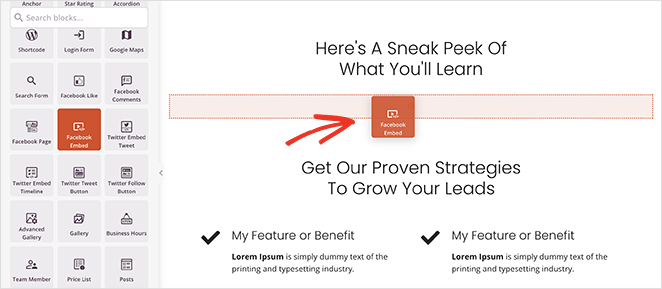
Set the embed type to Video and paste your Facebook video URL. The same block also handles Facebook posts and comments, so you switch the type based on what you’re embedding.
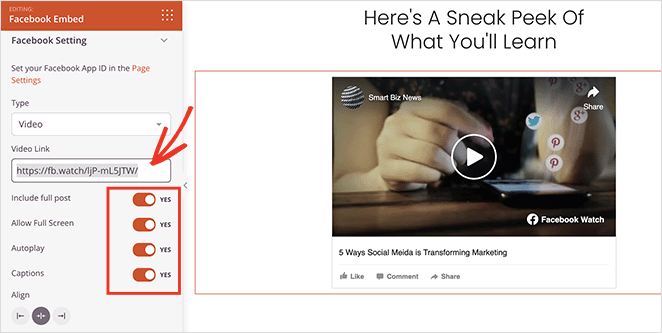
That’s the whole job. No embed code or plugin juggling, and it drops straight into any landing page or theme template you’re building.
The Free Way: Paste Facebook’s Embed Code
If you’re not using SeedProd, grab the code from Facebook itself. Open the video, click Share then Embed, and copy the code Facebook gives you.
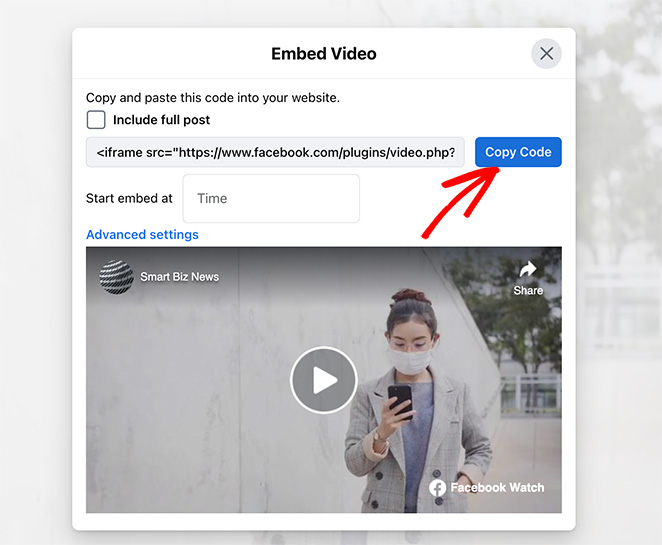
Back in WordPress, add a Custom HTML block and paste that code in. Publish the page and the video appears, the same idea as the iFrame method above but using Facebook’s own snippet.
For a Whole Feed of Videos: Smash Balloon
Want more than a single clip? Smash Balloon’s Custom Facebook Feed pulls your Page’s videos in automatically and keeps the feed updated on its own.
It’s the right pick when you want a gallery of Facebook videos rather than one embed. It’s the Facebook counterpart to the YouTube Feed Pro plugin I mentioned earlier.
How to Keep Video from Slowing Your Pages Down
Embedding a video from YouTube is fast because the video itself lives on their servers. But the player still loads scripts on your page, and that affects performance.
Here’s what I do on every video page to keep things quick.
- Lazy loading: The video player only loads when a user scrolls to it. In SeedProd, you can enable this directly in the Video Pop Up block settings. In the Block Editor, WordPress has loaded videos lazily by default since version 5.5.
- Custom thumbnail (image overlay): Instead of loading the full player on page load, you show a lightweight image. The player only initializes when the visitor clicks play. SeedProd’s Video Overlay option does exactly this. For a typical YouTube embed, this cuts initial page weight significantly.
- Avoid direct uploads: As covered earlier, videos uploaded to WordPress are served from your own server. If you’re hosting video yourself, use a CDN to deliver it from servers closer to your visitors.
- Responsive video: Auto-embedded videos from the Block Editor are responsive by default. Manual iFrames need the CSS wrapper described in Method 4 above.
The biggest win comes from the custom thumbnail. I’ve seen pages cut their render time nearly in half just by swapping a default YouTube embed for an overlay image.
It’s a five-minute change with a real speed difference.
Making Your Videos Accessible
Two more things worth doing before you call this done.
- Captions: Enable closed captions on YouTube, or upload an SRT file directly to the platform. For Vimeo, the same option is available in the video settings. Captions help users with hearing impairments and improve watch time for viewers in noisy environments.
- Transcripts: Paste a text transcript below the video. It’s a significant SEO signal and makes the content accessible to users who can’t hear audio at all.
- No unexpected auto play: SeedProd’s lazy loading setting means the video doesn’t play until a visitor chooses to. That’s an accessibility win. Unexpected audio is disorienting for screen reader users.
FAQs on How to Embed Video in WordPress
How do I embed a video in WordPress without YouTube?
Use SeedProd’s Custom video source option or the Block Editor’s Custom HTML block. In SeedProd, select the Video block or Video Pop Up block, choose Custom as the source, and paste your video’s embed code.
In the Block Editor, add a Custom HTML block and paste the iFrame or embed code from your video platform. This works for Vimeo, self-hosted videos, and any platform that provides an embed code.
How do I add an MP4 video to WordPress?
Use the Block Editor’s Video block (not the YouTube block) to upload an MP4 directly. Click the block, choose Upload, and select your MP4 file.
WordPress inserts a native HTML5 video player. For best performance, set auto play to off and add a poster image so visitors see a static thumbnail before the video loads.
Why can’t I embed a YouTube video on WordPress?
WordPress auto-embeds YouTube by default, so the usual culprit is the URL itself. Paste the plain video URL on its own line, not a hyperlink or a shortened share link, since those can break auto-embed detection.
If it still won’t embed, the video owner may have turned off embedding for that video on their end.
How do I optimize video loading speed in WordPress?
Enable lazy loading so the video player only loads when a visitor scrolls to it. Use a custom thumbnail (image overlay) instead of the default player. The full player only initializes on click, which cuts initial page weight significantly.
Avoid uploading videos directly to WordPress. If you’re self-hosting, use a CDN to serve the file from servers closer to your visitors.
Can I autoplay videos in WordPress?
Yes, but browsers like Chrome and Safari often block auto play unless the video is muted. To meet browser requirements and accessibility standards, auto play videos should start without sound and include visible play controls.
Many page builders and video plugins, including SeedProd, let you toggle auto play and mute settings directly in the block settings panel.
Why won’t my Facebook video embed when I paste the link?
Facebook shut down the connection WordPress used for auto-embedding in 2020, so a pasted Facebook link now stays as plain text instead of turning into a video.
To embed one, use SeedProd’s Facebook block, or paste the embed code from the video’s Share menu into a Custom HTML block.
More Helpful WordPress Guides
You’ve got video embedded, it plays fast, and it won’t break your page speed score. Now you’re in a better position than most WordPress sites that just paste a URL and hope for the best.
If you want the most control over video placement on landing pages, sidebars, and theme templates, Get SeedProd and you can have it set up in an afternoon.
If you’re looking for more ways to improve your WordPress site, you may find the following guides helpful:
- How to Add a Facebook Page to WordPress
- How to Add Custom WordPress Social Media Icons to Your Website
- How to Secure Your WordPress Site
Thanks for reading! We’d love to hear your thoughts, so please feel free to join the conversation on YouTube, X and Facebook for more helpful advice and content to grow your business.