
TL;DR
Before your site goes live, your coming soon page is doing one job: converting curious visitors into email subscribers who’ll be ready when you launch.
- Typical range: Most coming soon pages convert 5-20% of visitors into email subscribers.
- Traffic source matters most: Cold organic traffic converts at 0.5-3%; warm audiences (your email list, founder’s network) convert at 10-30%.
- The real benchmark: Aim for 10%+ if you have a clear offer. Anything under 3% with paid traffic needs attention.
- What moves the needle: Offer clarity, form length (one field only), countdown urgency, and social proof from early signups.
- Track it with SeedProd: SeedProd’s subscriber list shows every signup with name, email, and date. Export to CSV to count totals and calculate your rate against your Analytics visitor data.
You set up your coming soon page. The signups are trickling in.
You have no idea if that trickle is normal or a warning sign.
The problem is that no published benchmark exists specifically for coming soon pages. Every conversion rate article lumps them with sales pages and lead-gen forms, which convert for completely different reasons.
In this guide, I’ll walk you through what pre-launch page rates actually look like, broken down by traffic source, what affects your rate, and what you can do before your launch date.
- What Is a Coming Soon Page Conversion Rate?
- How to Calculate Your Coming Soon Page Conversion Rate
- What's the Average Coming Soon Page Conversion Rate?
- What's a Good Coming Soon Page Conversion Rate?
- What Affects Coming Soon Page Conversion Rates?
- How to Improve Your Coming Soon Page Conversion Rate
- FAQs About Coming Soon Page Conversion Rates
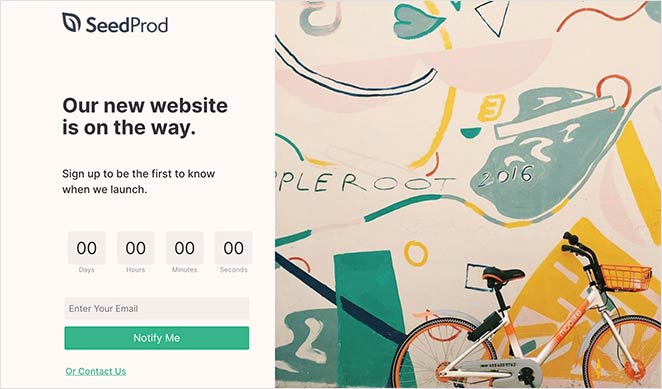
What Is a Coming Soon Page Conversion Rate?
Your coming soon page conversion rate is the percentage of visitors who give you their email address before your site launches. If 100 people visit and 8 sign up, your rate is 8%.
What makes this different from a standard landing page rate is who’s visiting. People who land on a coming soon page sought the page out before the site was live.
That self-selection means they’re a warmer audience than a typical landing page visitor. It’s why coming soon page benchmarks run higher than the 2-3% figures cited for general landing pages.
One distinction worth making before the benchmarks, is that this article measures visitor-to-signup rate. Some sources publish waitlist “conversion rates” in the 25-85% range.
Those numbers measure what happens after launch, when you invite waitlisted subscribers to become paying customers. A 5% visitor-to-signup rate is not underperforming against a 25% waitlist-to-customer rate.
They’re measuring different moments entirely.
I manage content for SeedProd, where coming soon pages are one of my main topics, and I’ve seen this confusion come up often. The question “is my rate good?” almost always needs a follow-up: “What type of traffic is landing on the page?”
How to Calculate Your Coming Soon Page Conversion Rate
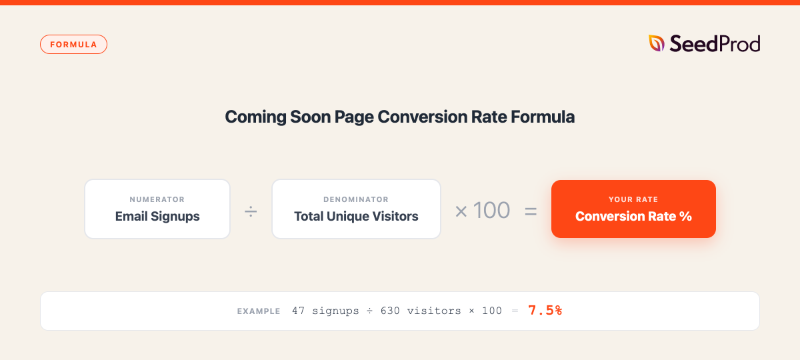
The formula for calculation your coming soon page conversion rate is: (email signups ÷ total unique visitors) × 100.
If you collected 47 signups from 630 unique visitors, your rate is 7.5%. That’s the whole calculation.
Use unique visitors for the denominator, not pageviews. A visitor who reloads your page three times is one person.
Using pageviews inflates the total and makes your rate look artificially low.
How to Track Your Coming Soon Page Signups
There are a few ways to get your signup count, and they vary in how complete the picture is.
Google Analytics is the most accurate option. With form submission tracking set up, it gives you both your signup count and visitor total in one dashboard, so you can read your conversion rate directly without any manual calculation.
Your connected email platform (Mailchimp, ConvertKit, and most others) shows your subscriber total with date filtering. This is the quickest check if your email marketing platform is already connected to SeedProd.
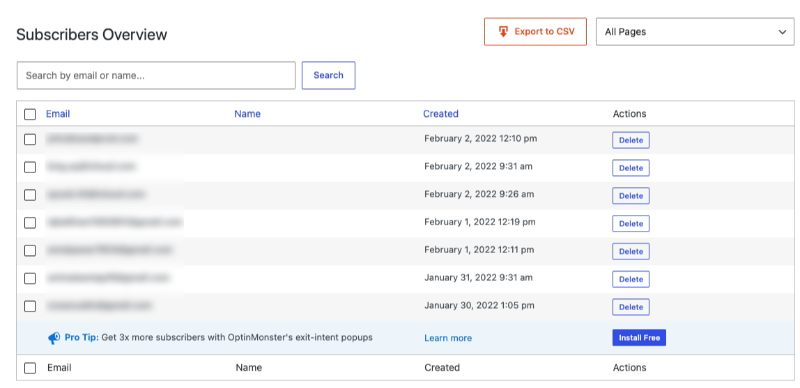
SeedProd’s subscriber list is in the SeedProd section of your WordPress dashboard. It shows each contact’s name, email address, and signup date, and you can export to CSV.
For unique visitor counts (the denominator in your rate calculation):
- Google Analytics: Connect it via the Custom Scripts field in SeedProd settings. GA gives you unique visitor counts by date range.
- Hosting stats: Your web hosting control panel shows visitor data if you haven’t set up GA yet.
Once you have both numbers, divide signups by unique visitors and multiply by 100.
What’s the Average Coming Soon Page Conversion Rate?
The average coming soon page conversion rate is around 5-10% across all traffic types. Traffic quality and offer strength drive most of the variance.
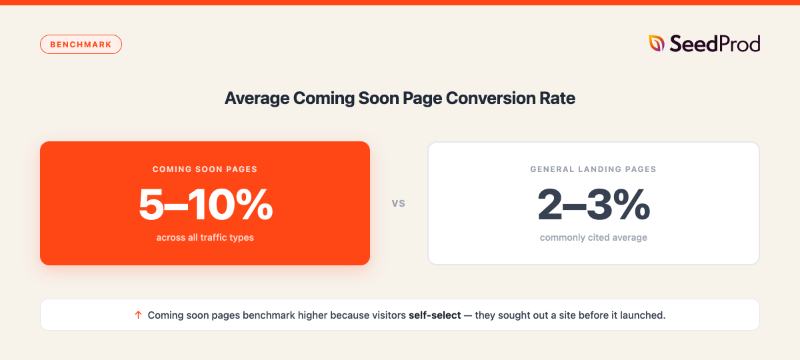
The 2-3% figure you see cited everywhere covers all landing page types, including sales pages, contact forms, and demo request pages. Coming soon pages are opt-in lead-gen pages with self-selecting visitors, and those consistently benchmark higher.
Mailchimp’s landing page benchmark data reports a 9.7% average across all landing page types on their platform. Landingi’s data, cited by SEO Sherpa, puts the global average across 18 industries at 10.76%.
For waitlist pages specifically, getwaitlist.com, which operates an actual waitlist platform, reports 2-5% for B2B SaaS products with cold traffic and 4-8% for consumer apps. Waitlister.me cites around 15% as an industry benchmark, drawing on Unbounce data.
That figure reflects optimized campaigns and skews high relative to what most first-time pre-launch pages see.
When I dug into benchmarks for this article, almost nothing existed specifically for coming soon pages. Every source cited general landing page conversion rate data.
The 5-10% range is the most defensible baseline for mixed-traffic pre-launch pages. The variance depends mainly on traffic source.
What’s a Good Coming Soon Page Conversion Rate?
A good coming soon page conversion rate depends almost entirely on where your traffic is coming from. The same 3% rate looks strong from a cold Reddit post and weak from your own email list.
By Traffic Source
These benchmarks are sourced from getwaitlist.com platform data and ConversionXL research on warm vs. cold traffic. Warm traffic typically converts 2-3x higher than cold across opt-in page types.
| Traffic Source | Typical Range | What Good Looks Like |
|---|---|---|
| Cold organic (SEO, social discovery) | 1-3% | 3%+ is strong for unknown-brand cold traffic |
| Paid ads (targeted) | 2-8% | 5%+ means the offer resonates with the audience |
| Warm audience (email list, founder’s network) | 6-15% | 10%+ is very achievable with an existing audience |
| Community / referral post | 3-10% | Varies heavily by community relevance |
| Viral / incentivized sharing | 15-30%+ | Referral mechanics (jump-the-queue) drive this range |
The most common mistake I see is judging a cold-traffic rate against a warm-audience benchmark. A 2% rate from a Reddit post for a new, unknown brand is performing within the expected range.
For ecommerce pre-launch pages with a discount incentive on targeted paid ads, 8-15% is achievable. The specific offer is what closes the gap between curiosity and a signup.
Email signups convert higher than social follows on pre-launch pages. Email gives you direct control of the launch announcement; a social follow depends on the algorithm showing your post at the right moment.
The benchmarks in the table above measure email signups specifically.
So how many signups is enough? Conversion rate matters here more than raw count.
As a launch readiness signal, a waitlist of 500+ tends to indicate enough warm demand to proceed, regardless of your rate.
By Incentive Type
Your offer is the single biggest lever you control. The ranges below are directional benchmarks drawn from patterns in waitlister and getwaitlist case data, not hard platform averages.
| What You’re Offering | Typical Conversion Range |
|---|---|
| Nothing specific (“be the first to know”) | 1-4% |
| Early access / waitlist priority | 5-12% |
| Launch discount or exclusive pricing | 8-18% |
| Exclusive pre-launch content | 8-20% |
| Referral reward (jump-the-queue mechanic) | 15-30%+ |
Moving from a vague offer to a specific one can shift your rate from the bottom of that table to the middle. “Be the first to know” converts at 1-4%; “Get 20% off at launch” can push you to 8-18%.
Your offer is what turns a curious visitor into someone willing to hand over their email before the product even exists.
What Affects Coming Soon Page Conversion Rates?
Seven factors drive most of the variance in coming soon page performance. Traffic quality consistently shows up first whenever I look at this data.
Everything else matters, but nothing overrides a warm vs. cold audience.
- Traffic quality: The biggest factor. A warm audience from your email list will outperform cold discovery traffic regardless of how polished the page looks.
- Offer clarity: What specifically does the visitor get by signing up? Vague offers (“be the first to know”) underperform specific ones (“get 20% off at launch”) every time.
- Form length: One field (email only) converts higher than two or more. Adding a first name field introduces friction, even when it looks minimal.
- Countdown timer: A visible countdown creates deadline urgency. Without a date, “coming soon” is indefinite, and visitors have no reason to sign up today rather than later.
- Social proof: A live signup counter works because on pre-launch pages there are no reviews yet. The signup count is the only external validation available to a first-time visitor.
- Mobile optimization: Discovery traffic from social media, link shares, and community posts is majority mobile. A broken mobile layout stops conversions before the form even loads.
- Page speed: According to Genesys Growth, every second of load time costs around 7% in conversions. Target 2 seconds or faster.
How to Improve Your Coming Soon Page Conversion Rate
Most of these changes take under 10 minutes. Any one of them can shift your rate by a few percentage points.
1. Make the Offer Impossible to Ignore
Replace vague copy with a specific, named reason to sign up.
“Be the first to know” converts far lower than “Get 20% off at launch” or “Join the waitlist for early access.” The format that works: [specific outcome they get] + [when or how they receive it].
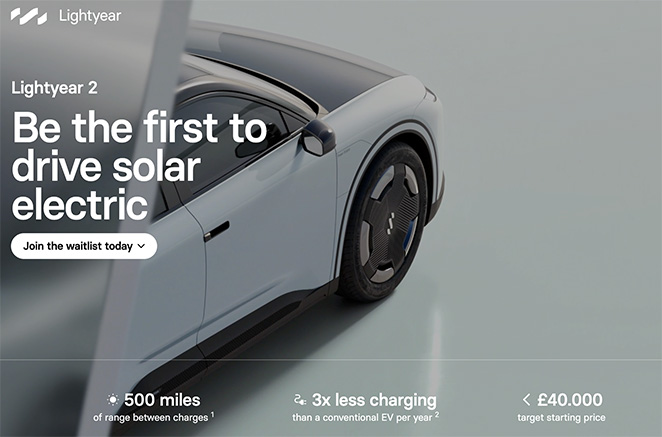
A free resource tied to your product’s core value, like a template or video walkthrough, can work as well as a discount. It needs to deliver something of immediate use.
If you’re collecting email signups and social follows, lead with email. Email gives you direct control of the launch announcement; a social follow depends on the platform deciding who sees your post.
2. Cut Your Form to One Field
Email only. No first name, no phone number.
Adding a single extra field reduces conversions measurably. The friction is real even when it looks minimal.
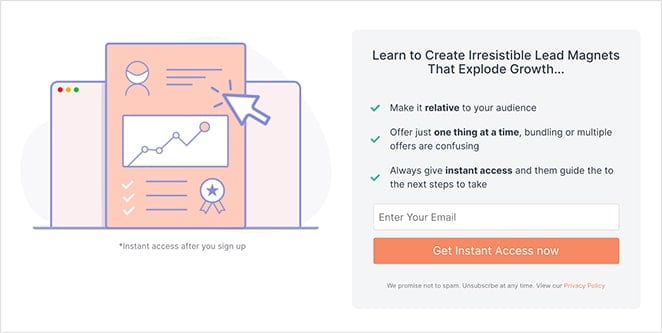
Instead, ask for a first name in your welcome email, after the subscriber has already committed. You get the personalization data you want without losing signups at the point of highest intent.
3. Add a Countdown Timer to Build Urgency
A visible countdown to your launch date makes the wait feel finite, not open-ended.
Without a deadline, a visitor who lands on your page has no urgency to sign up today rather than next week. I use SeedProd’s Countdown Timer block, which you can drag into any coming soon page template in about two minutes.
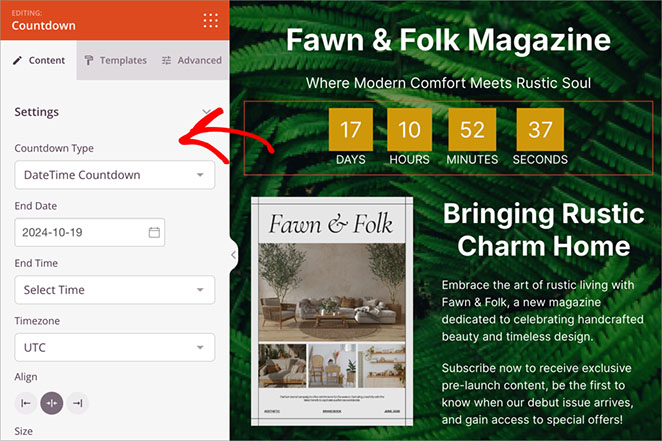
One rule I stick to is to only use a real launch date. A fake countdown damages trust before you’ve had a chance to build any, and early subscribers notice when the date resets.
4. Show Your Early Signup Count
A manually updated counter showing how many people have already signed up is one of the most underused elements on pre-launch pages.
According to waitlister.me, social proof near signup forms can increase conversion by around 40%. The effect is especially strong on pre-launch pages.
There are no reviews or testimonials yet, so the signup count is the only external validation a first-time visitor can rely on.
“312 people are already waiting” works better than “Be the first” because it validates demand before the product is live.
Check your SeedProd subscriber list or connected email platform for your current total, then add that number to a text block on the page.
Even a count of 12 is worth showing. It signals that real people have already made this decision.
5. Optimize for Mobile
Test your coming soon page on your phone before sharing it anywhere.
Discovery traffic from social media, community posts, and link shares is majority mobile. The things to check are:
- If your CTA button is large enough to tap
- The email field works with the mobile keyboard
- There’s no horizontal scrolling
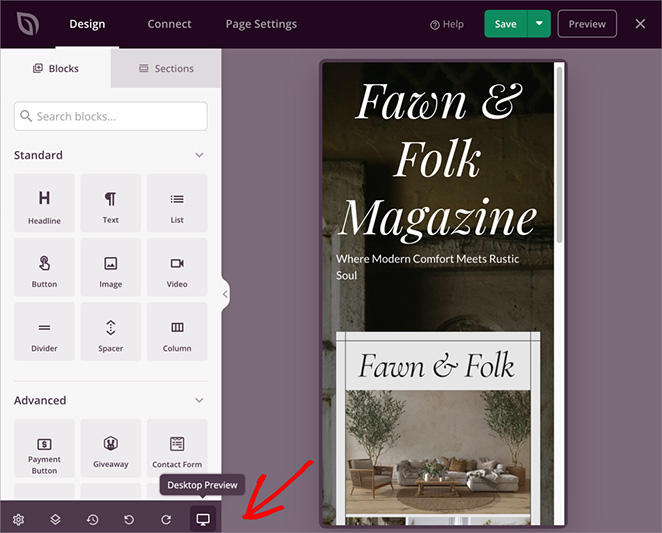
SeedProd’s mobile preview mode shows you exactly how the page renders at smaller screen sizes. Confirm it before publishing.
6. Speed Up Your Page Load
Target a 2-second load time or faster.
Every extra second costs around 7% in conversions. Compress your images, check with Google PageSpeed Insights, and audit what scripts your page loads.
SeedProd outputs bloat-free code. It doesn’t add scripts for blocks you’re not using.
Your coming soon page stays leaner than pages built with heavier builders.
7. Test Your CTA Text
Your signup button copy is worth testing. “Get Early Access,” “Join the Waitlist,” and “Notify Me” can produce meaningfully different click rates for the same audience.
SeedProd doesn’t have built-in A/B testing, so use an external tool like VWO or run a sequential test. Two weeks with each version, then compare rates.
It’s not a controlled experiment, but it’s enough to spot a clear winner.
FAQs About Coming Soon Page Conversion Rates
What is a good conversion rate for a coming soon page?
5-10% is a reasonable baseline across mixed traffic. Cold organic or social discovery traffic: 2-3%+ is solid.
With a warm audience (your existing email list or founder’s network), 10-15% is achievable. With a strong incentive like a launch discount, 15-20% is realistic.
Use your traffic source as the primary benchmark. A single universal number doesn’t account for the variance that matters most.
What’s the difference between a coming soon page and a maintenance mode page?
A coming soon page is for pre-launch sites. You’re collecting email signups before your product or site goes live.
A maintenance mode page is for live sites temporarily offline for updates. It’s designed to communicate downtime, not capture signups.
Both are available as separate modes in SeedProd, with different templates for each purpose. Coming soon pages return HTTP 200; maintenance mode returns HTTP 503, the SEO-safe code for temporary downtime.
How do I get more signups on my coming soon page?
Start with your offer. Replace vague copy with a specific incentive: early access, a launch discount, or exclusive content.
After that, traffic quality is the biggest lever. Warm audiences from your existing network convert far higher than cold traffic, regardless of how good the page looks.
Keep the form to one field (email only), add a countdown timer if you have a real launch date, and show your current signup count as social proof.
Does a countdown timer actually help coming soon page conversions?
Yes, when you have a real launch date. A countdown creates urgency around a specific event and signals that the wait is finite.
Without a deadline, visitors have no particular reason to sign up today instead of never. A fake countdown works against you; subscribers notice when the date resets.
Use it only when you’re committed to an actual planned launch date.
Build Your Coming Soon Page with SeedProd Today
Now you know what “normal” looks like for a coming soon page. SeedProd has the tools to push past it: a subscriber list you can export, a Countdown Timer block, mobile preview, and bloat-free code.
You can try it right now. Export your subscriber list to CSV, grab your unique visitor count from Google Analytics, and calculate your rate using the formula in this guide.
You may also find the following guides helpful:
- How to Create a Waitlist Landing Page
- How to Grow Your Email List
- How to Create a Lead Magnet
- Anatomy of a Landing Page
Thanks for reading! We’d love to hear your thoughts, so please feel free to join the conversation on YouTube, X and Facebook for more helpful advice and content to grow your business.