
TL;DR:
All in One SEO (AIOSEO) is a WordPress SEO plugin that handles your titles, schema, sitemaps, redirects, and on-page checks from one dashboard. After running it across years on client and personal sites, I rate it the best fit for beginners and small business owners who want guided setup instead of raw control.
- What it is: An all-in-one WordPress SEO plugin covering on-page optimization, schema, sitemaps, redirects, local SEO, and social previews.
- Best for: Beginners, bloggers, and small business owners who want smart defaults and a setup wizard, not a settings maze.
- Free vs paid: The free version covers sitemaps, meta tags, and basic schema. Paid plans start at $99/year and add redirects, local SEO, link suggestions, and the AI Suite.
- The standout feature: TruSEO gives you a live on-page checklist while you write, so you fix issues before you publish, not after.
- The modern angle: AIOSEO now ships an AI Suite and an LLMs.txt generator that help your content get cited in ChatGPT, Claude, and Google AI Overviews.
- The honest verdict: Worth it once you outgrow the free tier. The cost does climb across the four paid plans, so match the plan to what you actually need.
Choosing your main SEO plugin feels like a big commitment. You want a tool that grows with your site instead of one you outgrow in six months.
That is why I took a close look at All in One SEO (AIOSEO). I have run it on both client sites and my own personal blogs for years, so this All in One SEO review comes from real use, not a feature sheet.
I will show you what it actually does well, where it falls short, and who it fits. Then you can decide if it belongs on your site.
What Is All in One SEO?
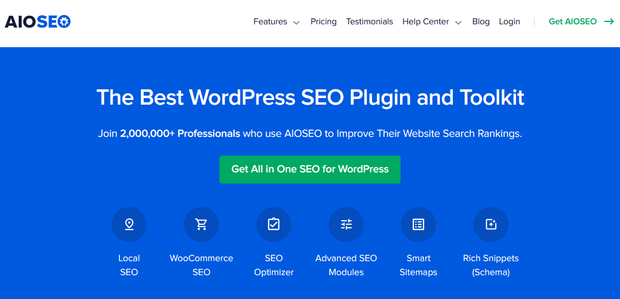
All in One SEO (AIOSEO) is one of the most popular WordPress search engine optimization (SEO) plugins, and it is one I have used on multiple sites.
After installing it for the first time, I was surprised by how beginner-friendly it felt. The setup wizard explained each setting in plain language and recommended smart defaults, which saved me the trial-and-error I usually deal with in SEO plugins.
What I like most is that it does not just cover one area. It rolls sitemaps, schema, local SEO, social previews, and link suggestions into one plugin, so I did not need to patch together five different tools.
You can also connect All in One SEO with many social networks and WordPress plugins like MemberPress, WooCommerce, SeedProd, and more.
The real value shows up over time. AIOSEO automates the foundational tasks I used to do by hand, like checking meta descriptions, keeping titles the right length, and nudging me to link internally.
As someone who manages content across several WordPress sites, I do not have time to obsess over every algorithm update. Having those checks built in saves me hours each month, which matters a lot if you are a small business owner trying to grow instead of fiddle with settings.
Is All in One SEO Free?
Yes, there is a free version of All in One SEO you can install straight from the WordPress.org plugin directory. I started with it on a small personal blog and was impressed by how much it handled out of the box.
For a hobby project or simple portfolio, the free version covers the basics that actually matter. You get on-page checks through TruSEO, XML sitemaps, basic schema, and social meta, so your pages are set up correctly without you touching a settings file.
The catch is the advanced tools sit behind the paid plans. Things like the Internal Link Assistant, redirects and 404 tracking, Local SEO, and the AI Suite are not in the free version, which is exactly when I upgraded.
AIOSEO offers four paid tiers: Basic, Plus, Pro, and Elite. They share the same core engine, but each one unlocks more advanced tools as your needs grow.
Here is how the current paid plans compare, with regular yearly prices:
| Feature | Basic | Plus | Pro | Elite |
|---|---|---|---|---|
| Price (per year) | $99 | $199 | $399 | $599 |
| Sites | 1 | 3 | 10 | 100 |
| TruSEO on-page analysis | ✔ | ✔ | ✔ | ✔ |
| XML sitemaps | ✔ | ✔ | ✔ | ✔ |
| Smart schema markup | ✔ | ✔ | ✔ | ✔ |
| WooCommerce SEO | ✔ | ✔ | ✔ | ✔ |
| Social media settings | ✔ | ✔ | ✔ | ✔ |
| Local SEO / business schema | ✔ | ✔ | ✔ | |
| Internal Link Assistant | ✔ | ✔ | ||
| Redirection and 404 tracking | ✔ | ✔ | ||
| Keyword Rank Tracker and IndexNow | ✔ |
I chose the Pro plan for most of my client work because it adds the tools I lean on daily: the Internal Link Assistant, advanced redirects, 404 tracking, and the extra sitemap types for video and news. Smart schema and WooCommerce SEO come in even on Basic, so you do not need to jump to Pro just for those.
If you run a local business, the Plus plan is the sweet spot, since that is where Local SEO and business schema kick in. If you manage dozens of sites, Elite covers up to 100 and adds keyword rank tracking and IndexNow.
How to Get Started with All in One SEO
To get started, install the All in One SEO plugin on your WordPress site. I used the Pro version for this review, since that is what I rely on for most of my projects.
After I activated the plugin, the Setup Wizard launched on its own. That was the first sign it was built for real users, not just developers.
The Setup Wizard walked me through six steps with clear instructions. It told me what each option did and which choice made sense for my type of site, so I had my SEO foundation in place within minutes.
Migrating from Another SEO Plugin
I was switching from another SEO plugin when I first installed AIOSEO. The migration was smooth. It imported my old metadata and settings automatically, then flagged anything that did not carry over cleanly so I could fix it.
One thing I appreciated is that AIOSEO reminded me to deactivate the old plugin right after setup. That heads-up saved me from conflicts that could have hurt my rankings or slowed my site.
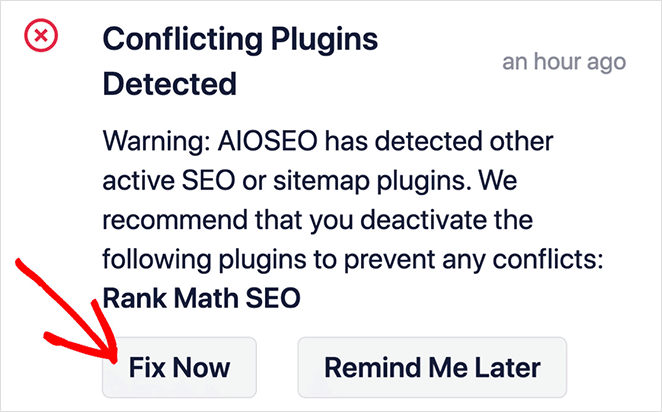
All I had to do was click the Fix Now button. It disabled the other SEO plugin without deleting anything, which gave me peace of mind while I tested the switch.
Once setup was done, I was ready to start using AIOSEO’s features right away.
All in One SEO Features
All in One SEO (formerly All in One SEO Pack) is a feature-rich plugin I have used on both personal blogs and client websites. It gives you strong SEO foundations even if you are not an expert.
Across the years I have run it, the thing that stands out is how much it packs into one dashboard without feeling cluttered. Instead of stacking five or six separate tools, I manage audits, schema, sitemaps, and social previews from inside AIOSEO.
In this section, I will walk you through the features I actually use. Whether you are building a new site or boosting an existing one, these are the tools that made the biggest difference for me.
1. On-Page SEO Optimization
This is the AIOSEO feature I use most. The built-in TruSEO tool gives you a live checklist right inside the WordPress editor, so you optimize your content while you write it.
When I rewrote a stale service page for a client last year, TruSEO caught a missing meta description and a buried focus keyword before it went live. It checks your title tag, meta description, focus keyword, internal links, and more, which keeps me from forgetting steps when I am moving fast.
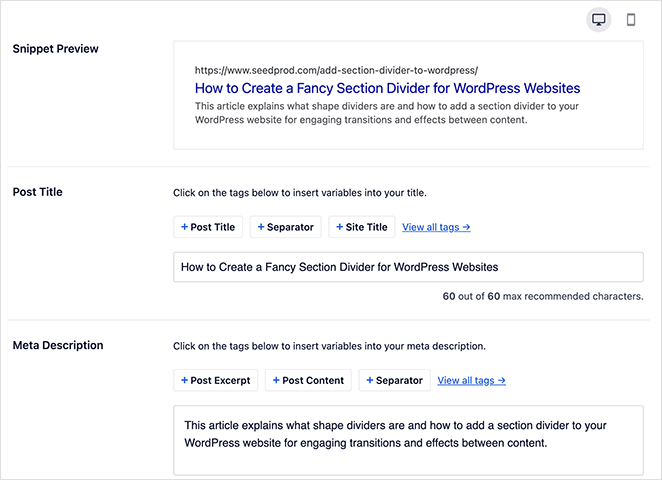
When I open a page or post, I can see what needs attention right away. The suggestions are clear and actionable, especially for keyword placement and whether I have added alt text to my images.
- Post title tag
- Meta description
- Focus keyword
- Social media metadata
- Canonical URL
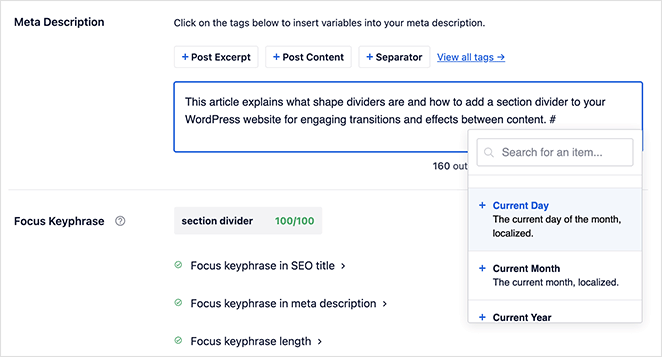
I also use AIOSEO’s smart tags to save time on meta descriptions. You can insert the post title, current year, or site name dynamically, which is a big help when you are managing lots of pages.
Once I have filled in the key SEO details, I always check the Page Analysis section. It gives you a summary score and flags what you missed, like short content, missing links, or hard-to-read sentences.
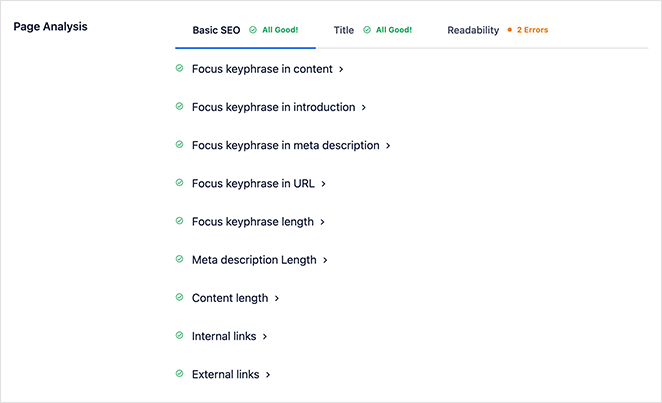
I aim for as many green checkmarks as I can before I hit publish. It is not about chasing a perfect score, it is about knowing I covered the basics that actually help content rank.
2. Search Appearance Settings
The Search Appearance area is where you fine-tune how your content shows up in Google. I use it on every site I manage to set global defaults like title formats, business info, and schema types.
It took me about ten minutes to fill in the first time, and I have barely touched it since. I added my brand name, logo, phone number, and a few schema options, and AIOSEO handled the rest in the background.
These global settings feed the business Knowledge Graph area in search results, which makes it easier for Google to find your information and show it to potential customers. You can include details like:
- Person or Organization
- Business name
- Phone number
- Contact type
- Logo
Under the Content Types tab, I set default title and meta templates for posts and pages. I used smart tags like {post_title} and {site_name} so I did not have to write custom metadata for every single piece of content.
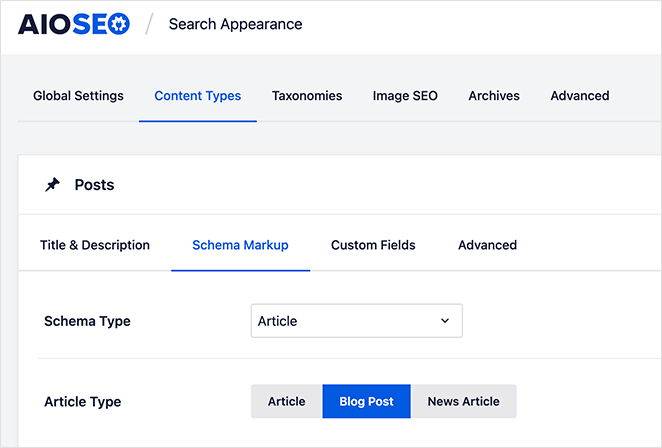
One small thing that made a big difference is the Current Year dynamic tag I added to some titles. It keeps my post titles fresh without me updating them by hand each year.
The plugin also lets you set default schema markup for all content types. I usually choose “Web Page” or “Article” depending on the content, but you can also pick “Product” or “Local Business” if you need them. You can fine-tune two more settings here too:
- Image SEO: Assign keywords to images automatically and redirect attachments.
- Author SEO: Control how author pages look in search results.
3. Site SEO Audit Checklist
This is one of my favorite features in AIOSEO. I ran the Site Audit right after setup and found a missing homepage meta description and a broken internal link I had no idea were there.
The Site Audit scans your whole site for issues that can harm your SEO, then gives you an overall score to work from.
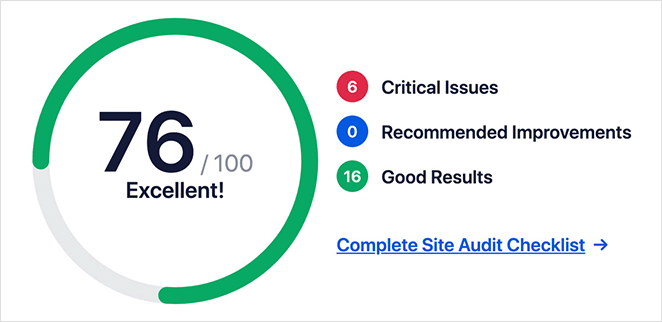
My first audit came in just under 70, which gave me a clear benchmark. I worked through the checklist to clean up smaller issues like thin content and missing alt tags, and bumped the score closer to 80.
A score of around 60 to 80 gives you a solid base to rank from. Pay attention to the Critical Issues, because those could already be hurting you. That is how I found a noindex tag accidentally applied to one of my blog categories, which I would have completely missed otherwise.
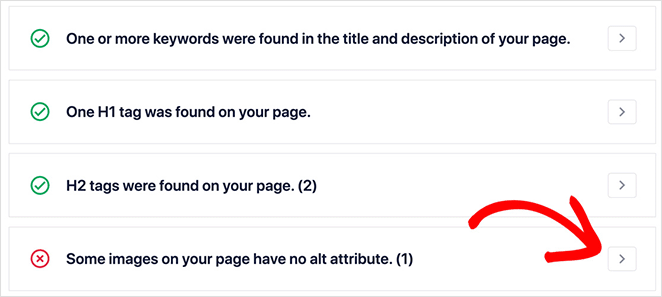
You can read more on each issue by clicking the arrow to the right. I like that it does not just flag a problem, it tells you how to fix it.
You can also use Site Audit to scan a competitor’s site and compare their score with yours. I used this to analyze a client’s top competitor and spotted a few optimizations we had not implemented yet.
4. Multiple Sitemaps
Before AIOSEO, I relied on the default WordPress sitemap and had zero control over what got included or how often it updated. Once I switched, I used the General Sitemap to define exactly which post types and taxonomies should appear, and my indexing improved noticeably.
Sitemaps tell search engines where your content lives, so it is easier to find and index. All in One SEO lets you build four sitemaps:
- General
- Video
- Google News
- RSS
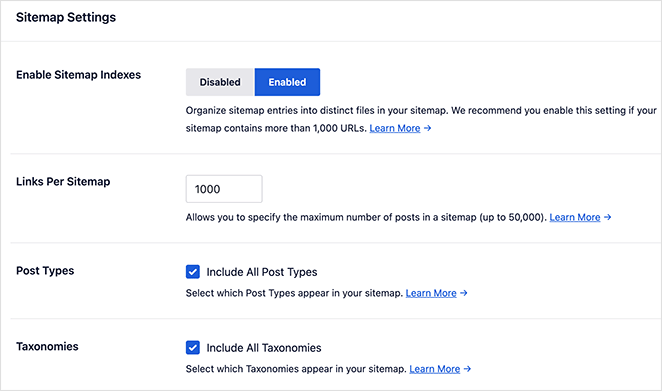
I usually enable the General sitemap and adjust which content types to include. For example, I have excluded private landing pages and certain WooCommerce product tags I do not want indexed.
You can also control the importance of each URL, set the update frequency, and the last modified date. Under the Advanced Settings tab, you get more control:
- Exclude posts/pages from sitemaps
- Exclude terms
- Priority score
- Include/exclude images from sitemaps
I have used the “exclude pages” option to hide thank-you pages and test content from search engines, something I could not do easily with other plugins.
5. Redirection
I use the redirection feature every time I change a URL or remove an old page. It is one of the easiest tools I have found for managing broken links without a separate plugin.
Redirects send traffic from old URLs to relevant published content. If you remove a post and republish it at a different URL, you can redirect the old one to the new one without losing organic traffic.
Inside All in One SEO, you can redirect URLs easily. Choose a source URL (the old one) and enter your new target URL.
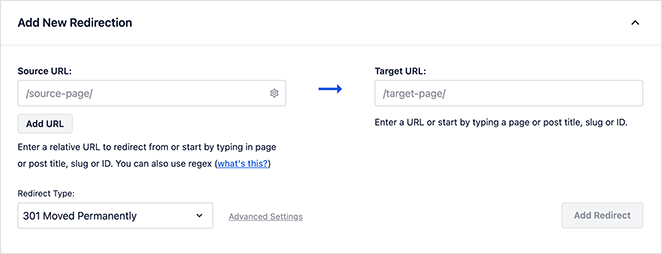
I have used this tool to redirect outdated blog posts to current versions and to fix dead links flagged in my site audit. It has saved me a ton of time and preserved rankings for older pages that were still getting traffic.
You can then choose a redirect type that helps search engines understand the purpose of the redirect.
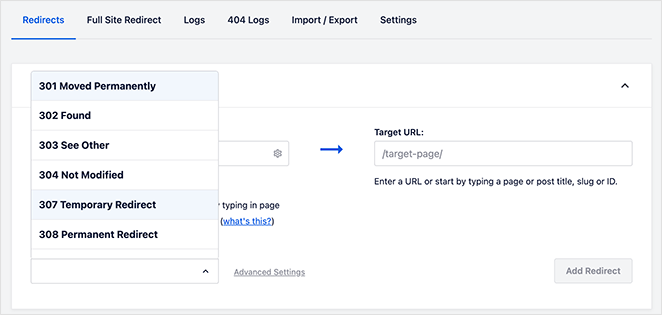
I usually use 301 redirects for old blog posts, but I have also used 307s during testing when I wanted a temporary change. Having these options built in makes it easier to avoid mistakes that confuse search engines.
The plugin also creates automatic redirects to prevent broken links. If you delete a post, AIOSEO prompts you to redirect it instead of leaving a 404, which has helped me catch issues before they showed up in Search Console.
6. Local SEO Tools
I set up AIOSEO’s Local SEO module for a client who runs a neighborhood bakery, and it changed how they showed up in search. Once the business profile was complete, Google picked up the changes within a few days.
All in One SEO’s Local SEO addon helps businesses that serve specific areas appear in local search results.
It supports multiple locations and adds your data in a Knowledge Graph format, which makes it easy for Google to show your information to potential customers.
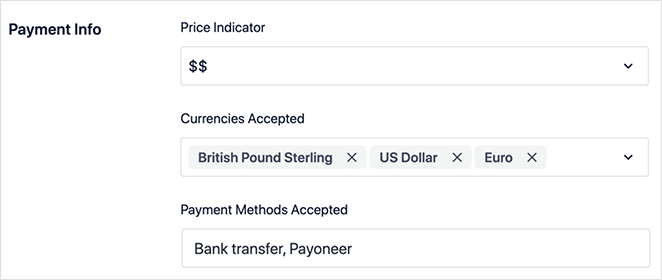
I added the client’s address, phone number, tax ID, and payment options from one screen, and AIOSEO generated the correct schema markup automatically. The information you can add includes:
- Business address
- Contact information
- Tax/ VAT ID
- Accepted payment methods
- Price indicator
You can also use the Maps feature to let Google pinpoint your location on Google Maps. I added a custom map to the client’s contact page so local customers could get directions straight from search.
7. Link Assistant
Internal linking used to be one of the most time-consuming parts of publishing for me. I would open old posts in new tabs just to see what I could reference, and AIOSEO’s Link Assistant put a stop to that.
Regular links between old and new content are a real ranking factor, but adding them by hand eats up time.
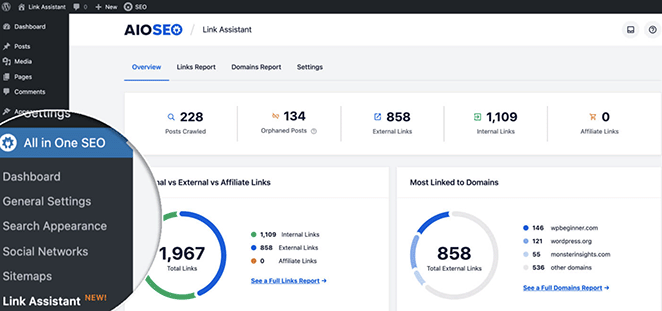
It shows how many internal and external links each post has at a glance. What I love most is the automatic suggestions: when I write a new post, Link Assistant recommends related pages from my site to link to, so I can connect new content to older cornerstone pages without digging through my archive.
I have also spotted pages with no internal links pointing to them and fixed that in a couple of clicks. Since I started using Link Assistant, my crawl stats in Search Console have improved and bounce rates have dropped on key blog pages.
8. Social Media Optimization
This is one of those features I did not think I needed until I used it. AIOSEO’s social settings let me control exactly how my posts look when they are shared on Facebook, Twitter, and Pinterest, with no more awkward crops or random text in link previews.
You manage it all in the Social Networks tab, where you can add social profile links for 11 platforms and control how your posts appear in Facebook, Twitter, and Pinterest feeds. In the Facebook tab, you can enable Open Graph Markup, choose default post types and taxonomies, and display the post author.
I went into the Facebook and Twitter tabs and set custom default images and titles using smart tags. Now when I publish a post, I know it will look good wherever it lands, and I have seen better click-through rates from social ever since.
The Twitter tab lets you enable Twitter Cards, set card types, and add extra data. You can also choose the default image source for both networks.
9. AI Content Generator
This is one of the most useful features AIOSEO has rolled out, and it has already saved me hours. Instead of bouncing between ChatGPT, social schedulers, and SEO tools, I generate AI-powered content right inside WordPress.
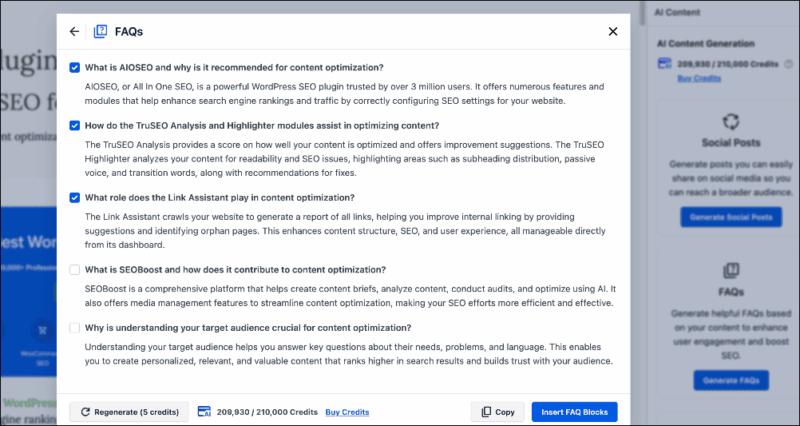
The AI Content Generator is built into the AIOSEO dashboard. I have used it to create SEO titles, meta descriptions, FAQs, key points, and even social media posts.
To turn it on, go to AIOSEO » General Settings » AI Content. The Lite version gives you 100 free credits to test it, and Pro users like me get access through their license key.
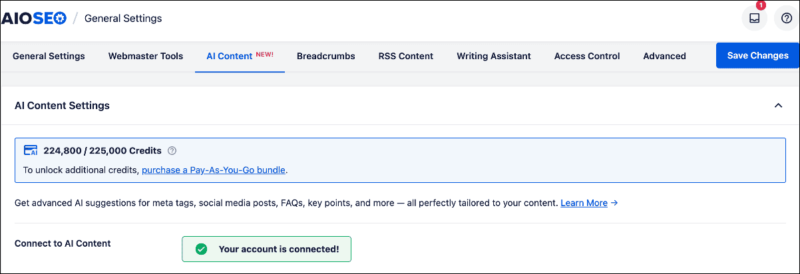
Here is what I have personally used the AI Content Generator for:
- FAQ Blocks: I let the tool generate schema-ready FAQs that drop into a post with one click, which helps with snippets and voice search.
- Key Points: I add these at the top of long-form content as a TL;DR to boost readability and help AI summaries.
- SEO Titles and Meta Descriptions: It gives me keyword-rich options without overthinking it, which speeds up publishing.
- Social Posts: I generate LinkedIn and Facebook blurbs for each post directly in the editor.
It is all embedded in the WordPress interface, so I can preview, edit, and publish without leaving my dashboard.
10. Newer Features Worth Knowing About
AIOSEO has shipped a wave of features since I first reviewed it, and a few have changed how I use the plugin. These are the ones I would not want to give back.
- Search Statistics: Your Google Search Console data sits right inside the WordPress dashboard, so I can see which posts are slipping without opening another tab. It is the feature I check first on a Monday morning.
- Keyword Rank Tracker: It tracks where your target keywords sit over time, which saved me from paying for a separate rank tracker on one of my blogs.
- IndexNow: It pings search engines the moment you publish or update a post, so new content gets noticed faster instead of waiting on the next crawl.
The feature I did not expect to care about is the AI Suite and its LLMs.txt generator. They exist for one job: helping your content get found and cited by AI tools like ChatGPT, Claude, and Google AI Overviews.
The LLMs.txt file is a simple map that tells AI crawlers which pages on your site matter most. I turned it on for a client blog that kept getting paraphrased without credit, and it gave the AI models a clean signal of what to point to.
No SEO plugin can promise you a citation in ChatGPT. What AIOSEO does is remove the guesswork, so you are not hand-editing files to stay visible as search shifts toward AI answers.
Build the site AIOSEO optimizes
Get a fast, search-ready page live in under 10 minutes
AIOSEO optimizes what you publish, but you still need pages to optimize. SeedProd’s drag-and-drop builder and 300+ templates let you launch landing pages, coming soon pages, or a full site without code.
I want to build my pagesAll in One SEO Pros and Cons
No plugin is perfect, and years of daily use have shown me both sides of AIOSEO. Here is the honest balance.
What I like:
- Beginner-friendly setup: The wizard explains each setting, so you are not guessing your way through SEO basics.
- Genuinely all-in-one: Sitemaps, schema, redirects, local SEO, and social previews live in one plugin, so you stop juggling five tools.
- TruSEO catches mistakes early: The live checklist fixes problems before you publish, not after a page is already underperforming.
- Search Console data in your dashboard: Search Statistics puts your real ranking data where you actually work.
What could be better:
- The cost climbs across tiers: Jumping from Basic to Pro or Elite adds up fast if you manage several sites.
- Features are split by plan: Some tools you might expect, like the Link Assistant and redirects, only show up on Pro and above.
- In-admin upgrade prompts: The free and lower tiers nudge you to upgrade more than I would like.
How AIOSEO Compares to Yoast, Rank Math, and SEOPress
AIOSEO is not the only good SEO plugin, and the right pick depends on how you like to work. Here is my honest read on the main alternatives.
- Yoast SEO: The most recognized name, and a safe choice if you want huge community support and plenty of tutorials. It nudges you toward upgrades a lot, and I find its readability scoring stricter than it needs to be.
- Rank Math: The most feature-packed free tier of the three, which makes it tempting if you want maximum control without paying. The trade-off is a busier interface that can overwhelm a beginner.
- SEOPress: A lean, affordable option with a one-price-unlimited-sites model that agencies like. It is less hand-holding, so it suits people who already know their way around SEO.
If you want raw features for free, Rank Math wins. If you want the biggest support community, Yoast wins. If you run many sites on a flat fee, SEOPress is worth a look.
AIOSEO is the pick I keep coming back to because of the guided setup and the all-in-one depth. For a beginner or a small business owner who wants to do SEO right without learning all of SEO first, that balance is hard to beat.
Who AIOSEO Is For (and Who It Isn’t)
After running it across different projects, I have a clear sense of where AIOSEO fits and where it does not.
AIOSEO is a strong fit if you are:
- A beginner who wants a guided setup instead of a wall of settings.
- A small business or local site that needs schema and Local SEO done right.
- A WooCommerce store owner who wants product SEO without extra plugins.
- Already using Awesome Motive tools and want everything to play nicely together.
It is probably not for you if you are:
- An agency that needs many sites covered as cheaply as possible.
- After the maximum number of features without paying anything.
Is All in One SEO Worth It?
Yes, All in One SEO is worth it once you outgrow the free tier. More than three million site owners use it, and after years of my own testing, I understand why.
The free version is genuinely useful for a hobby blog or portfolio. Skip the paid plans there and you lose nothing you actually need yet.
Upgrade when you hit a real wall: you need redirects and 404 tracking, you are doing Local SEO for a business, or you want the Internal Link Assistant to stop doing internal linking by hand. For most small businesses, Pro is the tier that pays for itself. For a single local site, Plus is plenty.
The downside of getting this wrong is real. Staying on the free tier when your business has outgrown it means watching rankings stall while a competitor with redirects and schema quietly pulls ahead. TruSEO and the clean interface are what tip the decision for me, and the AI Suite makes it one of the few plugins thinking about where search is going next.
If your free SEO plugin has started holding you back, AIOSEO is the upgrade I would point you to first. You can download All in One SEO risk-free with a 14-day money-back guarantee and have your foundations in place within minutes.
Frequently Asked Questions
Is All in One SEO better than Yoast or Rank Math?
It depends on what you want. AIOSEO is the easiest to set up and the most genuinely all-in-one, which makes it the better pick for beginners and small business owners.
Rank Math packs more into its free tier if you want maximum control, and Yoast has the largest support community. None is objectively best, but AIOSEO wins on guided setup and depth in one plugin.
What is the difference between AIOSEO Basic, Plus, Pro, and Elite?
The four tiers add more advanced tools as you scale. Basic ($99/year, 1 site) covers TruSEO, sitemaps, smart schema, and WooCommerce SEO. Plus ($199/year, 3 sites) adds Local SEO and business schema.
Pro ($399/year, 10 sites) adds the Internal Link Assistant, redirects, and 404 tracking. Elite ($599/year, 100 sites) adds keyword rank tracking and IndexNow for agencies and large site portfolios.
Does All in One SEO slow down your WordPress site?
After running it for years, AIOSEO has not noticeably slowed any site I manage. It is built to be lightweight, and it replaces several separate plugins, which can actually reduce your overall load.
If you do see a slowdown, it is usually your theme, hosting, or unoptimized images rather than the SEO plugin. Our guide on how to keep WordPress fast walks through the usual culprits.
Can All in One SEO help my site get cited in AI search like ChatGPT or Google AI Overviews?
It can help. AIOSEO now includes an AI Suite and an LLMs.txt generator, which give AI crawlers a clean signal about which pages on your site matter most.
No plugin can guarantee a citation in ChatGPT or an AI Overview. What AIOSEO does is handle the structured data and file setup for you, so your content is positioned to be found as search shifts toward AI answers.
Thanks for reading! We’d love to hear your thoughts, so please feel free to join the conversation on YouTube, X and Facebook for more helpful advice and content to grow your business.