

TL;DR: How to Resize Images in WordPress (Step-by-Step)
WordPress has a built-in image editor that lets you resize, crop, rotate, flip, and restore images without any extra plugins. Here’s how the process works.
- Open the Media Library — Go to Media » Library in your WordPress dashboard.
- Click Edit Image — Select your image, then click the Edit Image button.
- Scale to resize — Enter your target width under Scale Image and click Scale.
- Crop, rotate, or flip — Use the toolbar buttons to make additional edits visually.
- Save your changes — Click Save to apply edits and update the stored file.
- Restore if needed — Use Restore Original Image to undo all changes at once.
Trying to figure out how to resize an image in WordPress without breaking your layout or slowing down your site?
I’ve run into this problem more times than I can count. Whether I was adding blog images, product shots, or logos, oversized images always slowed down the page and looked off. That’s when I started using the built-in WordPress image editor, which is quicker than most plugins and does the job well.
In this guide, I’ll show you exactly how to resize, crop, flip, and rotate images in WordPress. You’ll also learn how to undo those changes if needed. You won’t need extra tools or code. Just a few clicks inside your dashboard.
- Why Should I Resize Images in WordPress?
- What Is the Best Image Size for WordPress?
- How Do I Resize an Image in WordPress?
- How Can I Crop an Image in WordPress?
- How to Rotate and Flip Images in WordPress
- Can I Undo Image Edits in WordPress?
- What About Image Compression and WebP?
- Frequently Asked Questions
- Control Your Images with SeedProd
Why Should I Resize Images in WordPress?
Resizing the images you add to WordPress matters for two reasons: it keeps your site from slowing down under the weight of large image files, and it saves space on your hosting server.
If you use high-quality stock photos or images from your camera, chances are your image file size is much larger than your site needs. Smaller image dimensions mean faster load times, which keeps visitors from bouncing.
I’ll show you how to find your ideal width in the next section.
What Is the Best Image Size for WordPress?
The right image dimensions depend on where the image appears and which theme you use. That said, there are widely used starting points that work across most WordPress themes.
| Image Type | Recommended Width | Notes |
|---|---|---|
| Featured image | 1200px wide | Used in social sharing and blog listings; 1200x628px is standard |
| Blog post body image | 800px wide | Fits most content columns comfortably |
| Thumbnail | 150x150px | WordPress default; used in widgets and archives |
| Banner / header | 1920px wide | Full-width backgrounds; compress heavily to reduce file size |
Most content columns in popular WordPress themes are between 650px and 800px wide. The quickest way to check yours is to right-click anywhere on your site and select Inspect in Chrome.
Hover over your content area and look for the highlighted column in blue. The tooltip shows the width in pixels. That number is your maximum image width for body images.
Once you know your target width, you’re ready to resize.
How Do I Resize an Image in WordPress?
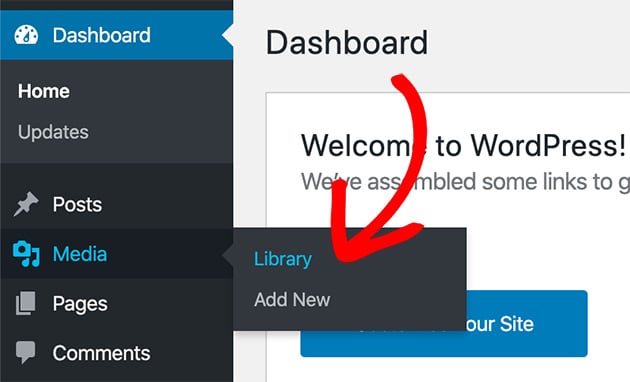
Using WordPress to resize images is straightforward. Head to Media » Library from your WordPress admin panel.
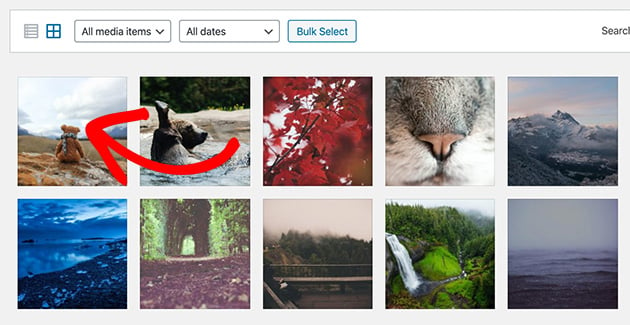
Upload or click on the image you’d like to resize in WordPress.
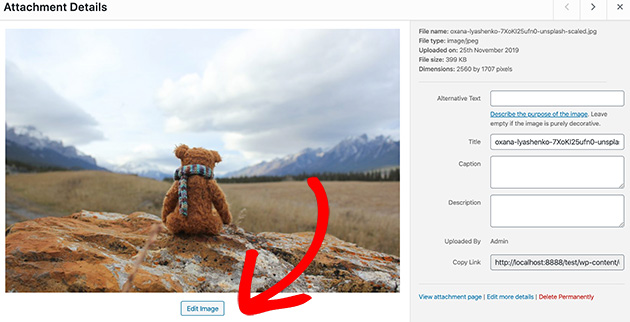
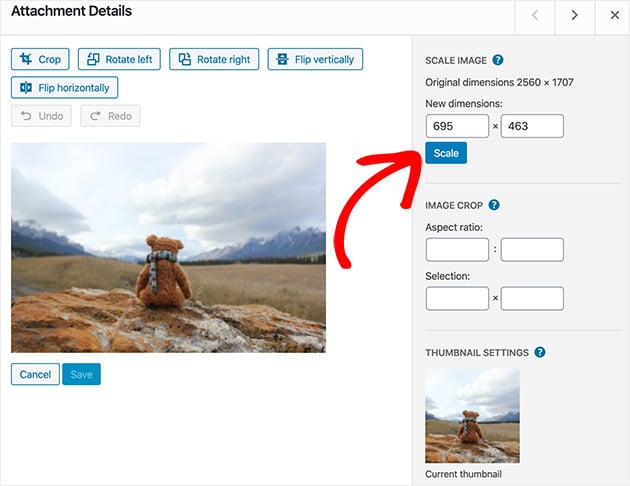
From here, click Edit Image.
Under the Scale Image heading, you can reduce image size by entering new dimensions. This tool shrinks the image without cropping anything out, and WordPress automatically keeps the correct aspect ratio.
If you just enter a width, the height will automatically be calculated based on the image ratio or vice versa.
In the first box, enter the width of your content area. If you’re not sure what that is, use Chrome’s Inspect tool: right-click on your site, select Inspect, then hover over your content column. The tooltip shows the pixel width. No code needed.
When you’re done, click Scale to resize the image.
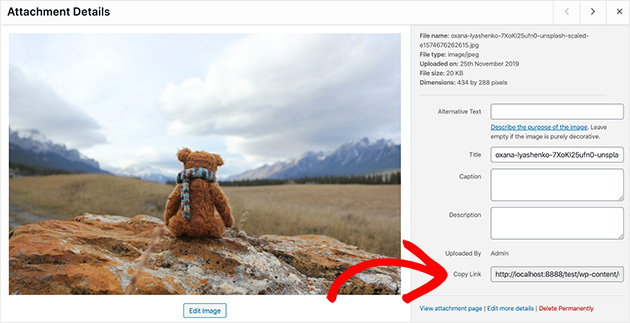
To use the resized image, go back to the image details page and copy the URL as shown in the screenshot below.
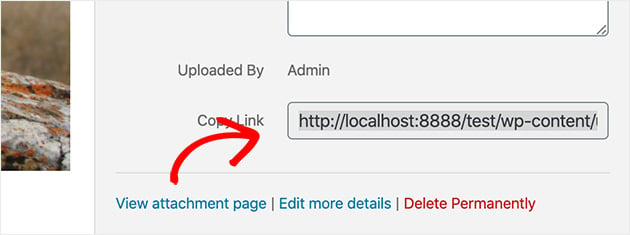
That’s it! You’ve now used WordPress to resize an image, and you can use it wherever you like.
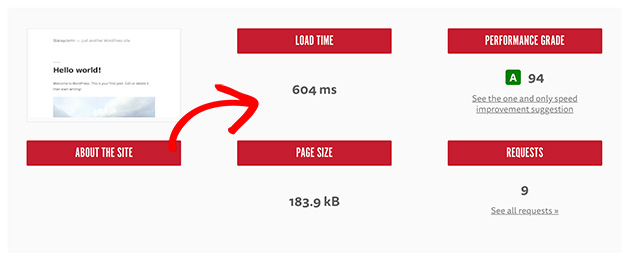
To give you an idea of how resizing affects your page speed, here are test results comparing the original and resized image loaded on a standard blog post.
We used Blog Tyrant’s website speed test tool for this example.
Here’s the test result of the original image size when added to a standard blog post.
And here are the results for the resized image.
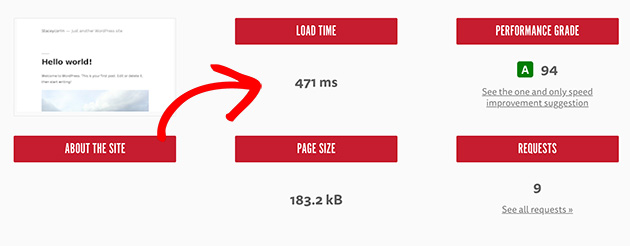
Even small differences in image size add up fast. Our original image was 2.5MB; after resizing, it dropped to 280KB. That’s a 90% reduction in file size.
On a site with dozens of images, those savings make your pages load faster and keep visitors from bouncing.
WordPress also lets you crop, rotate, and flip images. Keep reading to learn how.
How Can I Crop an Image in WordPress?
To crop an image in WordPress, we’ll follow the same first steps as resizing. Head to Media » Library, click the image you’d like to crop, and click Edit Image.
Next, click and drag your mouse on the image to start cropping. Cropping means cutting out unwanted edges to focus on a specific part of the image.
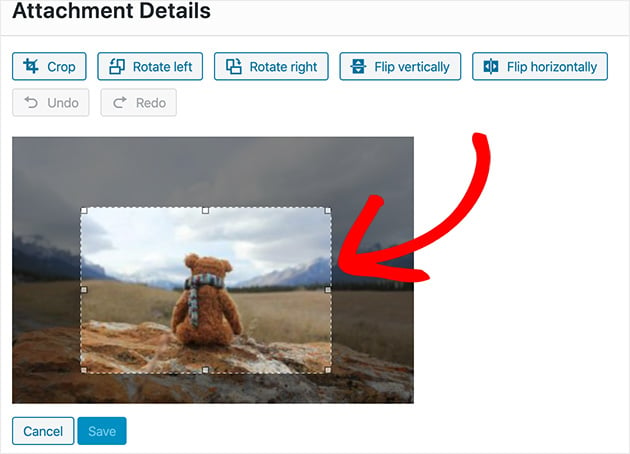
You can click on any of the little squares to adjust the cropped area or move the area around the image. Once you are satisfied, click the Crop icon as shown below.
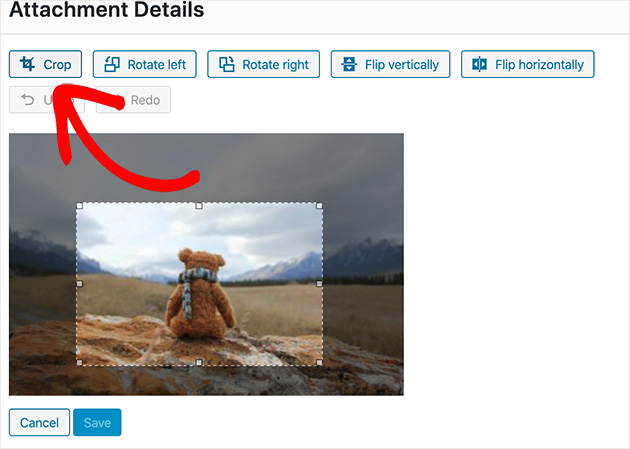
Now click Save. You’ve cropped your image.
Select the URL on the image details page to use the cropped image.
How to Rotate and Flip Images in WordPress
Rotating and flipping images both live in the same image editor. First, go to Media » Library, choose your image, and click Edit Image.
Rotate an Image
Click the Rotate Left or Rotate Right buttons to rotate your image 90 degrees at a time.
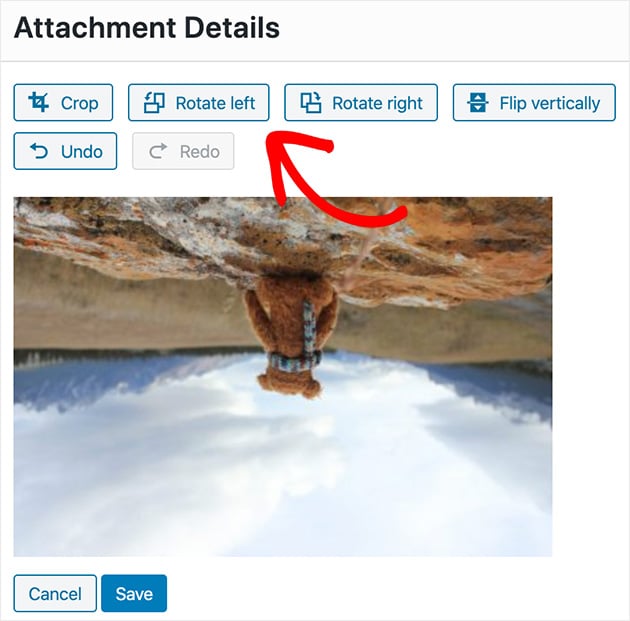
If you mess up, don’t panic. Clicking the Undo button will reset the image to the last step.
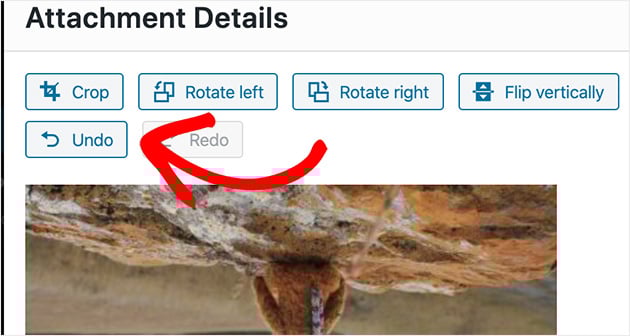
Click Save when you’re happy.
Flip an Image
Flipping an image works the same way. From the image editor, click the Flip Vertically or Flip Horizontally button. Flipping mirrors the image: vertically means upside-down, horizontally means left-to-right.
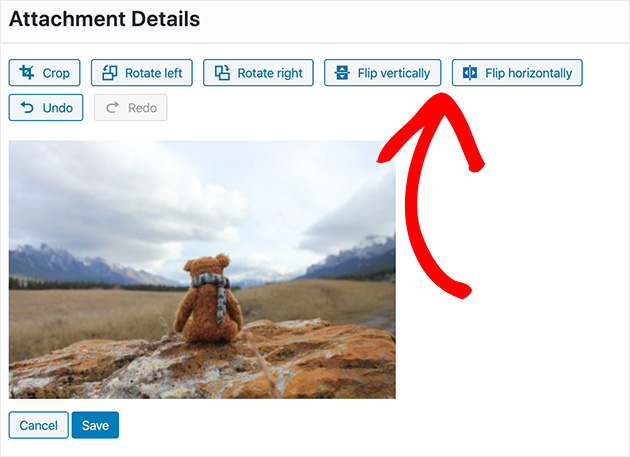
Click Save when you’re done.
Can I Undo Image Edits in WordPress?
We all make mistakes. If you’ve cropped the wrong area or scaled the image too small, there’s a one-click way to get back to the original.
Look to the right-hand side of the image edit screen. You’ll see a heading labeled Restore Original Image.
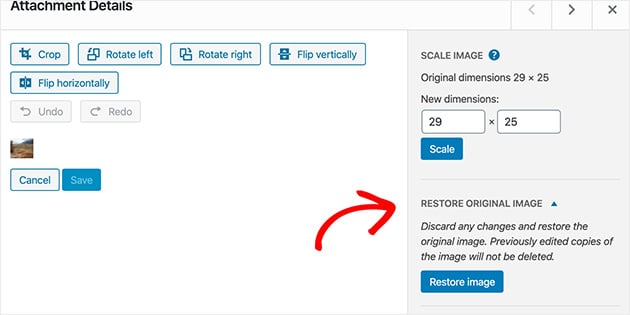
Clicking this reveals a button that lets you restore the image to its original size.
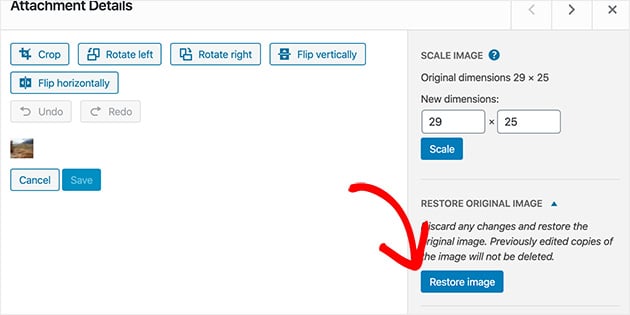
Click Restore Image to reset all of your changes. This brings back the image exactly as it was when you first uploaded it, removing any crops, flips, rotations, or size changes you made.
What About Image Compression and WebP?
Resizing an image changes its dimensions. Compression reduces its file size without changing the dimensions. Both matter for site speed, and they work best together.
After you resize an image in WordPress, the file size drops. But compression can shrink it further, often by 50-80% with no visible quality loss. I’ve tested this on my own site and the difference in load time is noticeable, especially on image-heavy pages.
The most reliable way to compress images in WordPress is with a dedicated plugin. Two worth trying are Imagify and Smush. Both compress images automatically on upload, so you don’t have to do anything extra after your initial setup.
One more thing worth knowing: WordPress has supported WebP image uploads since version 5.8. WebP files are typically 25-35% smaller than JPEGs at the same quality level. If your theme and hosting stack support it, uploading images in WebP format is one of the easiest ways to optimize images for WordPress without touching any settings.
Frequently Asked Questions
Does WordPress automatically resize images when you upload them?
Yes. WordPress creates multiple image sizes automatically every time you upload an image. By default, it generates thumbnail (150x150px), medium (300px wide), large (1024px wide), and full-size versions. Your theme uses these auto-generated sizes in different places, like thumbnails in blog listings or full-width header images. The Scale Image tool in the image editor only changes the original stored file, not these auto-generated sizes.
What is the best image size for WordPress?
It depends on where the image appears. A good general starting point: featured images at 1200x628px, blog post body images at 800px wide, and thumbnails at 150x150px. The most reliable way to find your theme’s exact content width is to use Chrome’s Inspect tool, right-click your content area, and read the pixel width from the tooltip.
What is the difference between resizing and compressing an image in WordPress?
Resizing changes the image dimensions (width and height in pixels). Compression reduces the file size without changing the dimensions, by removing data the eye can’t easily detect. Both affect page speed, but in different ways. Resizing with the built-in editor handles dimensions. A compression plugin like Imagify or Smush handles file size. For best results, do both.
Can I resize multiple images at once in WordPress?
The built-in WordPress image editor only resizes one image at a time. For bulk resizing, you need a plugin. The Regenerate Thumbnails plugin lets you regenerate all image sizes at once after you change your media settings. For bulk resizing to a specific dimension, plugins like Imsanity resize images automatically on upload based on a maximum width you set.
Control Your Images with SeedProd
Resizing images in the Media Library gives you clean, optimized files. But if you want full control over how those images appear on your pages, that’s a different problem.
SeedProd’s drag-and-drop website builder lets you place and size images exactly where you need them. You can adjust width, set alignment, add spacing, and see every change live before publishing. No guesswork, no refreshing to check how it looks.
If you’re rebuilding a page or building one from scratch, it’s worth trying.
If you’re looking for more help with images and media in WordPress, see the following guides:
- How to Add a Gallery to WordPress Pages
- How to Add a Featured Image in WordPress
- How to Change Blog Layout in WordPress
- How to Embed Video in WordPress
- How to Change Fonts in WordPress Themes
Thanks for reading! We’d love to hear your thoughts, so please feel free to join the conversation on YouTube, X and Facebook for more helpful advice and content to grow your business.




Hi, I am trying to resize an image and I tried using the Edit image option as you show above. Unfortunately, WordPress say ‘Unable to create new image’. Could you help me with that?
Hello,
The most likely reason is not having mod-gd installed.
If you are working online with a hosting company and have Cpanel as your hosting platform you can enable this module in Cpanel through
PHP Selector—> extensions—> gd.
Let me know should you have any more questions.
Best Regards,
Re-sizing did nothing. Unless I missed a step, I followed your instructions and the image stayed the same size it was before.
Yeah, tried again. This isn’t changing the size for me.
Hello Travis,
For us to further assist, would you mind telling us if you receive an error when editing/saving an image?
Thanks,
This no longer works on wp.com. When I click on the image, “edit image” is on the top. When I click that, it only allows me to rotate, crop or flip. I’ve been using wp for years and have always found a way to get around this. Now, it looks like the only method is to edit it off-line before uploading.
Am I missing something?
Hi Scott,
First, can I confirm if you’re using the free WordPress.com or self-hosted WordPress.org version? This guide is aimed at self-hosted versions of WordPress. It’s also a good idea to check that your WordPress installation is up-to-date for any issues.
Hi, I am trying to add images through a widget on the bottem of my webpage, but on the webpage they appear larger than the original imported image what causes the image to be less sharp. I resized the images approximatly 190/50 and 90/90 (for round logo’s) before adding them to my media. How can I adjust the image on the webpage to appear like the original imported image size? Do I adjust this in the theme of the webpage? What am I missing here?
Hello Dann,
If you upload an image you can edit it here: https://a.supportally.com/oCDtrF
The option to upload an image using sizes like thumbnail/medium/large, etc. is not anymore present using Gutenberg blocks. You can install the classic editor for this option to show up: https://a.supportally.com/OZ9Pyz
Best Regards,
Hello. I’ve been using the free version of WordPress for over 10 years and you can guess I’ve been very unhappy with their new interface lately. So, a quick question: did they get rid of the option to set image sizes as Large, Medium, Small and Thumbnail??? I swear I can’t find it anywhere on the usual menu anymore or by fiddling with the image/gallery “blocks”.
Hello Emerson,
If I understand your question correctly. The blocks that you are referring are the Gutenberg image/gallery blocks of WordPress and not about the SeedProd plugin, correct? If so, yes the option is not available using Gutenberg blocks. You can resize the image using the Edit link. See here: https://a.supportally.com/oCDtrF
Or you can install the Classic Editor plugin. The option to upload images using different sizes is still available.
Best Regards,
I tried to resize a jpg that is currently 850 x369. When I try to scale down it says file restricted to 800 width. Image appears way to large at 850 and 800. What can I do?
Hi Brenna, you could try editing the image in an online image editor or image editing software to reduce the file size and then re-upload it to your website.
I know I should have started my blog with smaller images but not the page loads so small. Is there a way to upload new images (that are smaller) without needing to reformat each post?
Hi Adam. You can try one of these image compression plugins. Many automatically optimize images without you needing to re-upload them.
May 8, 2023
There is no “scale image” in the edit image function, nor is there anything that can be adjusted regarding image sicze. Nor can I seem to edit the image size in a post editor using html. It seems there is simply no visible way do do so at all…..BUT I know there must be a way or many would dessert wp. Can you help me figure this out? Your post may be out-of-date because wp does not want to allow users to resize or scale images. But how is THAT a good business plan? Frustrated in Massachusetts
Hi Michael, the settings that you see within the image editor may look different if you’re using WordPress.com, the hosted version, in comparison to WordPress.org, the self-hosted version. You can learn the difference between the two here. If you’re still facing issues, we suggest reaching out to the support forums on the relevant WordPress platform.
This hits the nail on the head….exactly what I needed & will switch to .org using your tremendous guidance. Thanks!
I’m so glad this helped you! If you need anything else you’re more than welcome to ask.
Hey Stacey, is there a step after you scale and “copy” the link. I follow these steps but my images are not scaled in my post.
Cheers
Hi Laura,
Make sure after scaling your image, you exit the post you’re working on and refresh your page, then edit post again and add your image. Sometimes it needs a little refresh to show up with the new scaled version. I hope this helps!